Curating knowledge
How to create Slack training for managing remote employees
Turn Slack into a leadership tool. Learn how to create and deliver Slack management training for remote teams using interactive courses.

Ryan Macpherson
Dec 16, 2025

A Slack channel pings. Then another. A manager spends the day answering messages, juggling threads, and wondering if their team is aligned.
Remote work hasn’t made managing easier. It only made the gaps louder. In a remote environment, communication breaks down. Expectations blur. Team culture feels harder to hold onto.
That’s why training matters. Not just the “how to use Slack” tips. But training managers on how to lead inside Slack: how to set boundaries, keep accountability without micromanaging, and turn a tool into a real place for connection.
This article will show you how to build training using a course creation tool and deliver it in Slack, so managers can lead more effectively.
Essential Slack management skills every remote manager needs
Managers don’t need more Slack hacks. They need skills that make managing through Slack feel natural, not forced. Training should focus on these core areas:
Setting clear communication expectations and boundaries
In a remote environment, clarity matters more than speed. Managers need training to set clear response-time expectations, like defining when project channel replies are needed within hours versus when DMs can wait until the next work block.
They also need guidance on choosing the right medium:
Channels for transparency
DMs for private matters
Huddles for complex issues
Finally, digital office hours and status updates should be modeled so teams know when managers are available and when they’re not.
When managers practice these skills, Slack becomes structured instead of noisy. That’s why 91% of Slack users report improved effectiveness when working remotely once expectations are set.
Pro tip: Use Coassemble to transform your communication policy into an interactive etiquette course you can share on Slack. Instead of another static PDF, managers practice real scenarios, gain confidence, and build communication habits.
Fostering accountability without micromanaging
In remote environments, Slack makes work visible, but visibility can easily slide into micromanagement. Managers need training to shift the focus from monitoring activity to tracking outcomes.
That means:
Learning to set structured check-ins
Use project channels for progress updates
Rely on integrations for status tracking instead of chasing every message
Training modules can also cover how to phrase feedback in Slack so it feels supportive, not controlling.
The result is accountability that builds trust rather than eroding it. Employees who feel trusted report 2x higher productivity, 2.1x stronger focus, and 4.3x greater satisfaction, showing how trust drives both performance and retention.
Building team culture and connection remotely
Culture doesn’t build itself in a remote environment. Without training, Slack risks becoming transactional: a place for tasks, not relationships.
Managers need to learn how to create intentional spaces for connection. That can mean:
Launching engaging team channels
Encouraging lightweight rituals like “win of the week” threads
Setting up casual spaces for celebrations and shoutouts
Training can also walk managers through how to facilitate these moments without them feeling forced.
The payoff is significant. Research shows Slack has improved team culture in 79% of organizations using it. This suggests that when managers know how to cultivate connection, virtual teams feel stronger and more engaged.
How to create effective training programs for Slack management
The next step is designing programs that turn best practices into everyday habits inside Slack.
The goal is to shape static policies and remote work foundations into learning experiences that feel alive. Training is about practicing these skills in environments where remote and hybrid teams collaborate every day.
Transform existing management resources into Slack-specific training
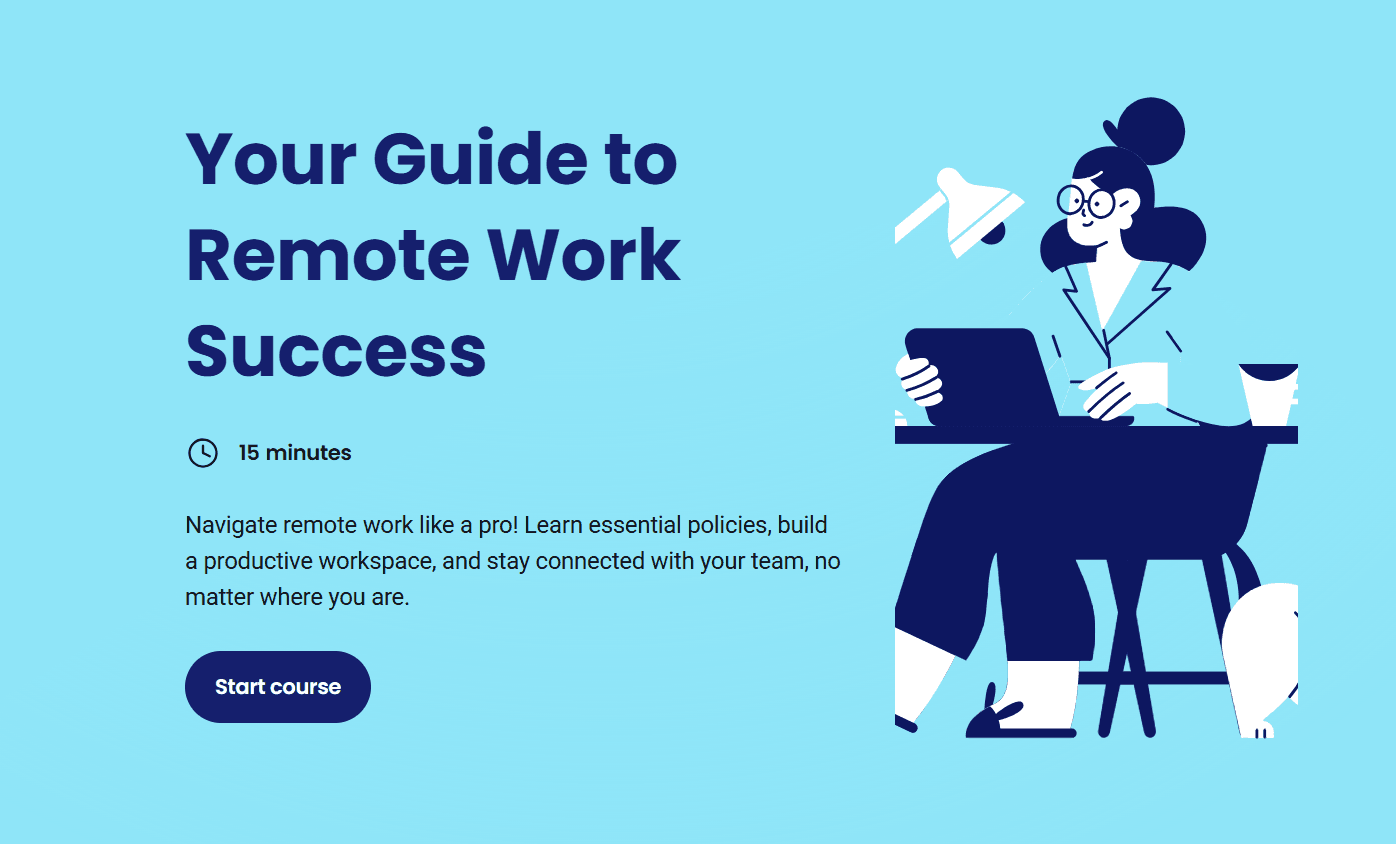
Most organizations already have a remote work policy, but it usually sits in a PDF, unread and outdated. Managers might know it exists, but few can apply it in their day-to-day.
With Coassemble’s AI Create, you can turn that same policy into a Slack-ready training experience. Instead of a wall of text, managers get short, interactive lessons. For example, a course module can walk them through:
How to organize project updates in the right channel instead of scattering them across threads
When to use status updates to signal availability during deep work blocks
How to give feedback in Slack that encourages progress without creating notification overload
Because the training is shared directly in Slack, managers don’t need separate logins or clunky LMS dashboards. They can open it directly, complete the course in Coassemble on any device, and stay aligned without disrupting their workflow.
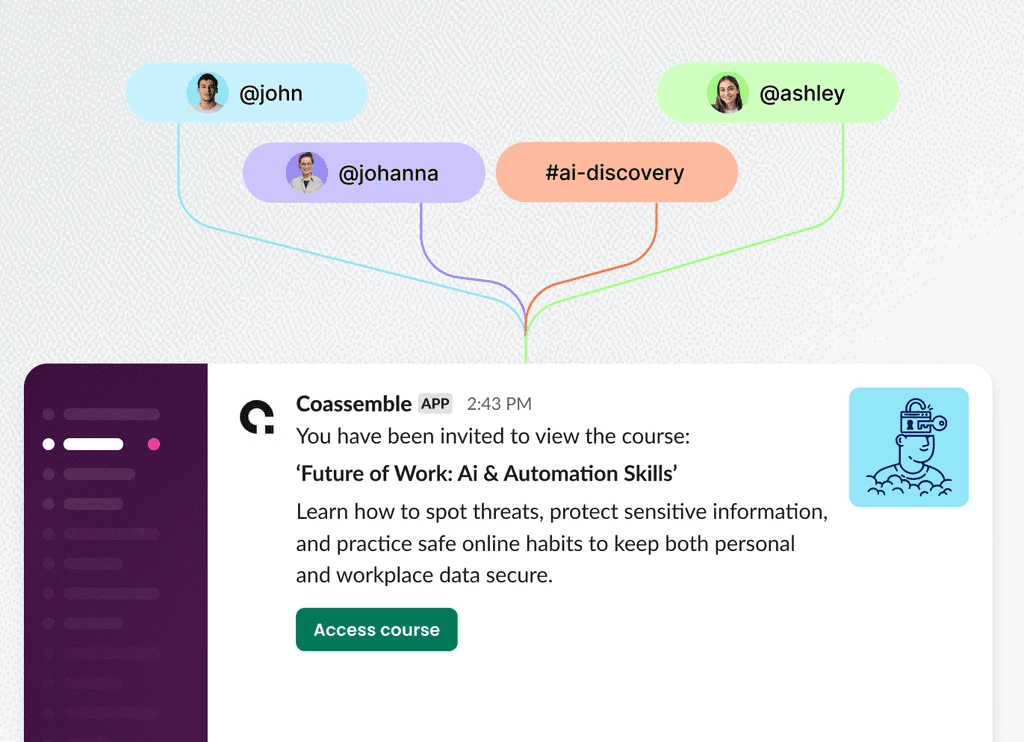
And you’re not blind to how it lands. Coassemble notifies you when a manager starts or completes a course, so you can track adoption in real time and see the impact on employee engagement. You can also gather insights and feedback to refine the content, making sure the remote work policy isn’t just read once but practiced and reinforced.
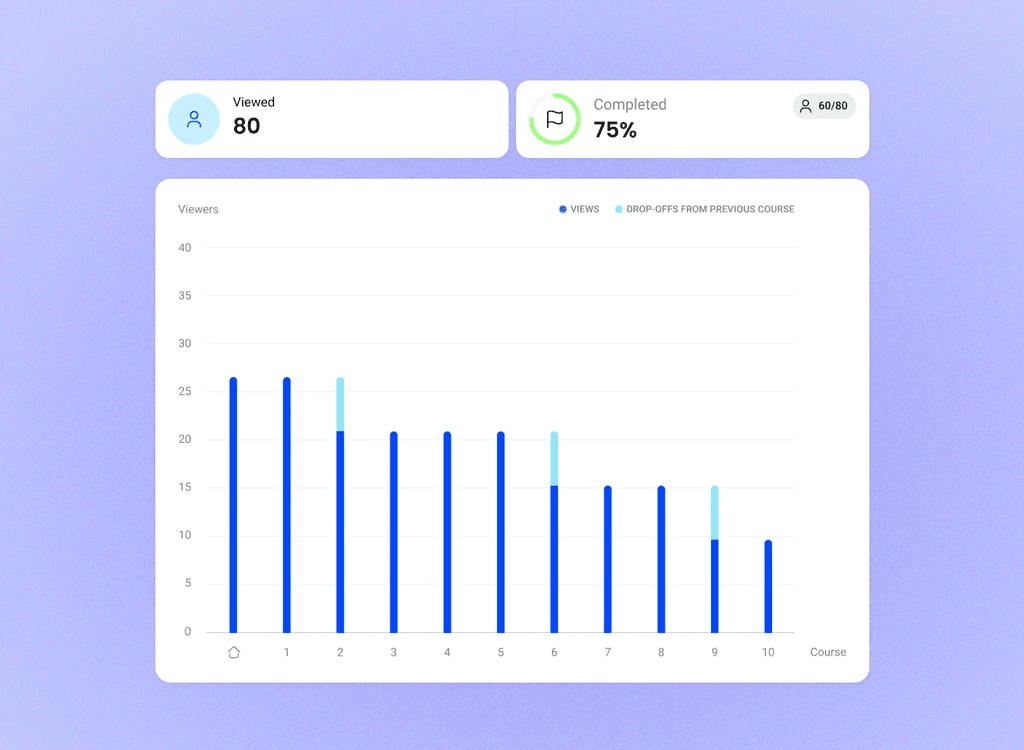
The outcome? A static document becomes an interactive, branded learning experience that scales across your remote workforce. Instead of a policy that sits idle, you create Slack communication training that makes remote management clearer, faster, and easier.
You can also learn more about how to share Coassemble courses with Slack.
Address common pain points through training
These are the common challenges of managing remote employees: notification overload, asynchronous communication, and conflict in text. Training needs to target each one in ways that managers can practice.
For notification fatigue, teach channel structure, threads, muting rules, and response expectations. Teams report that using Slack reduces internal email volume by about 32%, which helps reduce clutter and context switching.
For time zones & async communication, simulate delayed responses and handoffs in training. One survey found that remote work can increase productivity by about 13%, especially when teams adopt clear asynchronous communication practices.
For handling difficult conversations, include role-plays around tone, escalation (DM vs channel vs video), and setting norms for feedback in Slack.
Measure training effectiveness and manager performance
It isn’t enough to run training. You need to monitor its impact.
Track engagement metrics: how many managers complete Slack-based modules or participate in role-plays. Also, survey direct reports for clarity, trust, connection, and how training is influencing overall team performance.
Then, look at tool-usage outcomes to see how Slack features are shaping communication habits. In a hybrid workplace, distributed teams using Slack report a 27% reduction in meetings, which suggests communication becomes more efficient after adopting Slack properly. Training that helps managers leverage those features is also training that strengthens their remote leadership skills over time.
Finally, gather qualitative feedback. Ask what managers and HR professionals supporting them found helpful, what felt missing, and what Slack-specific scenarios still trip people up. Refine your modules based on that.
Wrapping Up
Managing remote teams in Slack isn’t solved with another handbook or a list of tips. It’s solved with training that managers can actually use – training that shows them how to set boundaries, foster accountability, and build culture inside the platform they already work in.
In virtual environments, static resources don’t work. Interactive Slack communication training helps managers stop guessing and start practicing. When managers are working remotely, training ensures teams move faster, stay connected, and build trust.
That’s what Coassemble enables. You already have the knowledge: policies, playbooks, processes. Coassemble helps you transform it into engaging, trackable courses you can share directly in Slack. No clunky LMS, no disruption. Just training that flows where the work happens.
Your team already works in Slack. Start training them there.
FAQs about training for managing remote employees in Slack
How do you manage remote employees in Slack?
Managing remote employees in Slack means setting clear expectations, organizing channels, and building accountability. Training managers on these skills keeps communication structured and culture alive.
How to train remote employees in Slack?
Use a knowledge transfer platform like Coassemble to convert policies and guides into interactive training. Share it inside Slack so employees learn in the flow of work.
What management style can help manage remote employees effectively?
The most effective style for remote team management combines trust with accountability. Managers should focus on outcomes, not micromanagement, while maintaining clear communication norms.
What are the tools to deliver training in Slack?
Slack itself doesn’t deliver training, but integrations make it possible. With Coassemble, you can share courses, track progress, and get insights all without leaving Slack.
Read More


Join the knowledge revolution today
Unlock knowledge. Boost engagement. Drive results
No credit card required

Join the knowledge revolution today
Unlock knowledge. Boost engagement. Drive results
No credit card required
Join the knowledge revolution today
Unlock knowledge. Boost engagement. Drive results
No credit card required