Should we build our own learning infrastructure or buy a headless solution?
Build if learning delivery is core to your product and you have sustained engineering capacity. Buy a headless solution if you need training live inside your product within weeks — and want your team focused on your actual product. Here's how to decide.
Build if learning delivery is core to your product and you have sustained engineering capacity to support it. Buy a headless solution if you need training live inside your product within weeks. A headless buy also frees your team to focus on your actual product.
Build your own learning infrastructure
Building in-house gives you full control over every feature. It also comes with real cost, time, and an ongoing maintenance burden most teams underestimate going in.
Total control over every feature
You shape the data model, the UX, and the feature set exactly to spec. There's no vendor roadmap standing between what you need and what you ship. If a feature doesn't exist yet, you build it on your own timeline.
That control has a flip side. Every decision is now yours to make and maintain, from how progress gets tracked to how content gets versioned.
High upfront and ongoing cost
The average custom software project costs $132,480 and takes about 13 months to deliver, according to Clutch's 2026 pricing data. That's before maintenance, which starts the day the build ships.
Annual maintenance typically runs 15% to 25% of the original build cost, according to industry benchmarks. On a $130,000 build, that's $19,500 to $32,500 a year, every year, for as long as the system runs.
That number covers security patches, dependency updates, and bug fixes. It doesn't cover new features. Adding SCORM support or a translated version next year means a second project, not a line item.
Over a five-year lifespan, that maintenance range alone adds up to $97,500 to $162,500. At the high end, that's more than the original build cost. The build is often the smaller number over time.
Slow time to launch
A custom build typically takes several months from discovery to a production-ready MVP, even for a narrowly scoped first version. That timeline matches Clutch's 13-month average for a full project.
Requirements discovery alone can eat weeks. Then there's data modeling, the actual build, QA, and a security review before anything reaches a real learner. Meanwhile, the problem you needed solved is still unsolved.
Your team owns every bug and update
Standards support like SCORM and completion tracking becomes your team's permanent responsibility, not a vendor's. So does security and compliance. If your product handles regulated data, that responsibility extends into audits your team now owns indefinitely.
This is the part that's easy to underweight during planning. The build is a project with an end date. The maintenance is not.
Buy a headless solution
A headless platform gives you the learning engine — authoring, tracking, and completions — through an API. You keep full control of the front end and trade some control of the engine itself for real speed.
Fast setup, live in weeks
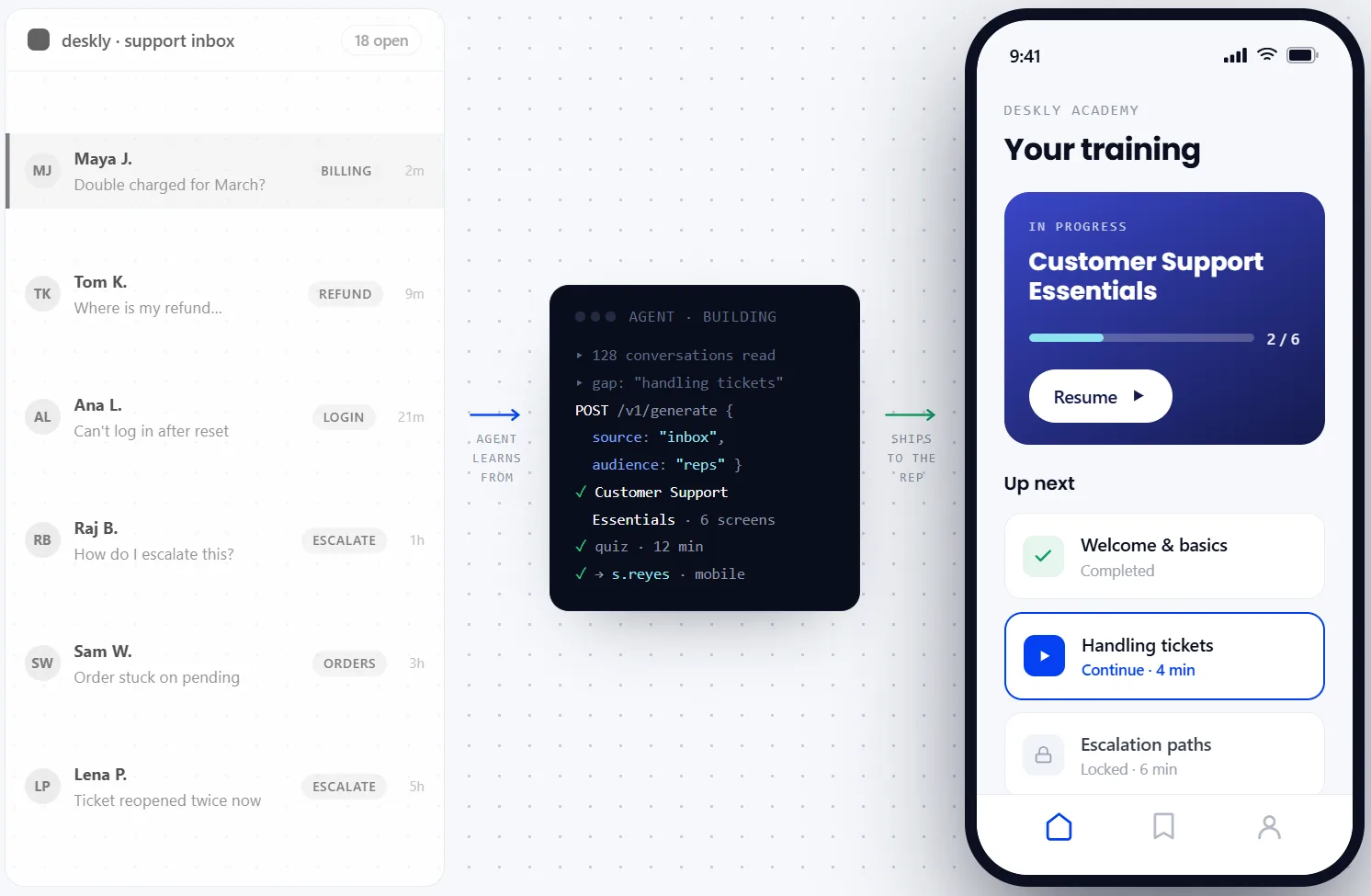
A free sandbox with full API and builder access means you can prototype a real integration before committing to anything. That compresses the evaluation window from months to days.
Because the embeddables ship pre-built, wiring in a working integration is realistic well inside a quarter. You're not designing a data model or a player from scratch. You're calling an API and rendering a signed URL.
Compare that to the 13-month average timeline for a custom software project. Even a lightweight custom build rarely fits within a single quarter once you count discovery, QA, and security review. A headless integration skips most of that critical path.
Predictable, usage-based cost
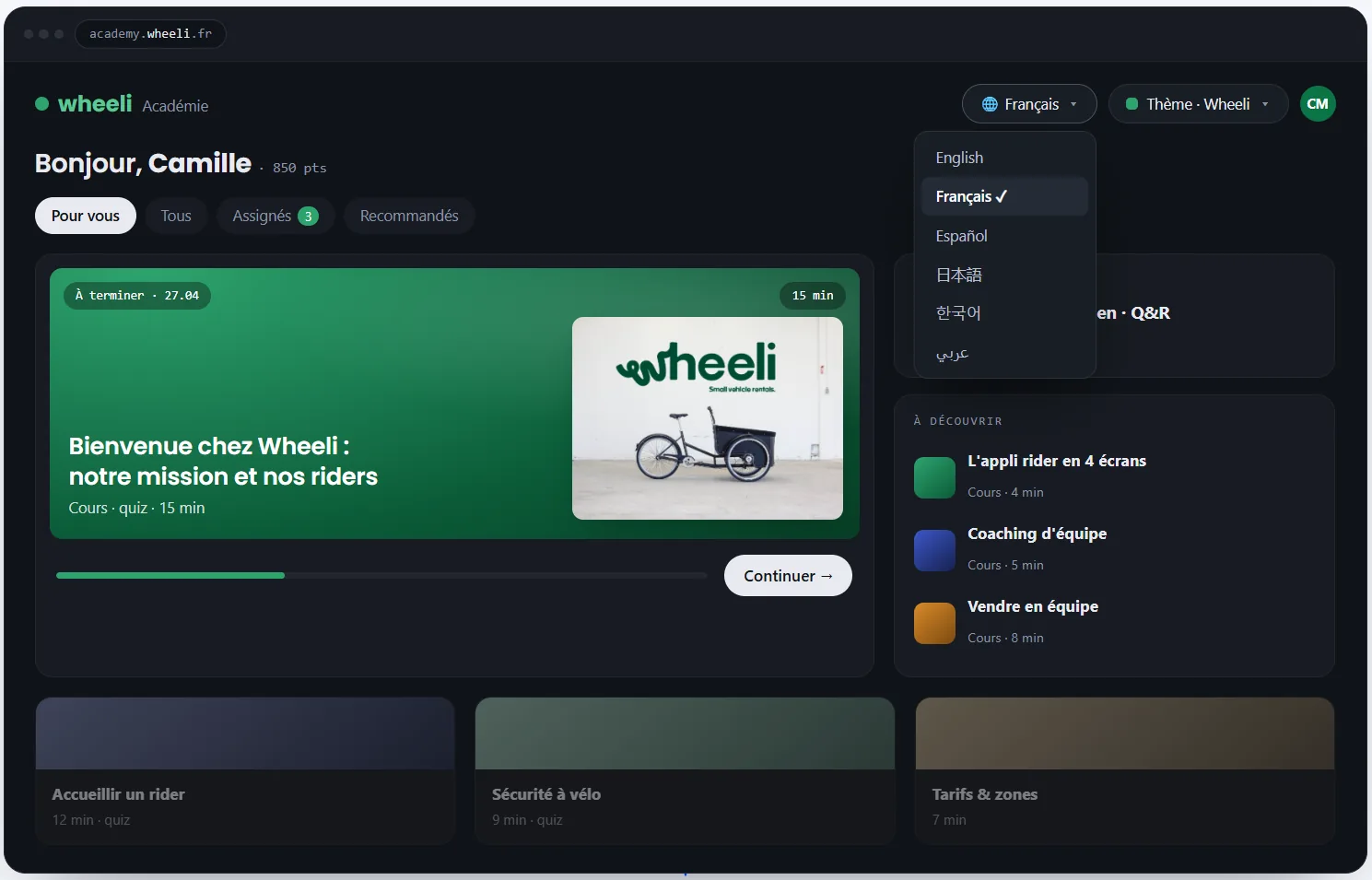
A set monthly or usage-based fee replaces a large one-time engineering spend.
That shift matters beyond the spreadsheet. 91% of IT decision-makers say composable, API-first technology will be instrumental to their organization's success, according to MACH Alliance research. Usage-based pricing is a direct consequence of that same composable approach.
Less control over the underlying engine
You rely on the vendor's roadmap for core platform features, since you're building on someone else's engine. White-labeling and theming close most of that gap in practice.
What you give up is influence over how the engine evolves. What you keep is everything your users actually see and touch.
Flexible front end via API
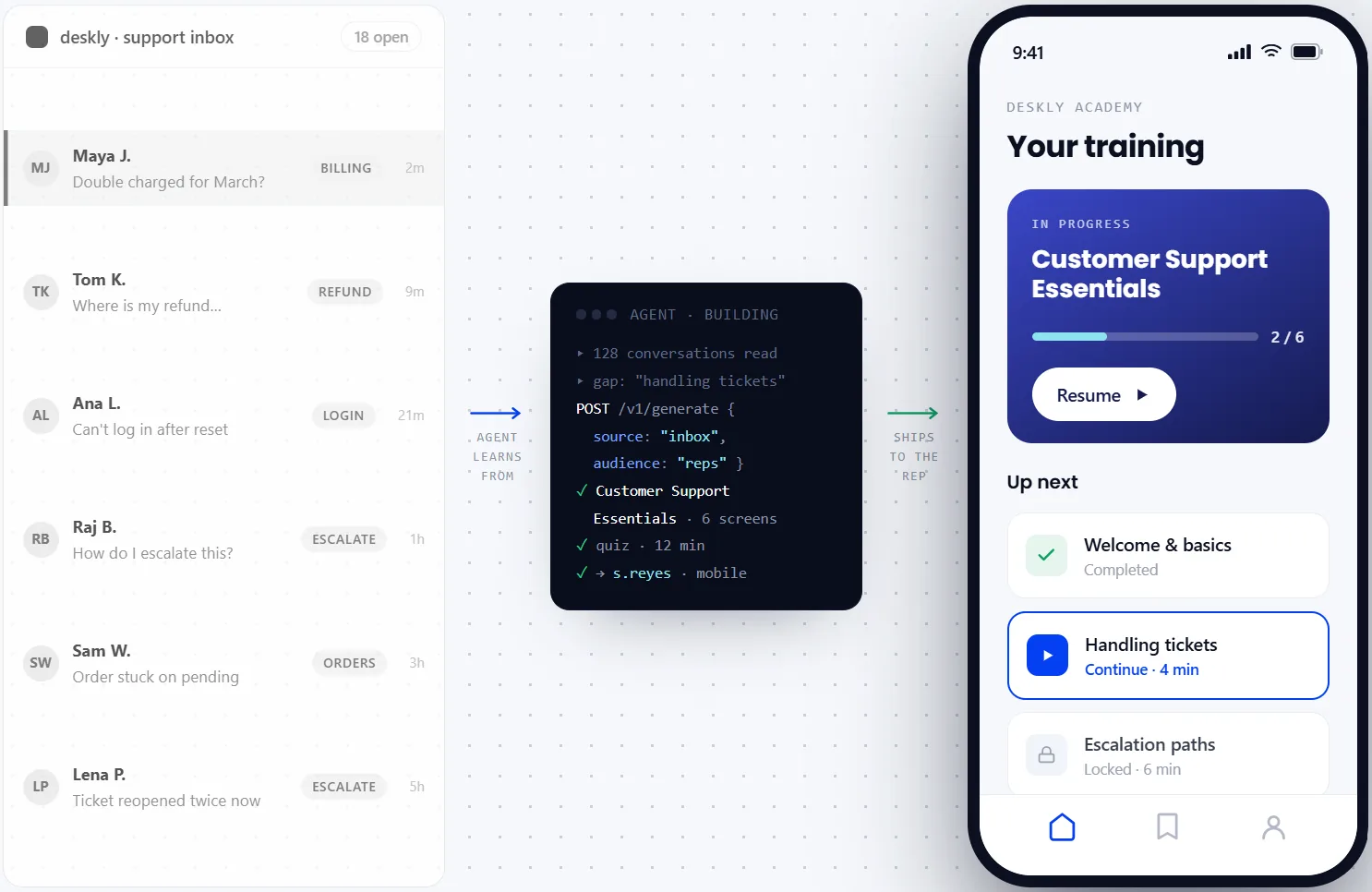
You design any interface you want. The embeddable components render inside your product, themed to your brand, with no separate login and nothing bolted on:
- The Course Player renders any course for your learners, signed per person
- The Course Builder puts the full authoring surface inside your product
- Analytics gives you progress and completion data, piped back to your own systems
You can start with one component, like Coassemble's own live embeddables, and add more as your integration grows.
How to decide which one fits your situation
Choosing between build and buy comes down to three factors: how core learning is to your product, your engineering time to spare, and how fast you need to launch.
If learning is core to your product, building may be worth it
This applies mainly when the learning experience itself is what you're selling, not a feature that supports something else. An EdTech platform whose entire value is its own course engine fits here.
If your product's differentiation lives in the learning mechanics, owning that code gives you a moat competitors can't copy easily. That's a narrow case, but a real one.
If learning supports your product, buying is almost always faster and cheaper
This is the common case. HR platforms, internal tools, customer education programs, and product onboarding all need training as a feature. Learning supports the product; it isn't the product.
For these teams, a headless LMS vendor gets you to production faster than a from-scratch build, at less cost. The build vs buy headless LMS decision usually isn't close. Weigh the 13-month average custom build timeline against a sandbox you can test in days.
Test before committing either way
Prototype before you commit engineering budget to either path. A free sandbox with the full API and builder lets you validate a real integration in days.
Coassemble's sandbox is exactly this kind of test. Request a free sandbox and build the real thing. What you ship from there is entirely up to you.
Match the path to what learning means for your product
There's no universal right answer to build versus buy. The right call depends on your product, your engineering time, and how fast you need to launch.
If learning is what you're selling, building can be worth the cost and the timeline. For everyone else, a headless platform gets you to production faster. Your team stays focused on the product they're meant to be building.
Among the headless learning platform options available, the fastest way to know which path fits is to prototype something real. See what you can build in a sandbox, and let a real test answer the question instead of a spreadsheet.
FAQs: building your own learning infrastructure or buying a headless solution
Should we build our own learning infrastructure or buy a headless solution?
Build if learning is core to your product and you have engineering time to sustain it. Buy a headless solution if you need training live in weeks and want your team focused on your actual product.
What are the headless learning platform options available?
Options range from fully custom builds to headless platforms like Coassemble, which give you an API-driven course engine plus pre-built embeddable components for the player, builder, and analytics.
What's the difference between build vs. buy for headless LMS vendors?
Building gives full control but costs more and takes longer, often a year or more. Buying from headless LMS vendors gets you live faster, at usage-based cost, with less control over the core engine.
How do I decide between building learning infrastructure and buying a headless LMS?
Weigh the learning infrastructure buy vs build question against three factors: how core learning is to your product, your available engineering time, and how fast you need to launch.
What are the current headless LMS architecture vendors in 2026?
LMS architecture vendors offering headless, API-first platforms include Coassemble, which is built specifically for embedding course creation and delivery directly inside another product.
Keep reading
How do I build a customer training academy inside my application?
Most guides tell you to stand up a separate LMS. Here's the other way: build the customer training academy inside the product your customers already use, through an API.
How do I embed interactive courses inside a web application?
iframe, JavaScript component, API-driven signed URLs, or SCORM? Here's how each approach to embedding a course inside your own web app trades off control, security, and effort.
Best practices for building an in-app customer training academy
What separates an in-app academy that gets used from one that gets ignored? Start from content you already have, keep lessons short, match your brand, segment, and trigger training in context.