How do I build a customer training academy inside my application?
Most guides tell you to stand up a separate LMS. Here's the other way: build the customer training academy inside the product your customers already use, through an API.
Search "customer training academy" and every result assumes the same thing. Set up a separate LMS, then send your customers there to learn. That's the old model. It costs you another login for customers to remember. It also means another system for IT to review, and another integration for your team to maintain.
There's a different way to answer the same question. You build the academy inside the product your customers already use. Training lives where they already are, through an API. No new destination or separate platform competing for your customers' attention.
That shift changes what the academy actually looks like and how fast you can ship it.
What is a customer training academy?
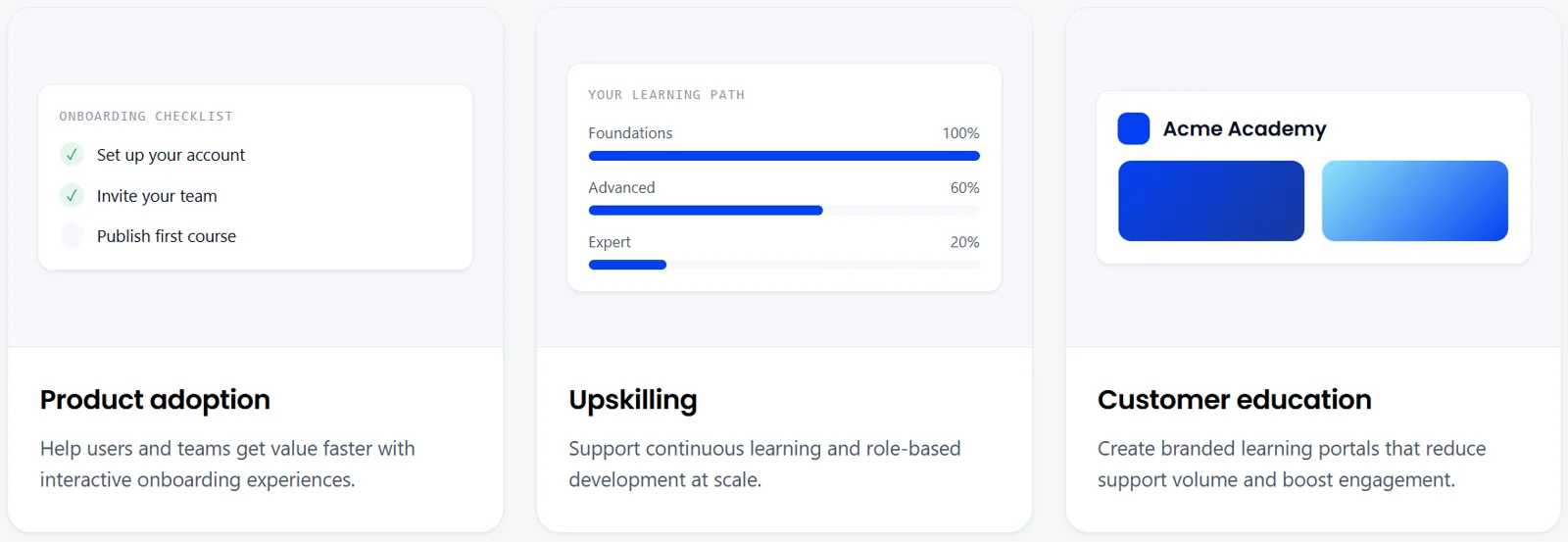
A customer training academy is a structured library of courses that teaches customers how to use your product. Instead of scattered help articles, it groups lessons into a clear, trackable path from first login to full adoption. The strongest academies live inside the product itself with no separate site to find or log into.
Coassemble's own Academy shows what this looks like in practice. A branded portal like "Acme Academy," with a sidebar covering getting started, product basics, admin setup, and certification. Customers move through it at their own pace, and every completion feeds back into your own systems.
Why you need a customer training academy
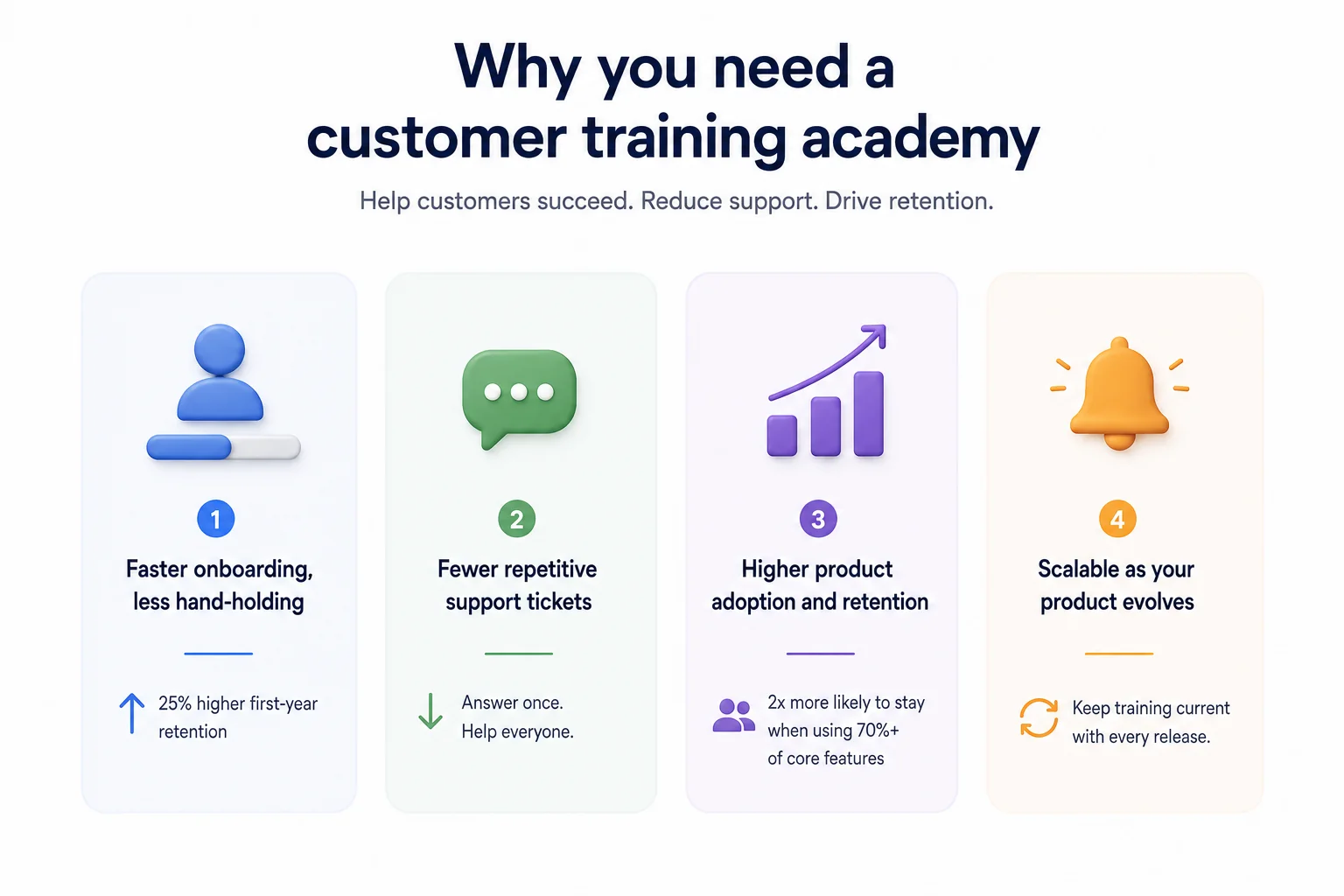
That embedded structure is what makes a customer training academy worth building in the first place. Support tickets pile up when customers can't find answers on their own. A customer training academy fixes that at the source.
Most customers already try to solve problems themselves before reaching out. Higher Logic found that 84% try to resolve issues independently. Another 79% expect businesses to give them the tools to do it.
Faster onboarding, less hand-holding
New customers who understand your product faster start seeing value faster. A guided academy replaces ad hoc onboarding calls with a structured path customers can move through on their own.
Structured onboarding programs boost first-year retention by 25%, according to Wudpecker's 2025 B2B SaaS retention benchmarks. That frees your customer success team from repeating the same walkthrough for every new account.
Fewer repetitive support tickets
Most support tickets aren't new problems. They're the same handful of questions, asked over and over by different customers. An academy answers those questions once, as a course, instead of a rep answering them one at a time. Customers get unstuck immediately, and your team spends less time on repeat explanations.
Higher product adoption and retention
Customers who never learn a feature never use it, and unused features are easy to churn away from. Wudpecker's research found customers using over 70% of core features are twice as likely to stay.
Training tied directly to your product surfaces what's actually available, not just what a customer happens to stumble into.
A scalable way to keep customers current as your product ships
Every release adds something new for customers to learn. Without a system for that, product updates outpace what your customers actually know how to use. An academy built on your own content keeps pace with your release cycle. Training stays current without a manual rebuild each time.
How to build a customer training academy inside your product
Knowing why you need an academy is one thing. Building it without months of engineering work is another. Instead of standing up a separate LMS, you can embed course creation and delivery directly into your own application.
An API-first platform like Coassemble makes that possible, so customers learn without ever leaving your product.
Turn existing docs and onboarding material into courses with AI
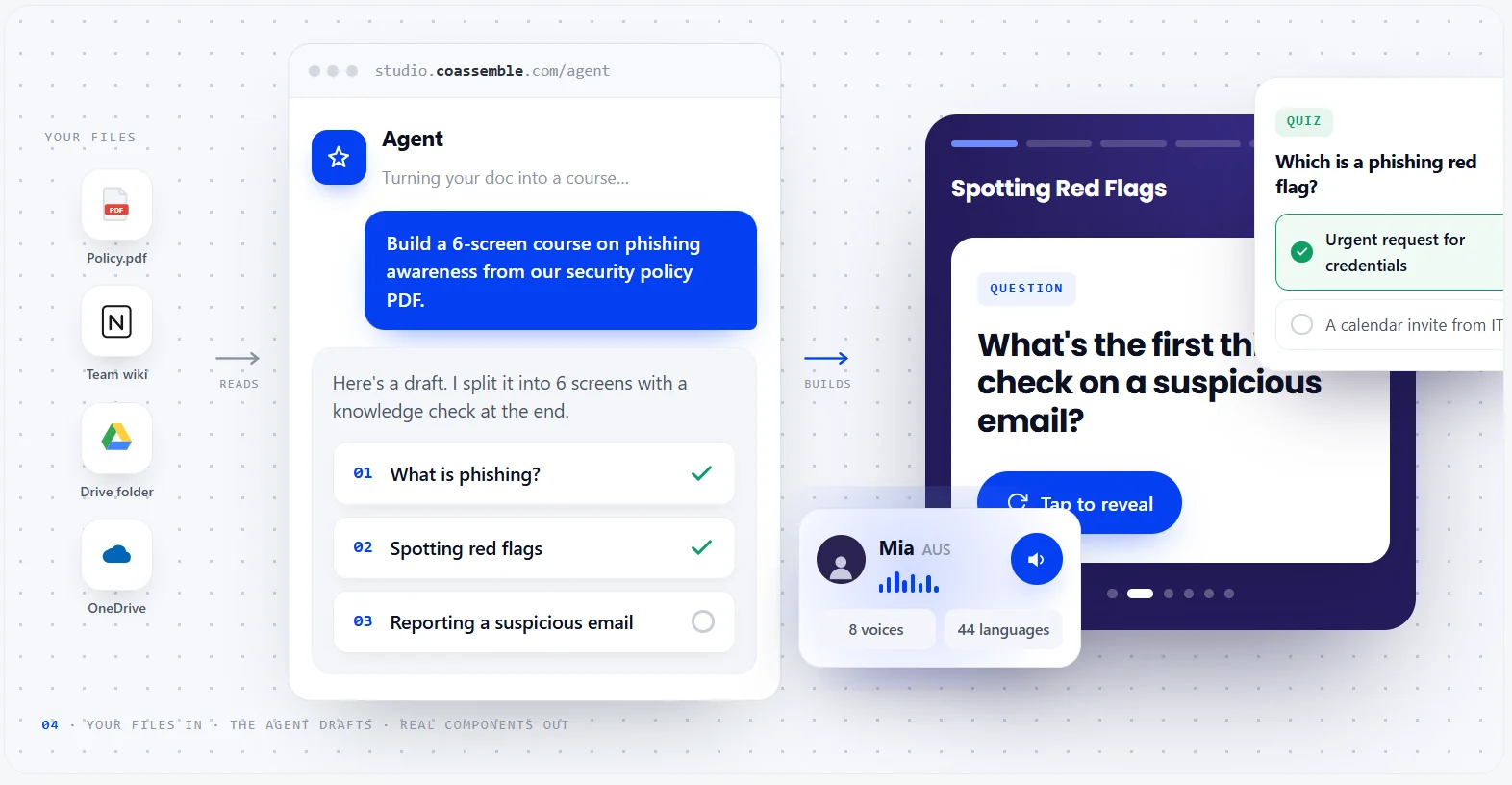
You likely already have the content an academy needs. Help docs, onboarding guides, and release notes can become structured courses without rewriting from scratch.
Coassemble's AI turns that material into courses automatically, so you're not starting from a blank page.
Embed the course player directly in your app
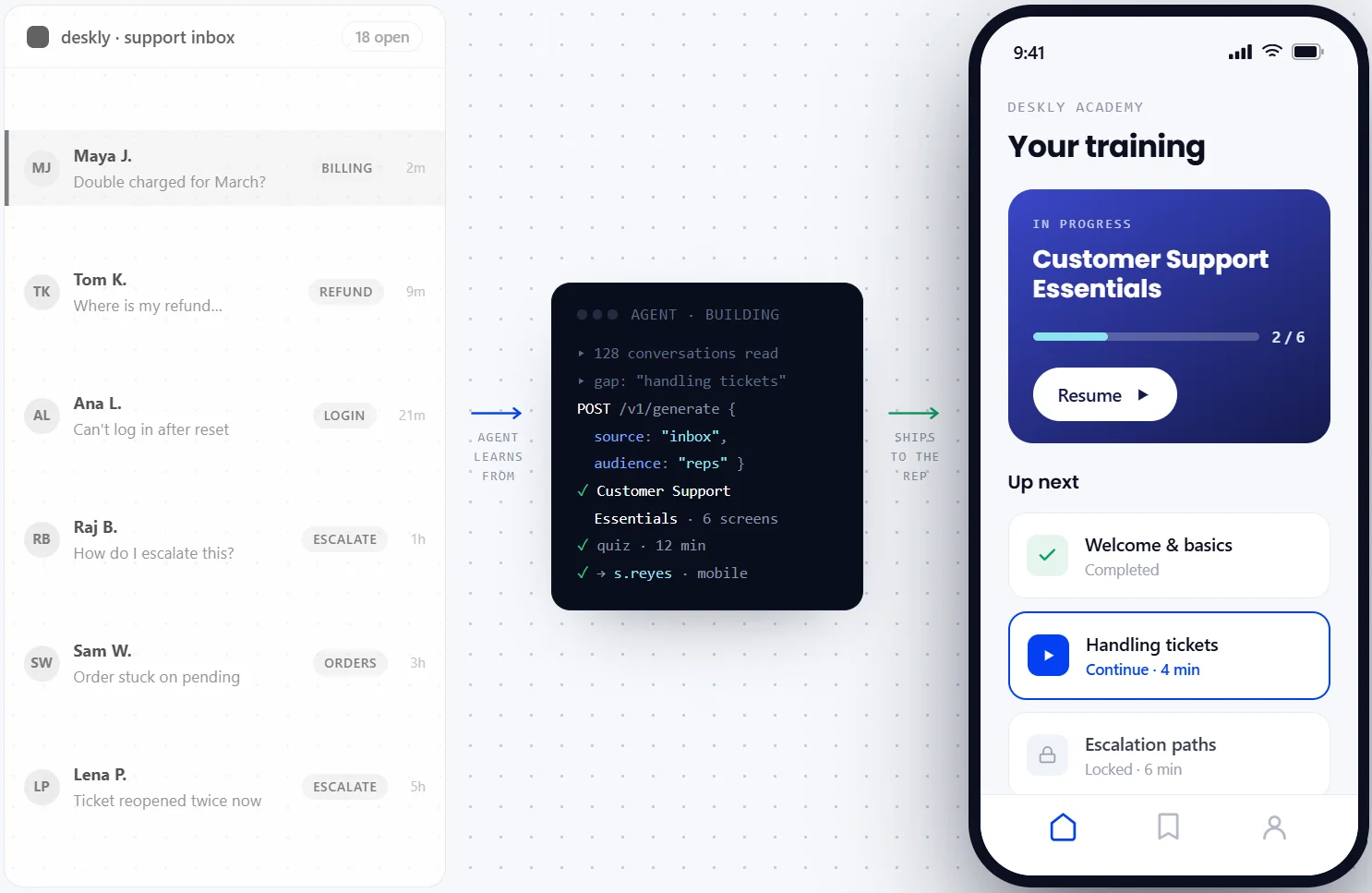
Once a course exists, it needs a home. Coassemble's course player embeddable drops directly into your product with a signed URL and an iframe. Customers see training inside the interface they already know, not a separate tab.
Match your own branding, not a third-party LMS look
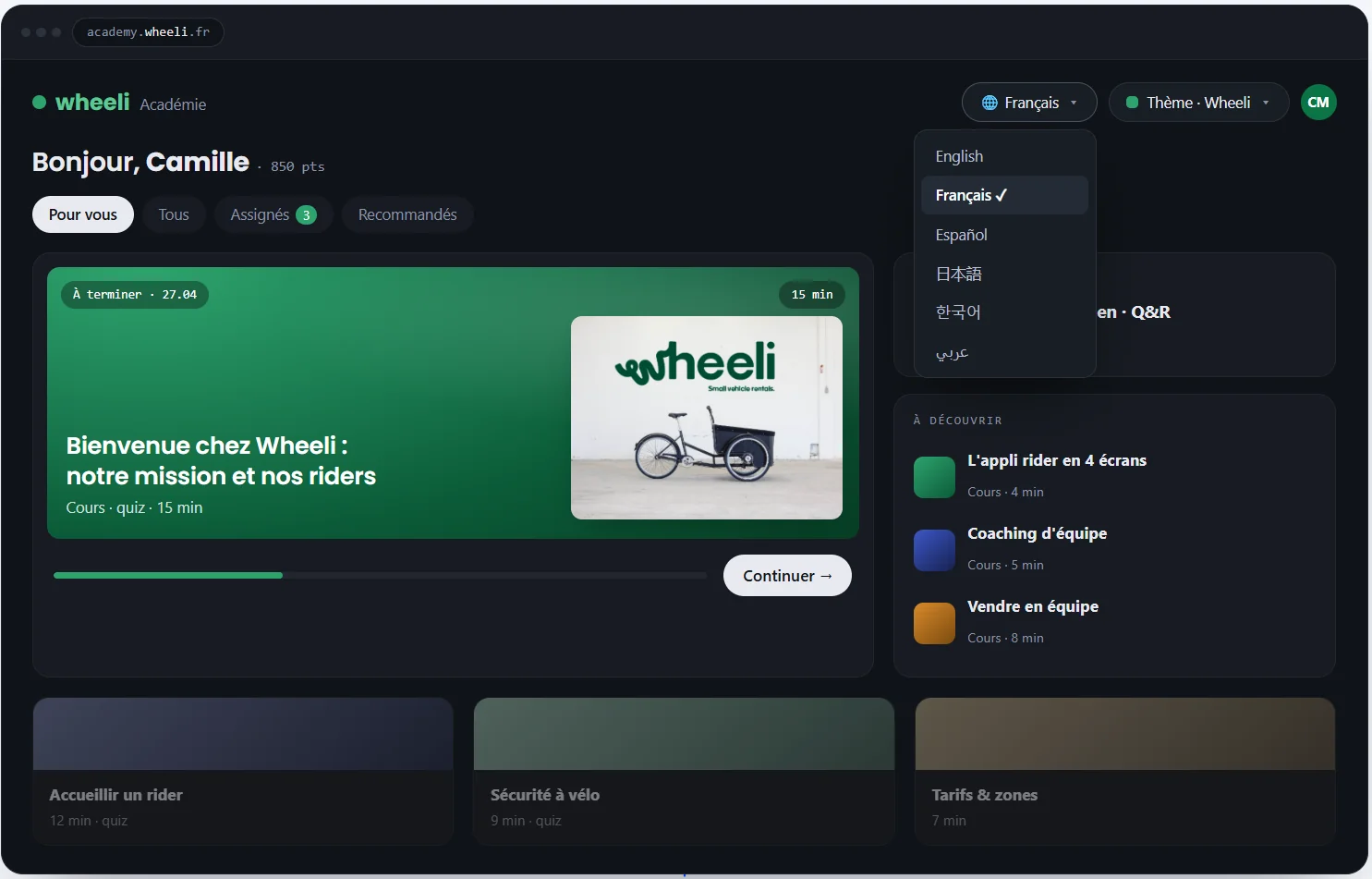
A training academy that looks like someone else's product breaks trust fast. Coassemble's Themes API lets you apply your own colors, fonts, and logo to the embedded player. Customers never see a trace of the underlying platform.
Track completions where your team already looks
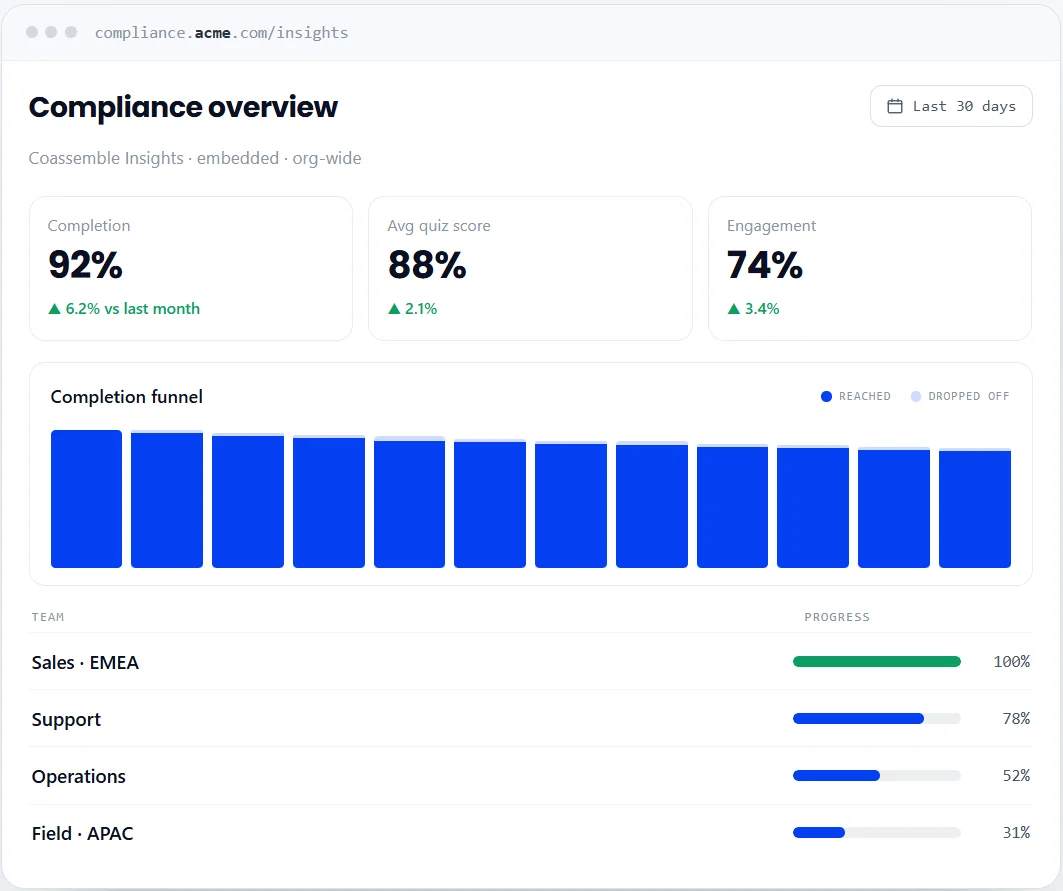
Training only helps your team if you can see who's using it. Coassemble streams completions and progress back to your own systems through webhooks and the tracking API. That data lands in your CRM or dashboard, not a separate reporting tool you have to check.
Start in a sandbox before committing
You don't need to commit to a plan before proving the concept works. Coassemble offers a free sandbox with the full API, builder, and embeddables included. You can build a real course and a real integration before you spend anything.
The academy doesn't need a new address
A customer training academy doesn't have to mean a new destination for your customers to log into. It can live inside the product they already use. Content you already have becomes the course, and completions get tracked where your team already looks.
That's a fundamentally different starting point than the one most guidance assumes. Instead of standing up a separate platform, you're extending the one you've already built.
Ready to see how it fits into your own application? Request a free sandbox and build a real integration before you commit to anything.
FAQs: Building a customer training academy inside my application
How do I build a customer training academy inside my application?
Turn existing docs into courses with AI, embed the course player with a signed URL, apply your own branding, and stream completions to your systems through webhooks.
What are best practices for embedding a customer training academy in-app?
Match your product's branding, keep training close to where customers already work, and track completions against your own data instead of a separate dashboard.
What features does a customer training academy need for a SaaS platform?
Look for an embeddable player, an API for course creation and delivery, webhook-based tracking, and support for your own theming and branding.
How does in-app learning management differ from a standalone LMS?
In-app training lives inside your product through an API, with no separate login. A standalone LMS is a different destination customers have to visit and remember.
Keep reading
How do I embed interactive courses inside a web application?
iframe, JavaScript component, API-driven signed URLs, or SCORM? Here's how each approach to embedding a course inside your own web app trades off control, security, and effort.
Best practices for building an in-app customer training academy
What separates an in-app academy that gets used from one that gets ignored? Start from content you already have, keep lessons short, match your brand, segment, and trigger training in context.
Should we build our own learning infrastructure or buy a headless solution?
Build if learning delivery is core to your product and you have sustained engineering capacity. Buy a headless solution if you need training live inside your product within weeks — and want your team focused on your actual product. Here's how to decide.