How AI can fix your documentation problem: From messy docs to knowledge sharing
Every team has that one doc. The outdated one. The messy one. The one buried in a folder called “Final_v3_UseThisOne”. It’s more than a nuisance—it’s a business risk. When documentation is unclear, outdated, or hard to find, knowledge gets stuck. Employees spend significant amounts of time searching for information or asking coworkers for help, leading to wasted hours and reduced productivity. And when knowledge gets stuck, things break: onboarding slows, mistakes multiply, support tickets pile up, and teams waste hours reinventing the wheel. The good news? AI can fix it. Fast.
Outdated PDFs. Slack threads no one can find. Google Docs that haven't been touched since 2022. Sound familiar?
Poor documentation doesn't just slow teams down. It creates inconsistency, frustrates new hires, and quietly costs the business every single day. And with knowledge scattered across multiple documents, drives, and tools, the problem compounds fast.
AI-powered documentation changes that. Instead of rebuilding from scratch, you can use artificial intelligence to turn what already exists into structured, shareable, trackable knowledge fast. No manual input. No starting from zero.
In this article, we'll cover:
- Why documentation breaks down in the first place
- What AI-powered documentation actually is
- How it works in practice
- How Coassemble helps you put knowledge in motion
Why documentation fails, and what it costs
Poor documentation isn't just a formatting issue. It's a flow issue. And it affects everyone.
- New hires spend weeks piecing together business processes through Slack threads and shadowing
- Support teams answer the same questions again and again
- Product teams get blocked waiting for context or standard operating procedures
- Operations teams risk compliance issues when steps are outdated
According to the KM World Survey Report, 47% of professionals spend one to five hours every day searching for specific information. And 54% of organizations use more than five different platforms to document and share knowledge, which makes the problem worse.
When knowledge is scattered across process documents, drives, and tools, it doesn't just slow teams down. It stays trapped. And the business pays for it quietly, every day.
Challenges of documentation with knowledge-sharing tools
Most teams don't have a documentation problem. They have a documentation everywhere problem.
Knowledge lives in Notion. Processes sit in Google Drive. Updates get buried in Slack. And somehow, the most important information ends up in someone's head. Or worse, their inbox.
Even when tools exist to help, they create new challenges:
- Content goes stale fast. Updates happen, but docs don't. Teams end up working from outdated information without realizing it.
- Knowledge stays siloed. What one team knows rarely reaches the teams that need it most. Team collaboration breaks down when knowledge isn't accessible to everyone.
- Creation bottlenecks slow everything down. Building structured documentation and maintaining professional documents takes valuable time that most teams don't have.
- Engagement is low. Long, static documents don't get read. They get skimmed or skipped entirely.
The tools were supposed to fix the problem. But adding more platforms often just adds more places for knowledge to get lost.
What teams actually need is a way to turn scattered documentation into something structured, accessible, and easy to act on, with shareable links that reach people wherever they work.
What is AI-powered documentation?
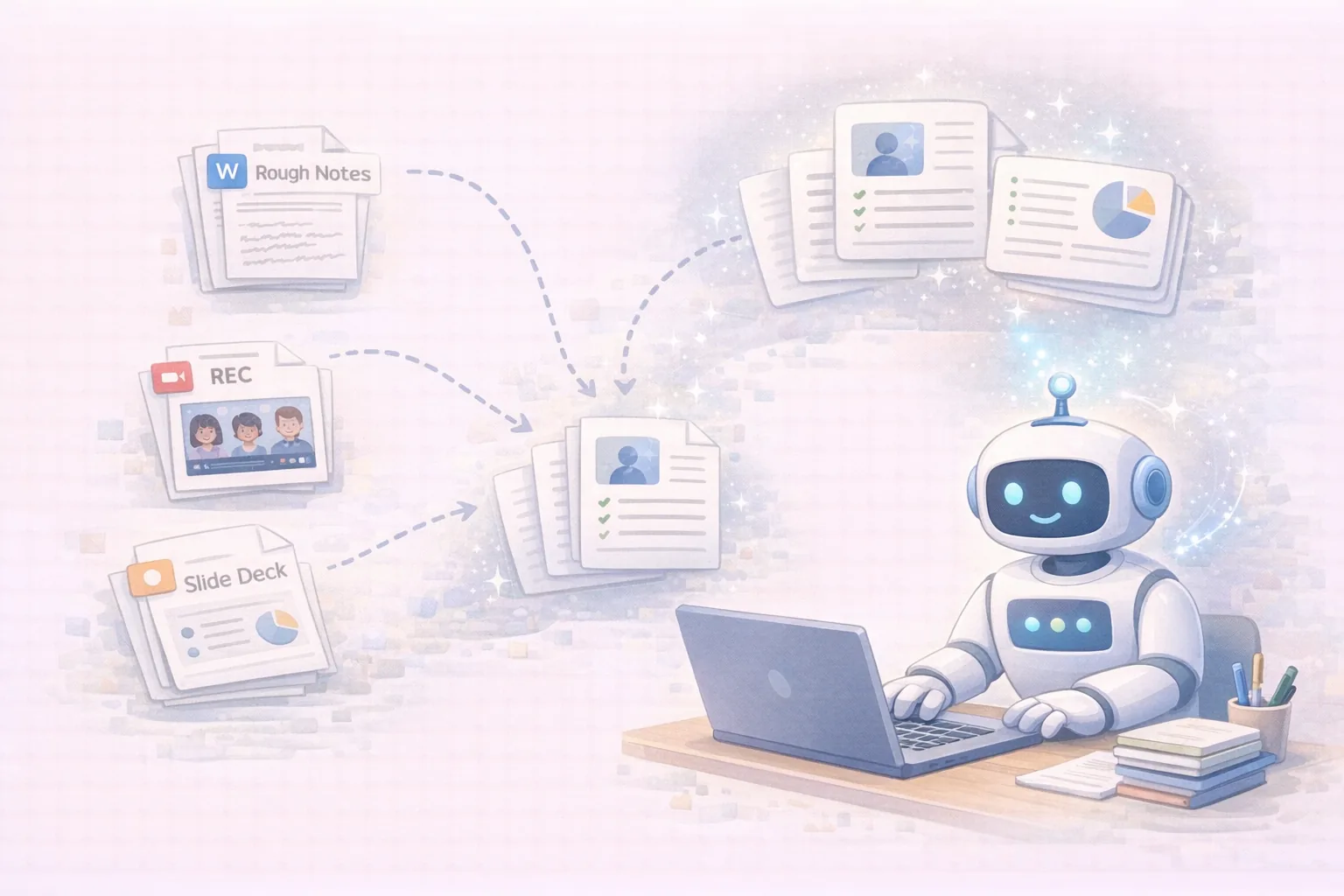
AI-powered documentation is the process of using artificial intelligence to create, organize, update, and share knowledge automatically.
Instead of starting from a blank page, AI can take what already exists (like a messy Word doc, a recorded meeting, a slide deck) and turn it into something structured and usable. Think of it as an AI document generator that works from your existing content.
It's not about replacing the people who hold the knowledge. It's about removing the friction that stops that knowledge from reaching everyone who needs it.
AI-powered documentation can:
- Convert raw content into structured, readable formats
- Identify gaps in existing knowledge bases
- Suggest updates when content becomes outdated
- Organize knowledge so it's easy to find and act on
- Generate professional documents and step-by-step instructions automatically
The result is knowledge that moves. Through teams, across tools, and into the hands of people who need it, without the bottlenecks.
For a deeper look at how this plays out across distributed teams, see our guide to knowledge transfer strategies for remote teams and what knowledge sharing actually looks like in practice.
How does AI-powered documentation work?
Here's what AI-powered documentation looks like in practice:
- Input your existing content. Upload a document, connect files from Google Drive or OneDrive, or drop in multiple documents at once. The AI reads and analyzes what's there.
- AI structures the content. The tool identifies key features of your content, organizes it logically, and fills gaps where context is missing. No manual formatting required.
- Output becomes interactive. Instead of a static document, you get something people can actually engage with: step-by-step instructions, branded training modules, or searchable standard operating procedures.
- Updates stay simple. When business processes change, you update once. Changes flow through instantly, so teams are always working from the latest version. No common issues with version confusion or outdated files.
The biggest shift? Documentation stops being a task someone has to own. It becomes something the whole team can contribute to, access, and trust.
If your team uses Slack, you can take this further. Here's how to turn Slack into a learning hub so knowledge reaches people right where work happens.
How to use Coassemble with your documentation
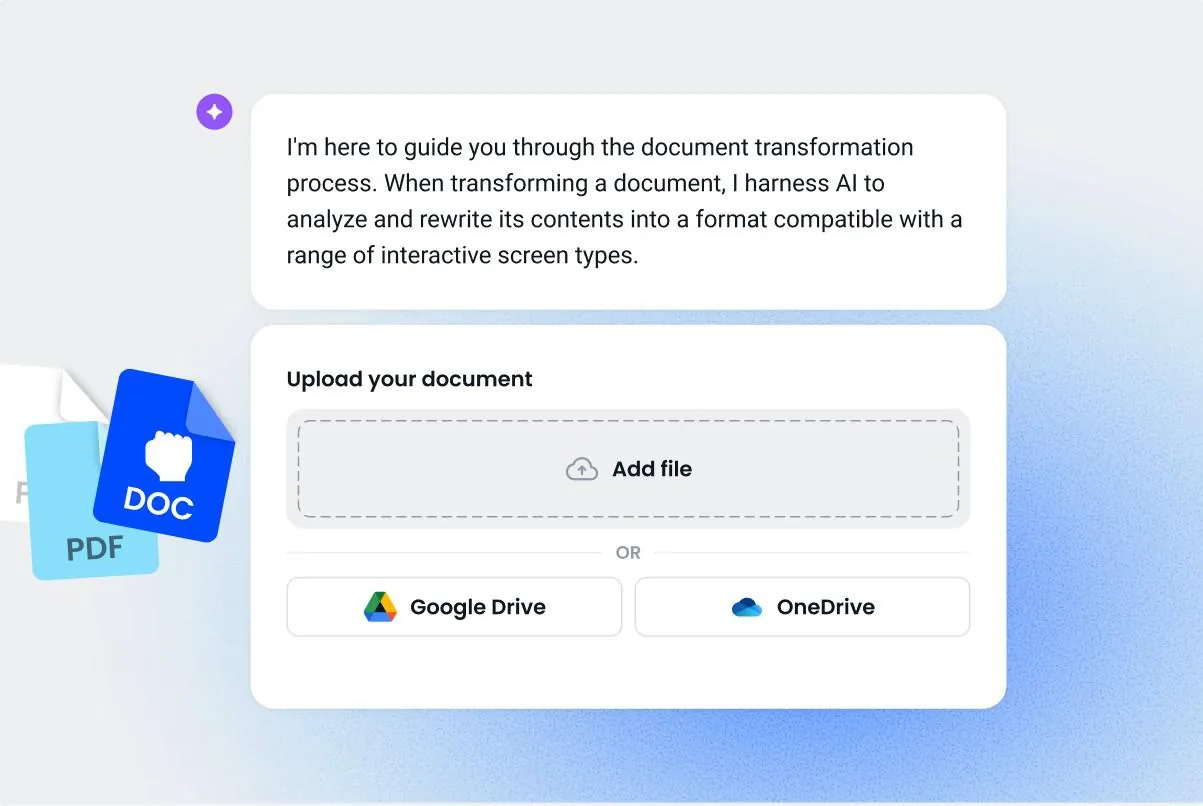
Coassemble is a knowledge transfer platform built for teams who need to move knowledge fast, without building from scratch or managing complex systems.
It works as a document AI that transforms what you already have (user manuals, technical documentation, comprehensive documentation packages) into interactive training in minutes. Upload a PDF, a Google Doc, or multiple documents at once, and Coassemble handles the rest.
Share training directly in Slack via shareable links, or embed it inside the tools your team already uses. And with the built-in Loom integration, you can record and drop video directly into any course. No downloading or switching apps.
For teams wanting to get more from video training, here's how Loom and Coassemble work together.
Real-life example: putting AI-powered documentation to work
The best way to understand AI-powered documentation is to see what it produces.
With Coassemble, they upload what already exists and, within minutes, have a structured, branded course ready to share. Like this sample course built using Coassemble: Sales Rep Onboarding: Foundations for Success. It covers everything a new rep needs for their first 90 days. From understanding the sales process to organizing their day and working effectively with the team.
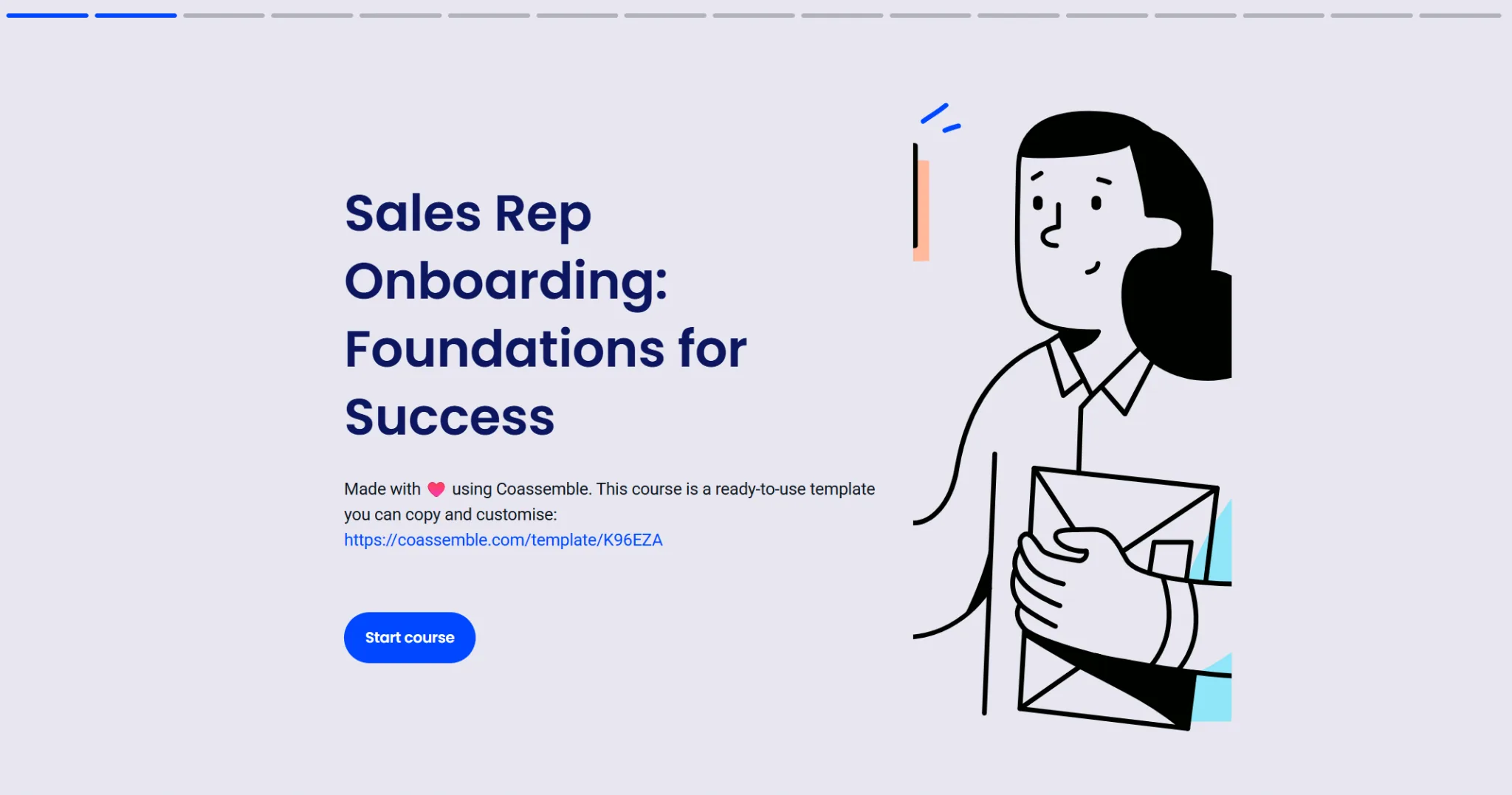
Every new hire moves through the same consistent experience. Managers stop repeating themselves. Reps ramp up faster. And when the process evolves, one update keeps everyone current.
That's the difference between documentation that sits in a folder and knowledge in motion.
How to reduce outdated documentation with AI
Outdated documentation doesn't happen overnight. It builds up slowly: one unupdated SOP, one process change that never made it into the handbook, one PDF nobody remembers editing.
Here's how to stay ahead of it:
- Audit what you have before you build anything new. Start by identifying what documentation exists and where it lives. A quick audit reveals what's current, what's stale, and what's missing entirely.
- Assign ownership to every piece of content. Every SOP, guide, or training module should have a named owner responsible for keeping it current. Documentation goes outdated when nobody owns it.
- Build updating into your workflow. The best teams treat process documents like a living part of how the business operates. AI-powered tools like Coassemble make this simple. One change updates every version instantly, saving time across the board.
- Start with your highest-traffic knowledge. Prioritize the content teams use most: onboarding guides, sales playbooks, and standard operating procedures. These are the assets where outdated information causes the most damage.
- Use analytics to spot what's being ignored. If nobody is engaging with a piece of content, it's either hard to find or no longer relevant. Coassemble's built-in analytics show you exactly where knowledge is landing, and where it isn't.
Your knowledge is ready. Now move it
Your team already has the knowledge. It's just not moving the way it should.
Scattered docs, outdated PDFs, and processes that live in someone's head – these aren't just inconveniences. They slow teams down, create inconsistency, and make it harder to grow.
AI-powered documentation changes that equation. Not by adding another platform to manage, but by giving teams an AI-powered solution to generate, organize, and share the knowledge they already have: structured, searchable, and easy to keep current.
Coassemble is the knowledge transfer platform that turns messy documentation into interactive training. Built for teams who already have a mandate to solve the problem and need something that works inside the tools they already use.
Start with what you have. Share it where work happens. Watch knowledge move.
FAQs on how AI can fix your documentation problem
How to reduce outdated documentation with AI?
Assign ownership to every document, build updates into your workflow, and use an AI-powered platform like Coassemble to push changes instantly across all versions. Start with your highest-traffic content first to simplify the process and save time.
Can I use AI for documentation?
Yes. AI-powered tools can automate documentation generation from existing files (docs, PDFs, images, and slide decks), turning common documents into structured, interactive training. No instructional design experience needed.
What is the AI that can generate documents?
Several AI tools offer automated documentation generation and document creation. Some are free AI document generators suited to basic writing tasks. Coassemble goes further; it's an AI-powered platform that transforms existing knowledge into interactive training that teams can manage, share, and update in real time.
Keep reading
How do I build a customer training academy inside my application?
Most guides tell you to stand up a separate LMS. Here's the other way: build the customer training academy inside the product your customers already use, through an API.
How do I embed interactive courses inside a web application?
iframe, JavaScript component, API-driven signed URLs, or SCORM? Here's how each approach to embedding a course inside your own web app trades off control, security, and effort.
Best practices for building an in-app customer training academy
What separates an in-app academy that gets used from one that gets ignored? Start from content you already have, keep lessons short, match your brand, segment, and trigger training in context.