Best White-Label LMS for Embedding in My Platform
Most 'best white-label LMS' lists rank the same thing: logo swaps, custom domains, branded certificates. That's fine if you're rebranding someone else's delivery platform. It's the wrong checklist if you're a technical lead trying to embed course creation inside a product you're already building. Here's what to check instead.
Most "best white-label LMS" lists rank the same thing: logo swaps, custom domains, branded certificates. That's fine if you're rebranding someone else's delivery platform for your learners. It's the wrong checklist if you're a technical lead trying to embed course creation inside a product you're already building.
A white-label LMS platform and an embeddable one solve different problems. Here's what to check before choosing between them.
What does white label mean for an LMS?
A white-label learning management system (LMS) — also called white-label LMS software — is training software you can fully rebrand as your own:
- Logo
- Domain
- Colors
Learners won't see vendor branding. Not every platform delivers on that promise the same way. Some rebrand only the learner-facing screens. Others extend branding to certificates, emails, and even the builder itself.
The concept isn't unique to training. In short, a white-label website (or app) is any product built on a vendor's platform but presented entirely under your own brand, so users only ever see you. A white-label LMS applies that same idea to training.
What should you evaluate before choosing a white-label LMS?
Choosing a white-label LMS means weighing more than branding. It's also important to consider integration, standards support, developer experience, security, and pricing. Here's each signal, and what separates a platform built to be embedded from one that's merely rebrandable.
Branding depth: cosmetic vs. complete
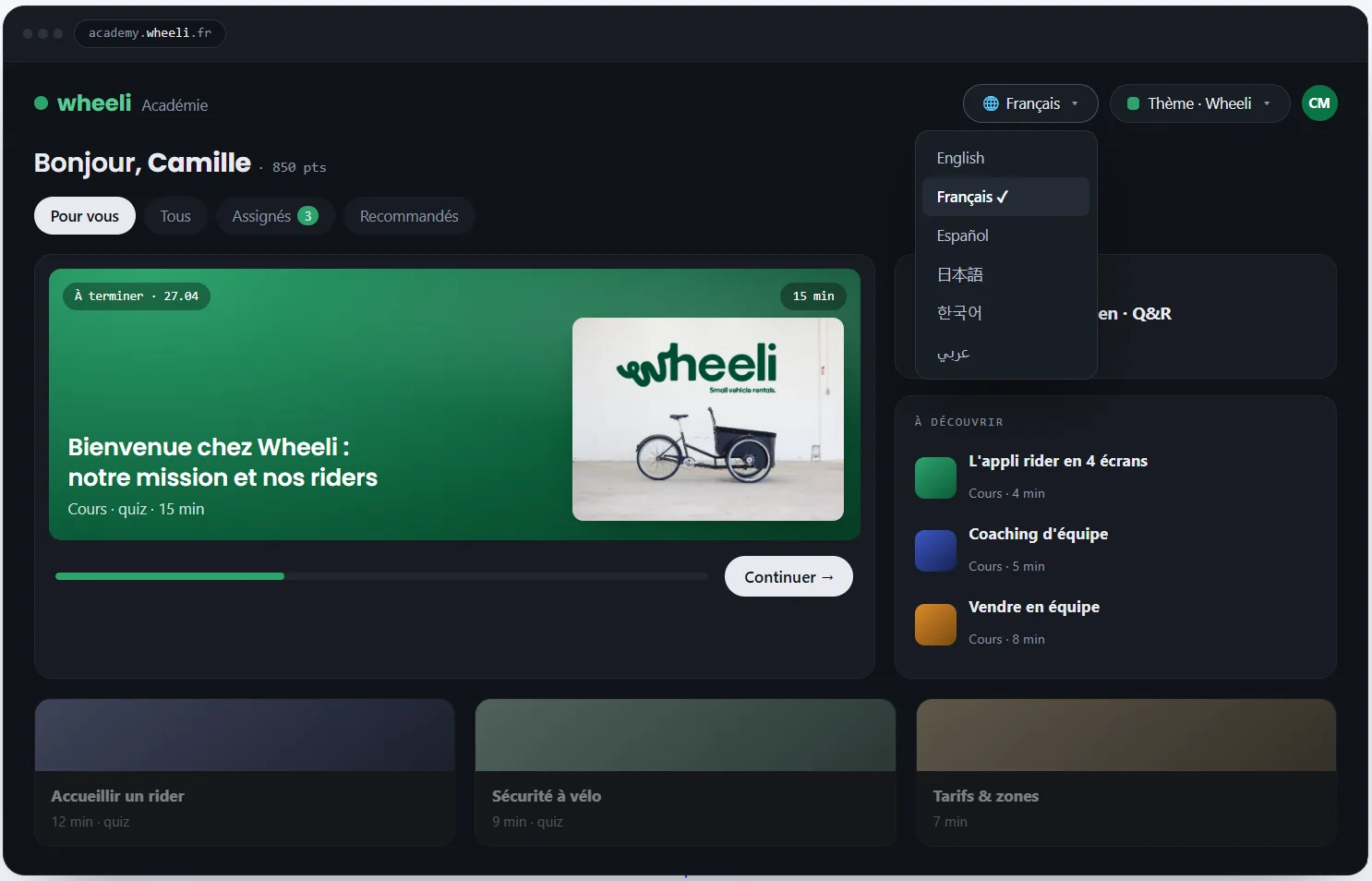
Start with branding itself. Logo and color swaps are table stakes. Almost every vendor offers that much.
The real test goes further. Does branding carry through to certificates learners download? To the emails your system sends? To the dashboard itself, and not just the learner-facing screens? Some platforms even let you white-label the builder, so the people creating training never see the vendor's interface either.
For example, picture a CS lead building onboarding content for a client's product. If the builder still shows another company's logo in the corner, the client notices even if nothing else is wrong. That's a meaningfully different commitment than a logo upload field.
Can it embed creation, not just delivery?
That branding gap is worth checking, but it isn't the biggest one.
Most white-label LMS platforms only rebrand where learners consume content. Someone still has to leave your product to build content elsewhere, then bring it back in. That handoff creates a second tool your team has to maintain.
An API-first, embeddable course creation layer removes that step. Authors build training inside your platform, using your interface, without ever touching the vendor's dashboard.
According to Training Retention Statistics 2026, training embedded in an existing workflow can lift retention by up to 35%. It's easier to track and revisit than content living somewhere separate.
xAPI and SCORM support
That creation-vs-delivery gap matters for one more reason: interoperability. xAPI and SCORM are the two standards that let training data move between systems.
SCORM tracks whether a learner completed a course and their score, then reports that back to an LMS. It's older and widely supported, which makes it useful for exporting content to systems you don't control.
On the other hand, xAPI tracks more granular activity. It can capture time spent per section, quiz attempts and correctness, and video interactions (like pausing or replaying). It can send that data to multiple systems at once, not just one dashboard.
Check which standards are actually supported, not just mentioned on a features page. That matters most if your platform needs to ingest data from elsewhere, or export it to a client's own LMS.
Integration with your existing stack
Standards support gets data moving between systems. You also need a direct line into the specific stack your team already runs.
Check whether completions and progress can be piped out via webhooks into your HRIS, CRM, or data warehouse. A platform that only shows progress inside its own dashboard forces your team to check two places instead of one.
Look for a documented tracking API, not just a reporting UI. That's what lets your existing systems stay the source of truth, instead of the training platform becoming another silo.
Developer experience and time-to-integration
A tracking API is only useful if your team can actually work with it. That's where developer experience becomes the deciding factor.
Look for clean, public documentation you can read before talking to sales. A no-card sandbox matters too. It lets your team test the integration against real code before any commercial conversation starts.
Beyond that, check how authentication actually works. A signed-embed-URL flow, where you authenticate, request a URL, and render it, is a common pattern worth looking for.
Ask what a realistic integration timeline looks like. Weeks, not months, is the mark of a platform built to be embedded instead of bolted on.
Security and enterprise readiness
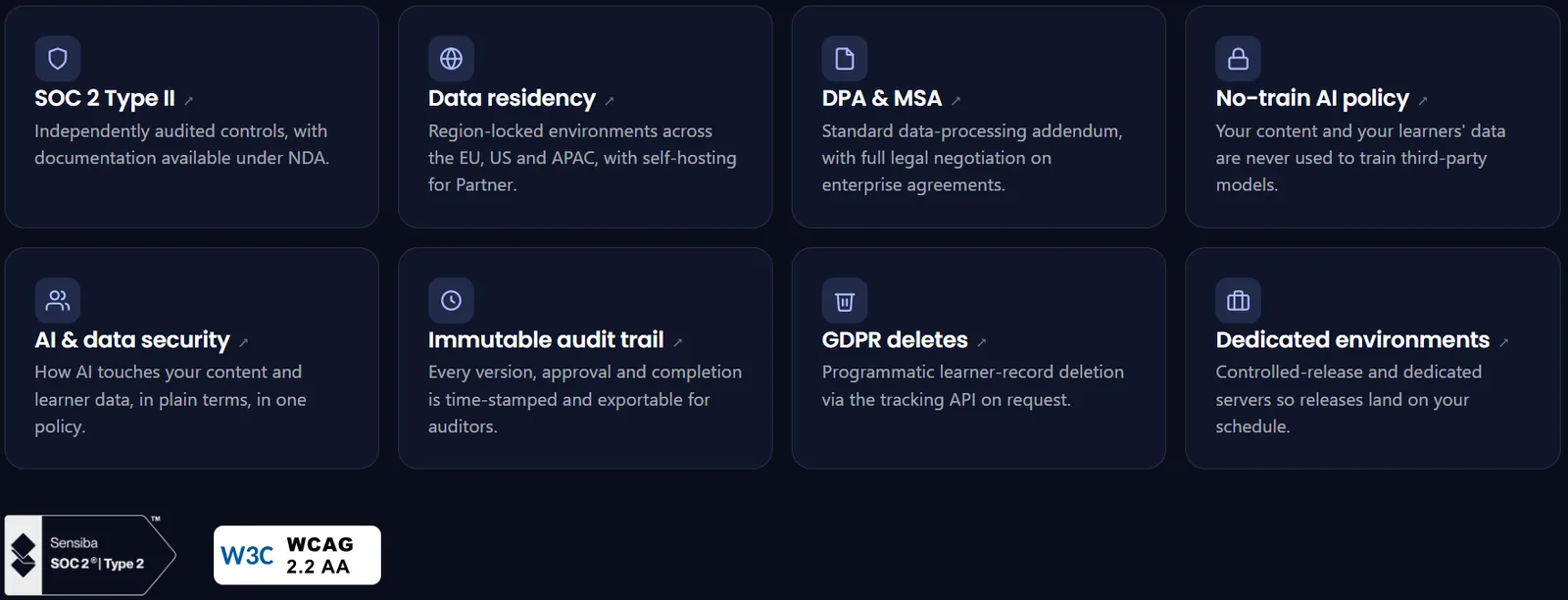
A fast integration doesn't matter if the platform can't survive procurement review. Security is what determines whether a pilot ever becomes a rollout.
Check for SOC 2 Type II certification first. It's the baseline most enterprise buyers expect before a vendor even reaches technical evaluation.
Beyond that, look for documented data residency options and a clear policy on how AI features handle your data. An immutable audit trail matters too, since it shows exactly who accessed or changed what, and when.
Most times, none of this shows up in a product demo. It usually shows up when your security team starts asking questions.
Pricing model
Security clears the platform for procurement. Budget review is the next hurdle, and pricing decides how that goes.
Per-learner pricing punishes growth. The more people you train, the more the platform costs, even if usage per learner stays flat.
Usage-based or committed-usage pricing works differently. You pay for what you actually use, and can validate the integration at a small commitment before scaling up. That structure matters most for teams still proving out whether embedding training pays off.
Build vs. buy: why most teams don't build this from scratch
Pricing is one budget conversation. Building the capability yourself is another, much bigger one.
An in-house team building AI-powered course creation from scratch is looking at months of developer time, not weeks. That includes an authoring interface, content storage, tracking, and the AI layer itself.
Aureus Financial faced this exact choice. Rather than build a custom delivery layer, they used Coassemble as the engine behind their own community platform. Members land on a course and complete it without ever leaving or logging in twice.

An API-first platform gives you that same embedded creation layer without the build.
How to embed white-label training with Coassemble
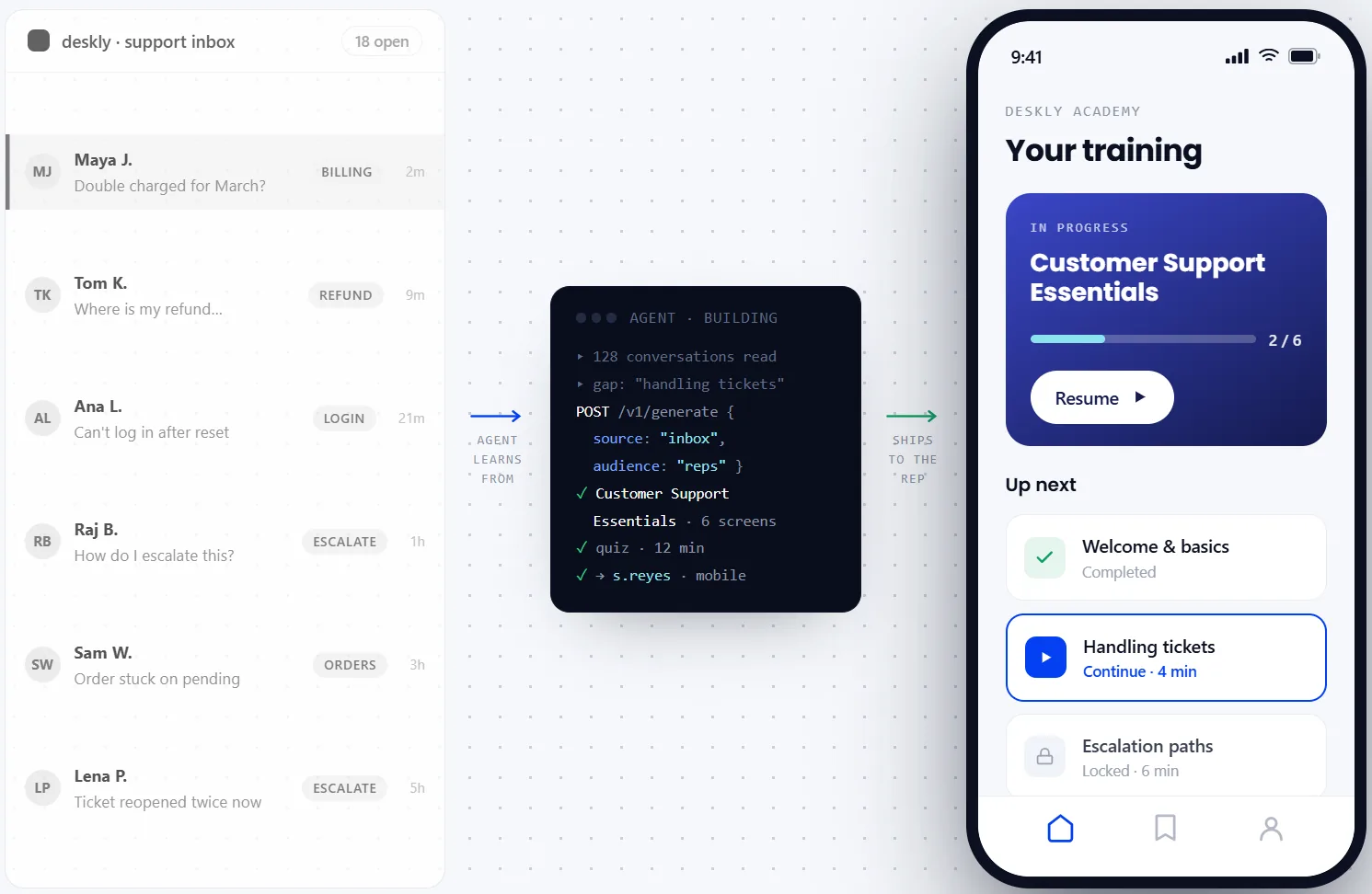
Branding, standards, integration, developer experience, security, and pricing aren't abstract checkboxes. Here's what putting them into practice actually looks like.
1. Start with a free sandbox. Request a no-card sandbox to get full API and component access. It's usually live within a business day, so you can test against your own stack before any commercial conversation starts.
2. Authenticate and embed the components you need. Coassemble ships drop-in components for the player, builder, course list, and analytics dashboard. You authenticate, request a signed URL, and render it, using the developer docs as your reference.
3. Apply your branding through the Themes API. Colors, logo, fonts, and voice can all be set programmatically per tenant through the Themes and Translations API. The authoring interface itself can be white-labeled too, so the people building courses never see Coassemble's branding either.
4. Connect your existing stack. Completion and progress events come back through webhooks, so your HRIS, CRM, or data warehouse stays updated automatically, without a second dashboard to check.
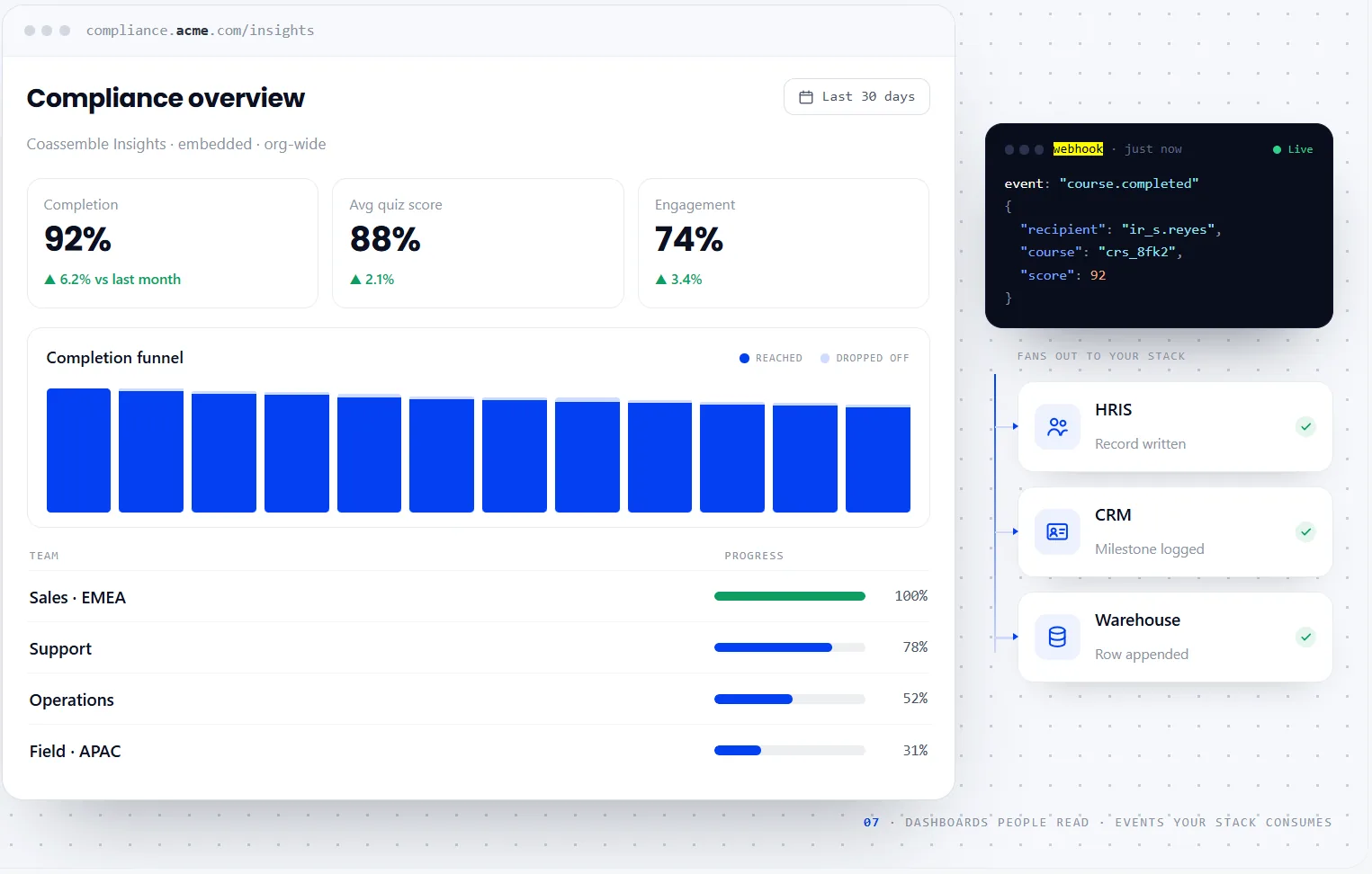
5. Deliver to any surface, and prove it happened. The same course can ship into your product, an existing LMS via SCORM, a website, or an HR workflow, with tracking consistent across all of them. Every version, approval, and completion is time-stamped and exportable for auditors.
None of this asks your users to leave your platform, or you to leave your stack. That's the whole point of embedding in the first place.
Conclusion
Most white-label evaluations start with branding, but that's not where they should stop.
The best white-label LMS for embedding in your platform isn't the one with the cleanest rebrand. It's the one that lets your users create and share training without ever leaving your product.
That's what an API-first, embeddable platform actually delivers. Check the developer docs or request a free sandbox to see what that looks like against your own stack.
FAQs: Best white-label LMS
What's a white-label LMS?
A white-label LMS is training software you can fully rebrand as your own: your logo, your domain, your colors, with no vendor branding visible to learners.
Which LMS supports xAPI?
Most modern LMS platforms support xAPI to some degree — check the specific vendor's docs. Depth of support varies widely, from basic completion tracking to full activity-level data.
What is the best LMS for embedding training in any platform?
An API-first platform with embeddable components for both creation and delivery, not just consumption, is best suited for embedding training into your own product.
Keep reading
How do I build a customer training academy inside my application?
Most guides tell you to stand up a separate LMS. Here's the other way: build the customer training academy inside the product your customers already use, through an API.
How do I embed interactive courses inside a web application?
iframe, JavaScript component, API-driven signed URLs, or SCORM? Here's how each approach to embedding a course inside your own web app trades off control, security, and effort.
Best practices for building an in-app customer training academy
What separates an in-app academy that gets used from one that gets ignored? Start from content you already have, keep lessons short, match your brand, segment, and trigger training in context.