SaaS sales training: a practical guide for founders
SaaS founders don’t need the perfect sales training program. They don’t need massive budgets either.
Most SaaS founders don’t struggle with ideas. They struggle with selling those ideas clearly, consistently, and under pressure.
In the early days, sales wasn’t a department. It’s a responsibility that lands squarely on the founder. For some, that means learning sales from scratch. For others, it means realizing instinct alone doesn’t scale.
Calls pile up. Objections repeat. Notes live everywhere. The knowledge is there, but it isn’t moving.
SaaS sales training helps founders put structure around what they already know, so every conversation gets sharper instead of starting over.
In this guide, we’ll break down:
- Why SaaS founders can’t afford to wing sales
- Free and low-cost SaaS sales training options that actually help
- How to choose training based on your experience level
- When it makes sense to turn your own sales knowledge into training
Why SaaS founders need SaaS sales training
Most SaaS founders start as builders. Sales come later, often before they feel ready. Unlike people who enter the software sales industry by choice, founders are learning on live calls, under real pressure.
In the early stage, there is no sales team. No account executive. No sales development representative. You are it.
That’s true for founders learning sales from scratch. And for those who already sell well but lack structure, experience helps. Structure makes it repeatable.
Common challenges show up fast:
- Technical backgrounds with little formal sales training
- Limited budget to hire experienced reps
- Demo anxiety on early calls
- Pricing conversations that stall
- Objections that repeat without improving responses
Sales training becomes mission-critical here. For early-stage SaaS companies, it’s not a nice-to-have, but a way to stop resetting learning on every call.
Beyond product demos: sales skills founders actually need
Early SaaS sales are about better conversations, not about better slides.
Research from Sales Winners Sell Differently found that top-performing sellers demonstrated “understood my needs” 2.5x more often than second-place sellers. That gap mattered more than product knowledge or pitch quality.
That insight shows up clearly in founder-led sales.
What actually moves deals forward:
- Understanding buyer psychology and decision-making
- Discovery calls that uncover real pain points
- Objection handling when prospects say “too expensive” or “not now”
- Following up without feeling pushy
Consultative selling changes outcomes quickly. One founder shifted from demo-first calls to problem-led discovery and closed three times more deals in the same period.
The product didn’t change. The approach did.
Top SaaS sales training (free and paid)
Below is a practical list of SaaS sales training programs, starting with free training and moving into paid programs.
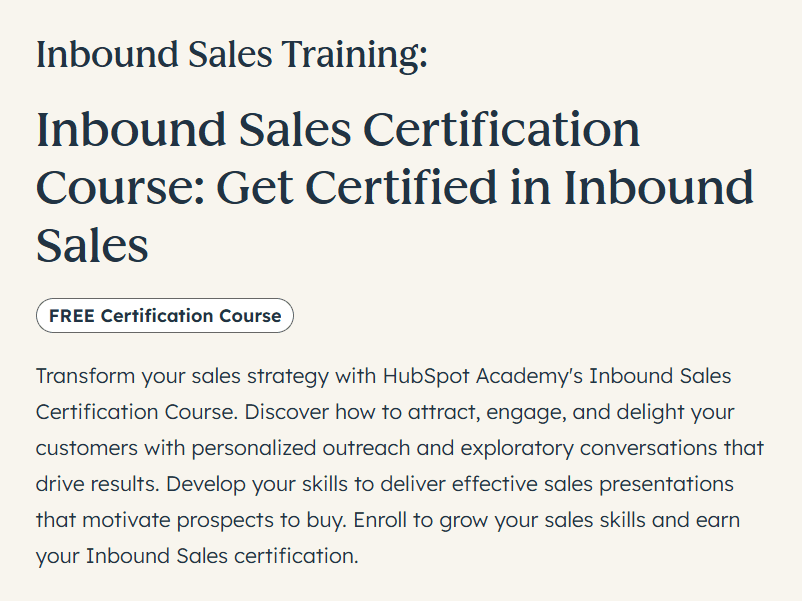
- HubSpot Academy: Inbound Sales Certification (free)
Best for: Founders who are new to sales or want a structured inbound approach.
This course introduces an inbound sales strategy built around attracting, engaging, and guiding prospects through personalized, exploratory conversations. The focus is on understanding buying behaviors and running sales conversations that lead to better outcomes.
What it covers:
- How inbound sales adapts to different buying behaviors
- Identifying the right buyers and prospects to focus on
- Running effective conversations that move deals forward
- Improving sales presentations to motivate prospects to buy
Why it works:
- Clear structure for early-stage selling
- Practical guidance for discovery and presentations
- Self-paced and accessible for busy founders
Limitations:
- Limited depth for complex SaaS deals
- Less useful for founders already closing consistently
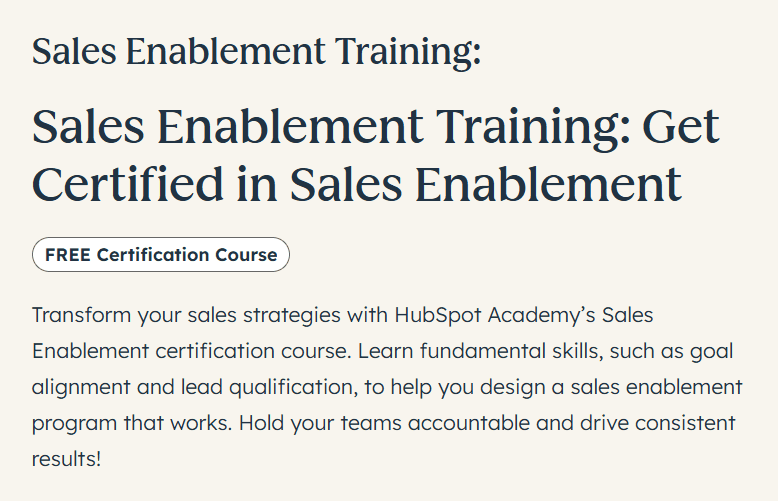
- HubSpot Academy: Sales Enablement Certification (free)
Best for: Founders who already sell and want more consistency and structure.
This course focuses on how sales efforts connect to content, messaging, and process. Instead of teaching how to run individual calls, it looks at how sales materials, follow-ups, and internal alignment support better outcomes across the sales funnel.
What it covers:
- Aligning sales and marketing around shared messaging
- Using content to support each stage of the SaaS sales process
- Creating repeatable assets for sales conversations
- Improving sales performance through better enablement
Why it works:
- Helps founders formalize what already works
- Useful for preparing to onboard a first sales hire
- Introduces structure without heavy process
Limitations:
- Less hands-on for live selling skills
- Not designed for complete sales beginners
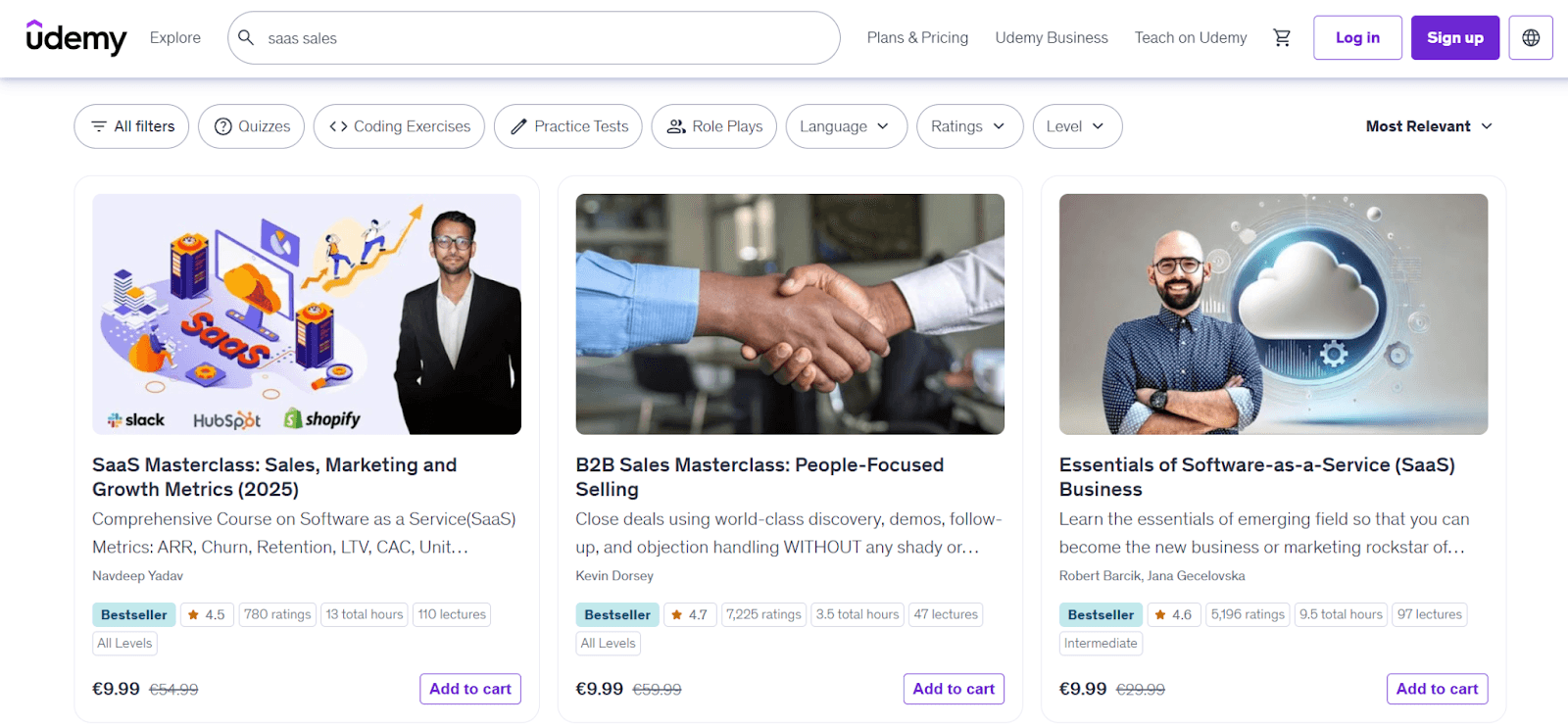
- Udemy SaaS sales courses (paid, low cost)
Best for: Founders who want targeted skills fast, without committing to a long program.
Udemy offers a wide mix of SaaS and software sales courses, usually sold individually rather than as a full SaaS sales training program. Topics range from SaaS sales fundamentals and lead generation to metrics, pricing, and customer success.
Most courses are heavily discounted and fall within a clear range:
- Typical price: €9.99-€19.99 per course
- Occasional bundles: around €19.99-€29.99
What works well:
- Affordable way to build specific skills on demand
- Short, focused courses you can finish in a few hours
- Useful for filling gaps like discovery, SaaS metrics, or sales funnel basics
What to watch out for:
- Quality varies widely between instructors
- Content is often tactical, not cohesive
- Limited guidance on applying lessons to your own sales process
Udemy is ideal for founders who already sell and want to sharpen one skill at a time, not replace a structured SaaS sales training program.
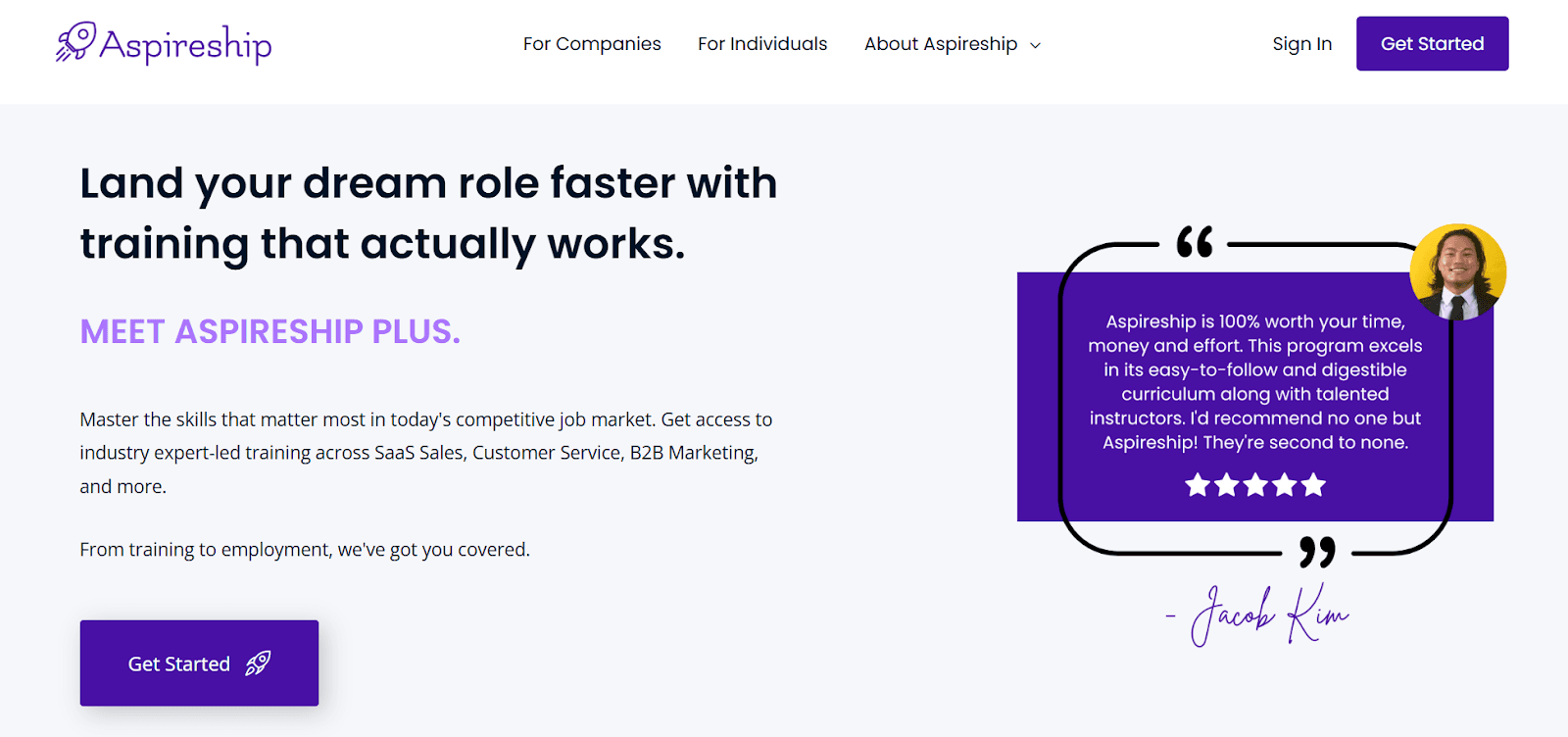
- Aspireship: SaaS Sales Foundations (free + paid)
Best for: Founders who already sell and want more structure, or founders preparing to hire sales roles.
Aspireship’s SaaS Sales Foundations focuses on consultative selling, objection handling, pipeline management, and modern prospecting. The training is role-based and grounded in real SaaS sales scenarios.
What it covers:
- Consultative selling frameworks
- Objection handling and deal progression
- Core pipeline and sales process skills
Pricing:
- Free: Access to SaaS Sales Foundations
- Paid: Aspireship Plus, around $180, with lifetime access to all foundation programs
Why it works:
- Clear structure for leveling up sales skills
- Useful baseline for onboarding future sales hires
Limitations:
- Designed primarily for sales professionals, not founders
- Limited customization to your specific product
Aspireship works well for founders who want disciplined sales skills that scale beyond themselves.
How to choose the best SaaS sales training
There’s no single “best” SaaS sales training. The right choice depends on where you are, what’s breaking down, and how much time you can realistically commit.
Start with your sales stage
Approximately 80% of startups rely on founder-led sales in their early stages, but not all founders need the same skills. Begin with an honest self-check. Different stages need different skills.
- Pre-revenue founder: Focus on fundamentals. Discovery calls, demos, and handling early objections matter most.
- Early traction (1-5 customers): Shift toward consistency. Refine your sales process so results aren’t random.
- Ready to hire: Learn how to train and enable your first sales hire, not just sell yourself.
One founder, Sarah, had two customers and kept hearing the same pricing objections. She focused her training on objection handling and closed five more deals in six weeks.
The skill didn’t change the product. It changed the outcome.
What to look for (and what to avoid)
Good SaaS sales training feels practical, not theoretical. It focuses on real-world examples and role-based scenarios founders actually encounter. The content should be SaaS-specific, not generic B2B advice, and flexible enough to fit busy schedules.
Strong programs also offer some form of community or peer learning, so founders can learn from perspectives beyond their own experience.
Watch out for programs that promise instant results or require heavy time commitments upfront. A lack of refund or trial options is another red flag, as is training built only around outbound cold calling for large enterprises. If the approach doesn’t match how you actually sell, it won’t stick.
The real cost: time vs. money
Every option has a trade-off.
- Free programs: Cost less upfront, but require more time and self-direction.
- Paid programs: Faster structure and depth, but still need focus to apply.
- Building your own training: The most control. Scales with your team. Turns lived experience into reusable knowledge.
**The simplest rule: **Match your training investment to your runway and urgency.
How to create your own SaaS sales training as a founder
Once you’ve gone through external training, a pattern usually appears.
You stop asking, “How do I sell?”
You start asking, “How do I make this repeatable?”
At this point, the fastest way forward isn’t another course. It’s turning what you’ve learned (and what’s already working) into training your future sales team can actually use. This is how founders move from learning sales to building a sales engine.
Why build your own training
By now, you’ve earned real context. You know:
- Which messages land
- Which objections slow deals down
- Which moments create clarity for prospects
No SaaS sales course knows your product, customers, or market like you do.
Building your own training:
- Captures knowledge before it gets trapped in your head
- Creates consistency as your sales team grows
- Speeds up onboarding for your first hires
- Evolves as your sales process evolves
Step 1: Capture your sales knowledge
Start simple. Don’t over-engineer it. Focus on what already exists, like recording your best demos or discovery calls and noting the “aha” moments that move deals forward.
This turns scattered experience into usable knowledge.
Step 2: Turn knowledge into training
This step is where structure matters.
Instead of leaving notes in documents or chat threads, founders can turn sales knowledge into interactive training quickly. Upload your notes, call summaries, or scripts, and let structure do the heavy lifting.
With a free knowledge transfer platform like Coassemble:
- Existing docs and PowerPoint slides become interactive training in minutes
- Quizzes reinforce understanding, not memorization
- Content stays mobile-friendly and easy to update
- Training plugs into tools your team already uses, like Slack
Coassemble transforms your documents into interactive training that actually engages your team.
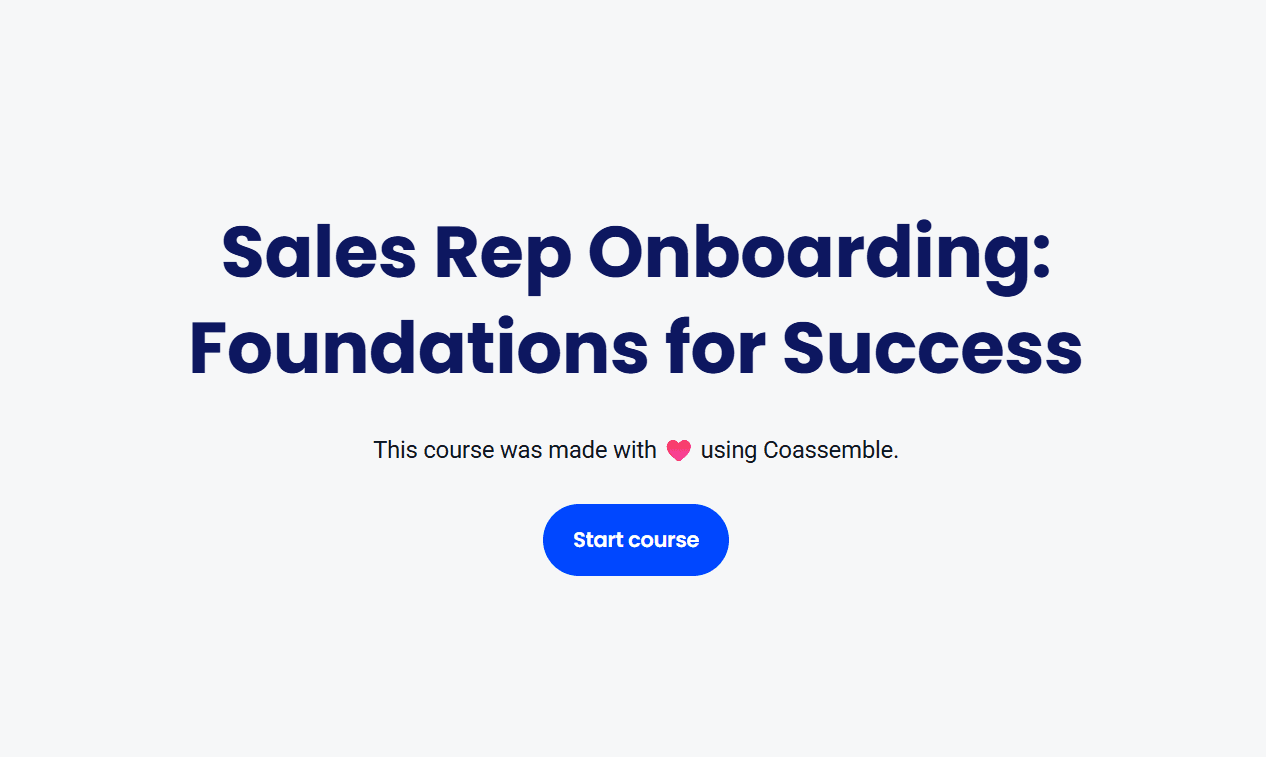
Knowledge stops sitting idle. It starts moving. If you want to see what this looks like in practice, here’s an example of a founder-built course made with Coassemble:
Sales Rep Onboarding: Foundations for Success
Step 3: Test, iterate, and scale
You don’t need a full program on day one.
Start with one module:
- Your demo framework
- Pricing conversations
- Objection handling
Share it with a peer, advisor, or early hire. Refine what’s unclear. Add modules as you learn.
By the time you hire your first sales rep, onboarding isn’t a scramble. It’s ready.
Wrapping up
SaaS founders don’t need the perfect sales training program. They don’t need massive budgets either.
The fastest progress usually comes from two steps. First, learn the fundamentals. Free and affordable SaaS sales training is enough to build confidence and direction. Then, document what actually works in your own sales conversations.
Your sales training becomes specific to your product, your market, and your buyers. It reflects real objections, real decisions, and real outcomes. That’s something no generic course can offer.
You can start today. Capture what you already know. Shape it into training as you go. With Coassemble, turning sales knowledge into scalable training takes minutes, not weeks. It happens while you’re building, selling, and growing.
FAQs about SaaS sales training
What skills are essential for SaaS sales?
Strong SaaS sales start with discovery, consultative selling, objection handling, and follow-up. Founders also need to understand buyer behavior, sales cycles, and how to drive recurring revenue beyond the first deal.
Is there a legitimate SaaS-specific sales course?
Yes. Options like HubSpot Academy and Aspireship offer SaaS-focused sales training. Most courses are built for sales professionals, not founders, which is why documenting your own process becomes powerful over time.
Why should founders learn SaaS sales training?
Because founders are the first sales team. Investors expect founder-led sales early on, and understanding sales fundamentals makes it easier to hire, train, and manage future sales roles effectively.
How is selling SaaS different from other types of sales?
SaaS sales focus on recurring revenue, longer sales cycles, demos, trials, and retention. Success depends on ongoing customer value, not one-time transactions.
Can I create my own SaaS sales training program?
Yes. Start by capturing what works in your own sales process. With Coassemble, founders can turn notes, calls, and docs into interactive training that scales as the team grows.
Keep reading
What is the best embeddable training software for SaaS platforms?
Embeddable training software puts course creation, delivery, and tracking inside your product instead of a separate portal. Here's what to look for, and how the top SaaS options compare in 2026.
What is a learning infrastructure, and how is it changing?
Learning infrastructure is the systems that create, deliver, and track training. Here's what it includes, how it differs from an LMS or a learning ecosystem, and how embedded learning and AI agents are changing the model.
What training software has the best API and developer documentation?
A robust API means little if the docs are unclear or support-gated. Six practical checks for evaluating a training platform's API and developer documentation before a sales call.