6 types of sales training you can build and deploy in minutes
You don't need to wait weeks for formal training programs. The knowledge your sales team needs already exists in your pitch decks and product briefs. AI-powered tools turn these documents into interactive training the same day you need it.
You don't need to wait weeks for formal training programs. The knowledge your sales team needs already exists in your pitch decks and product briefs. AI-powered tools turn these documents into interactive training the same day you need it.
Your top sales rep just closed another deal using objection handling techniques buried in a Google Doc from 2022. Your newest hire spent an hour searching Slack for the updated pitch deck. Meanwhile, you've been waiting three weeks for someone to build a proper sales training program.
Here's what most sales leaders don't realize: the knowledge is already there, trapped in decks, docs, and those legendary team calls you wish every rep could hear. When sales reps use their company's methodology alongside training, 73% reach their quota. Without it, that number drops dramatically.
Traditional sales training programs take weeks to build. Your sales team can't wait that long. AI-powered tools have changed what's possible for sales leadership teams who want to move fast.
In this guide, you'll learn:
- Six core sales skills training types that drive sales performance
- How sales leaders can deploy each type without waiting on others
- Practical ways to turn existing content into interactive training in minutes
What is sales training?
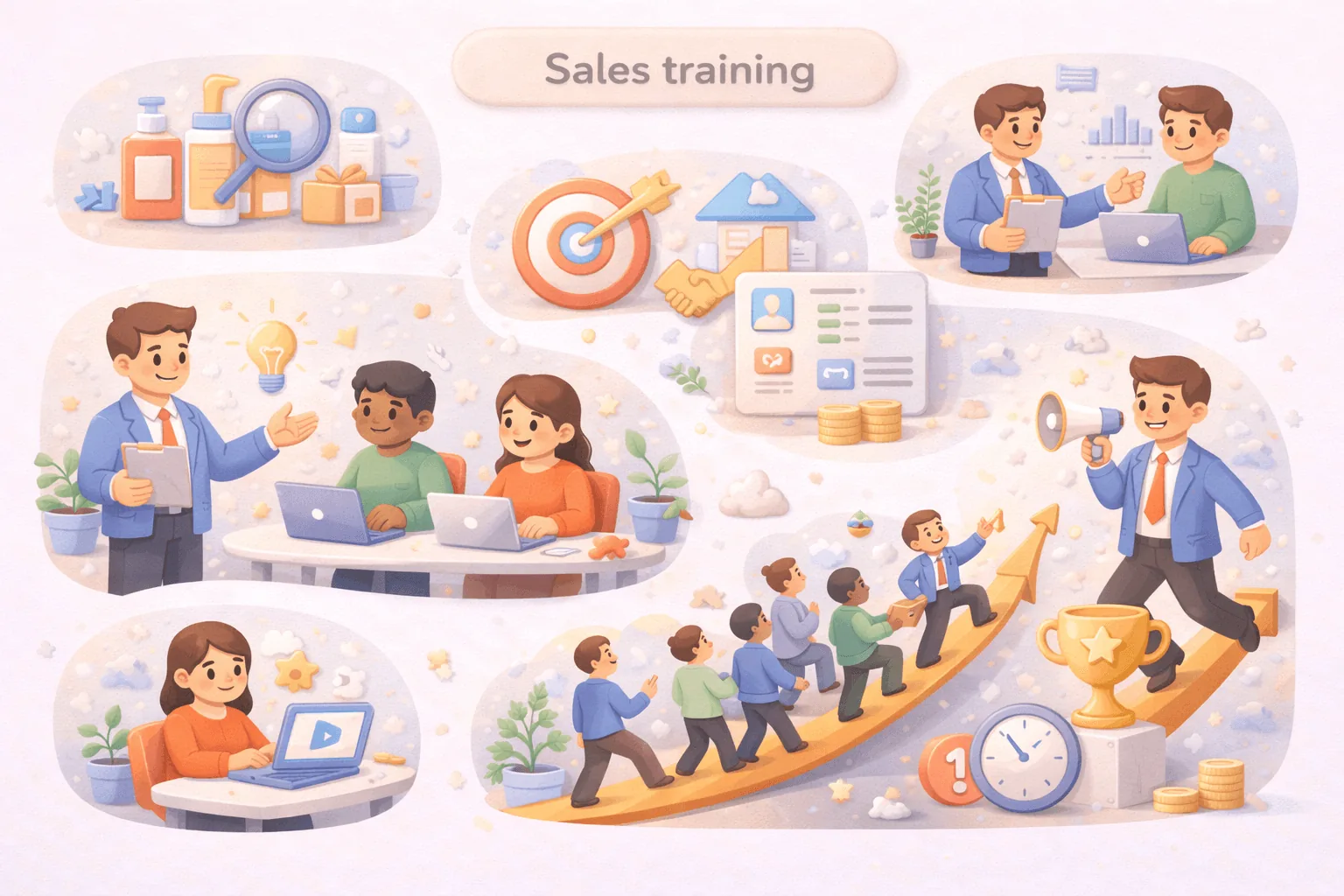
Sales training is a structured learning designed to improve how sales professionals sell.
It includes:
- Teaching product knowledge and sales techniques to new hires
- Refining negotiation skills and objection handling for experienced reps
- Updating customer relationship management approaches across the team
- Coaching sales strategies that align with your sales process
- Developing leadership capabilities through sales management training
Effective training means getting your team equipped for sales success.
Top 6 sales training types
The best sales training programs combine multiple approaches to build well-rounded sales professionals. Here are six types of sales training that sales leaders use to improve sales performance, and how you can deploy them fast.
- On-the-job sales training
On-the-job sales training
On-the-job training means learning by doing. New sales reps shadow experienced team members, listen to live sales calls, and gradually take on more responsibility in real customer conversations.
Why it matters:
- Builds real-world sales skills faster than classroom training
- New reps see how top performers handle objections and close deals
- Creates immediate context for sales techniques and sales strategies
Sales leader takeaway:
Your sales playbooks and pitch decks already contain the knowledge new reps need. Turn these static documents into quick reference courses. Upload your sales battle cards (PDFs, Word docs, PowerPoint decks) and new sales reps can review objection handling scripts before shadowing sessions, then reference them again during their own customer conversations.
With tools like Coassemble, you cantransform sales pitches and playbooks into interactive training in minutes; no instructional designer required.
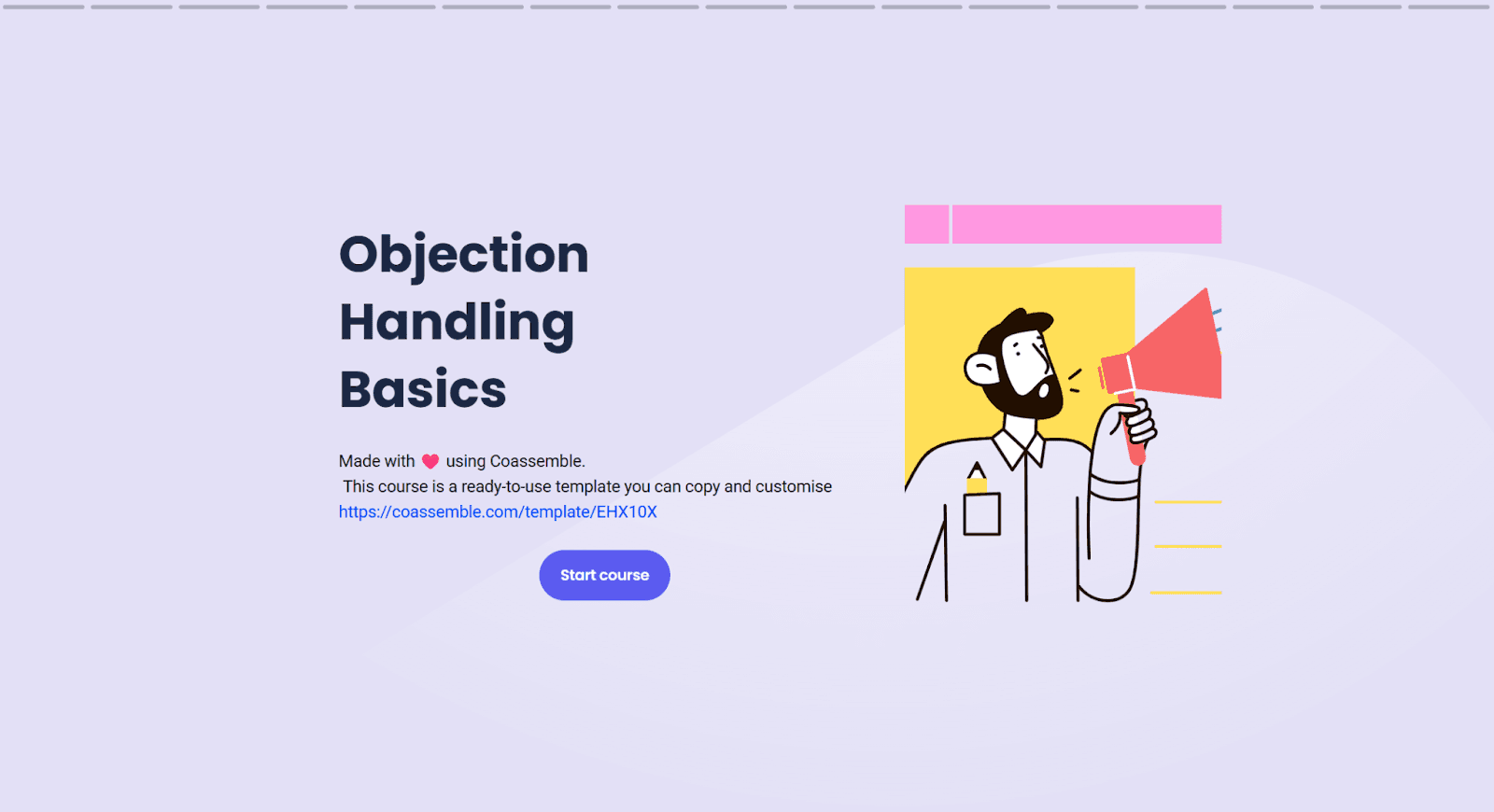
You can also copy and customize this template for your company in this link: Objection Handling Basics
- Sales coaching
Sales coaching
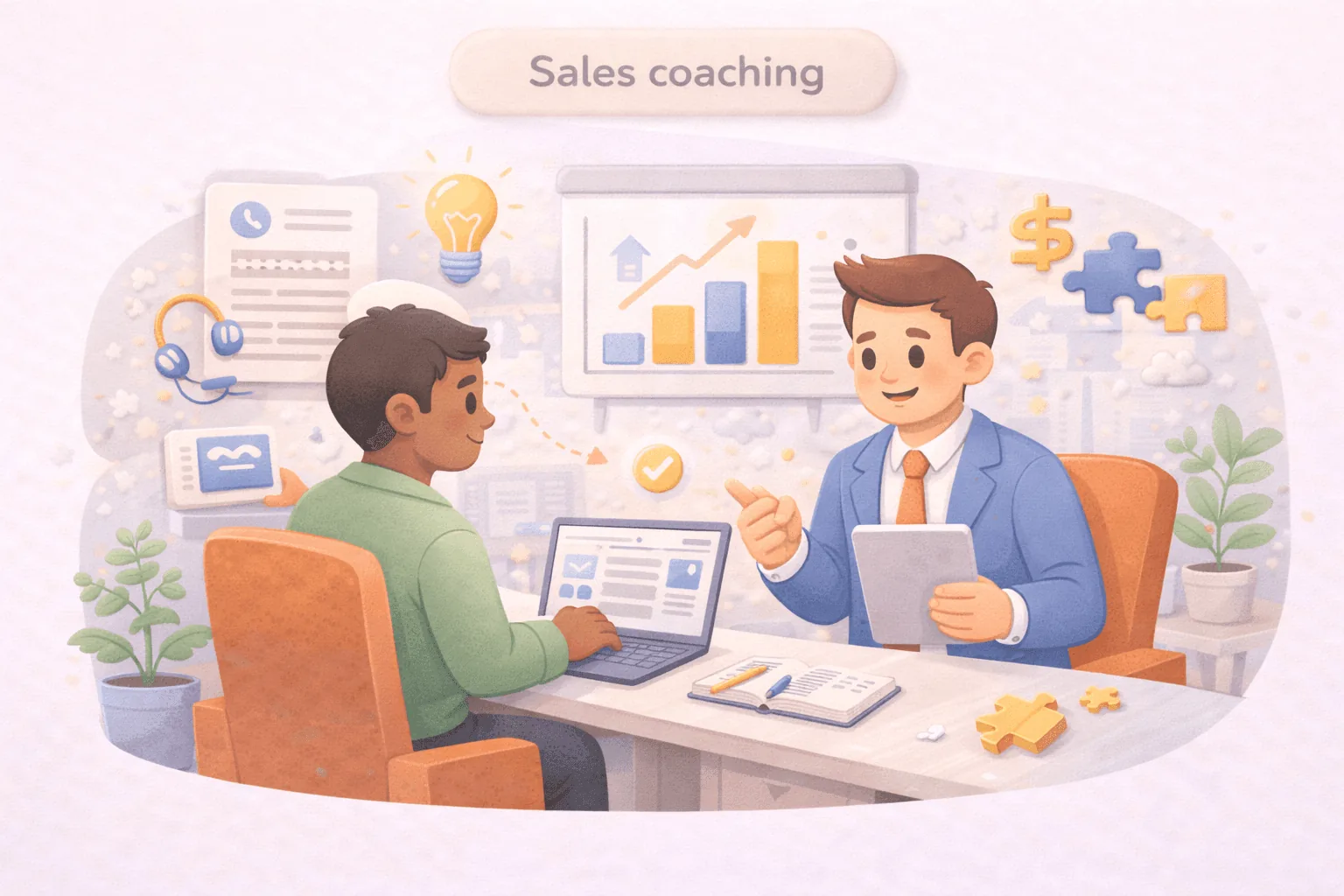
Sales coaching is one-on-one guidance from sales managers to improve specific selling skills. It focuses on personalized feedback after sales calls, pipeline reviews, and deal strategy sessions.
Why it matters:
- Personalized coaching drives bigger performance gains than generic training programs
- Sales managers can address individual gaps in negotiation skills or presentation skills
- Regular coaching sessions keep sales reps aligned with evolving sales strategies
Sales leader takeaway:
You're already coaching your team on the same themes every week. The challenge is that your coaching doesn't scale beyond the reps you talk to directly.
Create bite-sized training modules based on these common coaching themes. Record yourself walking through a discovery call framework or handling a tough pricing objection. Sales reps can self-serve on sales fundamentals between your coaching sessions. This scales your coaching impact without adding hours to your calendar.
Sales managers focus one-on-one time on high-stakes deals and personalized coaching.
- Role-playing sales training
Role-playing sales training
Role-playing simulates real sales scenarios so reps can practice pitches, objections, and negotiations.
Why it matters:
- Safe environment to experiment with different sales approaches
- Builds muscle memory for handling objections and closing techniques
- Helps new sales reps gain confidence before high-stakes customer conversations
Sales leader takeaway:
Record your top performers handling common objections or delivering your best pitch. Turn those recordings into training modules that new reps can watch and learn from. They see exactly how experienced sales professionals navigate tough negotiations or relationship-building conversations.
New sales reps can study these examples before role-playing with sales managers. They come prepared with context on what good looks like. This makes your role-play sessions more productive and gets reps ready for real customer conversations faster.
AI tools are also changing how reps practice. Platforms like Hyperbound offerAI-powered role-play simulations where reps practice calls and get instant feedback without waiting for manager availability. Sales reps can run through different scenarios repeatedly until techniques become second nature.
- eLearning
eLearning
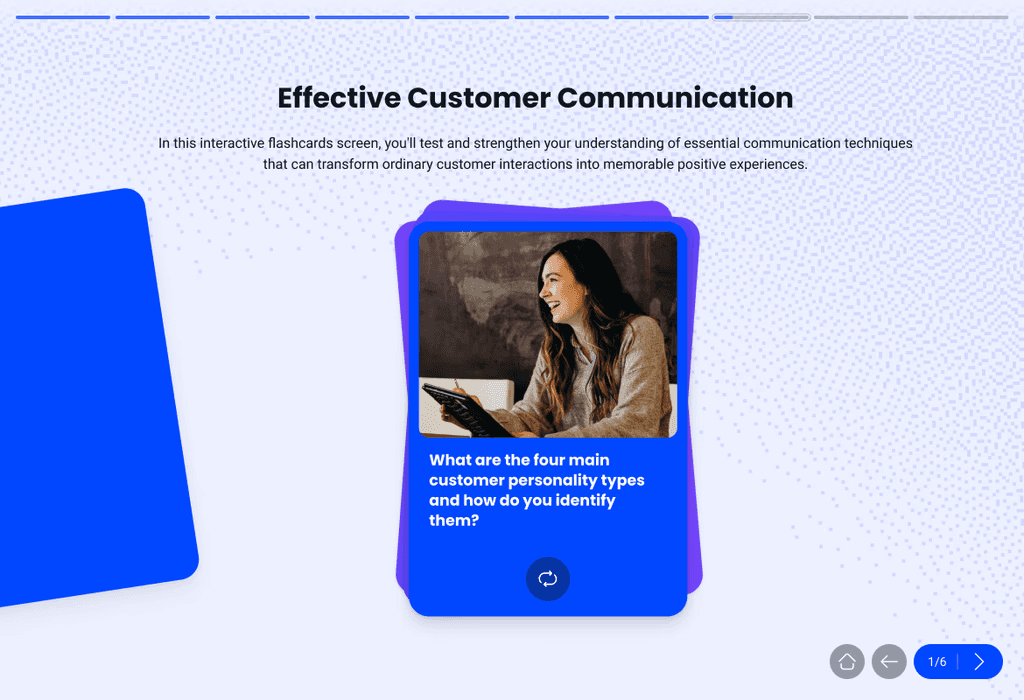
eLearning is self-paced digital training that sales reps complete on their own schedule. It includes online courses, video lessons, and interactive modules covering everything from product knowledge to sales methodology.
Why it matters:
- Scales across distributed sales teams without coordinating schedules
- Accommodates different learning speeds and styles
- Sales reps can access training exactly when they need it
Sales leader takeaway:
AI tools have changed how fast you can deploy online sales training. Upload product specs, competitive intel, or your latest sales deck into Coassemble. That 47-slide deck from your product launch? It becomes a 15-minute course with built-in knowledge checks.
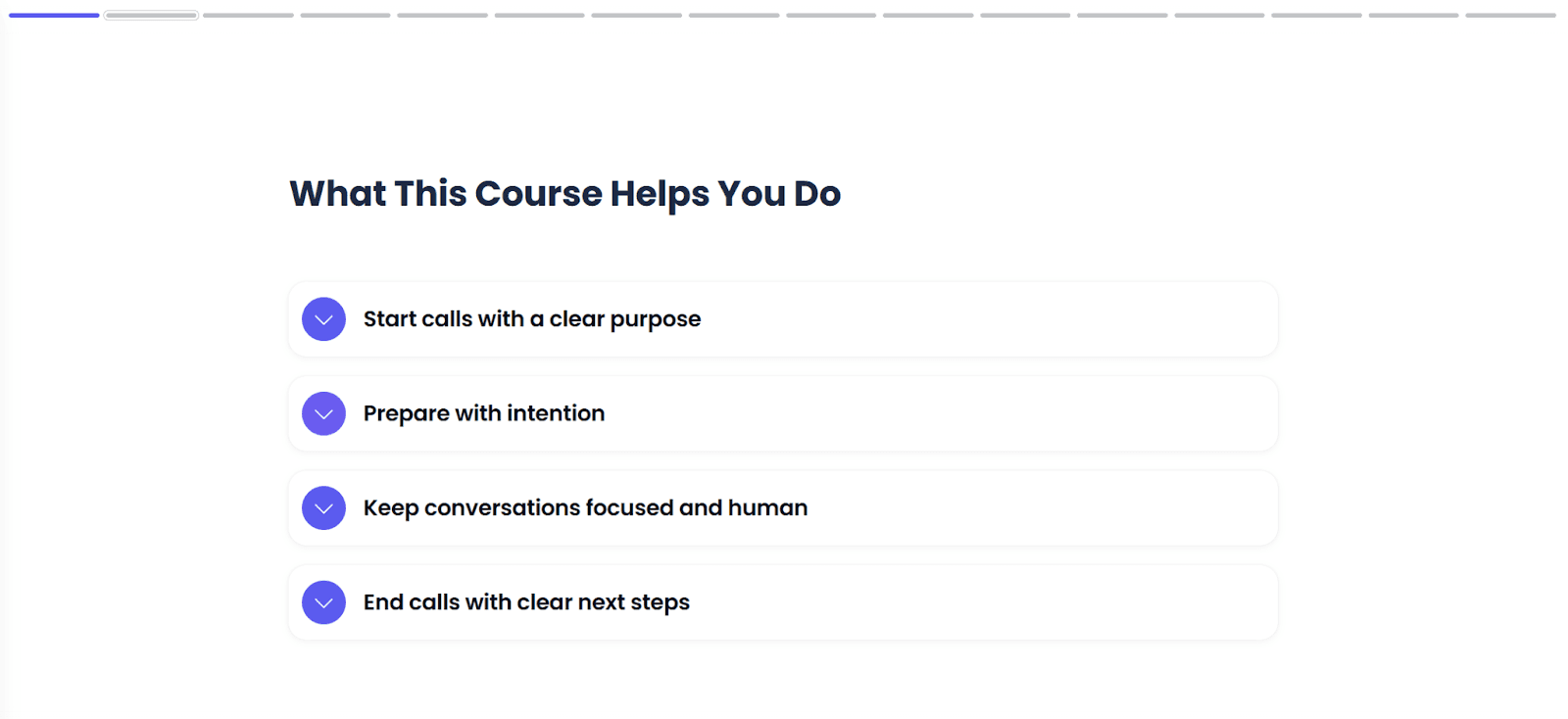
Here's a sales training course example made with Coassemble: How to Run a Successful Sales Call. You can copy and customize this template for your company in the link.
For quick product updates, embed Loom videos directly into your courses. Sales reps get visual walkthroughs alongside written content. Everything lives in one place instead of scattered across multiple platforms.
- Informal training
Informal training
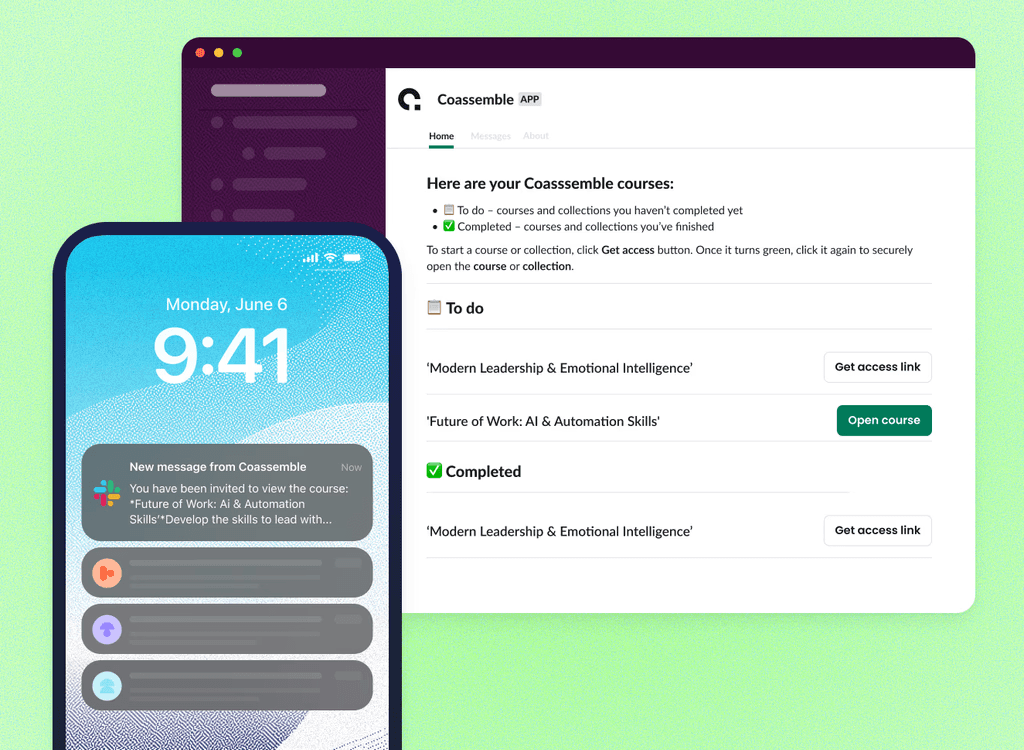
Informal training is knowledge sharing through Slack messages, team meetings, and casual conversations. It captures the tribal knowledge that lives in your sales team's day-to-day communication.
Why it matters:
- Captures real-time wins and lessons from active deals
- More immediate and relevant than formal training programs
- Sales reps trust insights from peers who are closing deals right now
Sales leader takeaway:
Your best training content already exists in Slack threads and team meeting notes.
You can turn your best Slack conversations and winning sales call recordings into quick microlearning modules in Coassemble. It also integrates with Slack and Teams, so you canshare training where your team already works. Sales reps access training without logging into another platform.
- "Just-in-time" learning
"Just-in-time" learning
Just-in-time learning delivers training exactly when sales reps need it. Before a big pitch, launching a new product, or entering a new market segment. It prioritizes immediate relevance over comprehensive programs.
Why it matters:
- Maximum relevance because timing matches the sales cycle
- Immediate application means better retention and sales effectiveness
- Sales reps get critical information right before customer conversations
Sales leader takeaway:
When you launch a new product or feature, don't wait for formal training programs. Upload your product brief or launch deck to Coassemble. Generate an interactive course in 15 minutes. Deploy it to your sales team via Slack.
Sales reps get the knowledge exactly when they need it, before their first customer call. They can reference product knowledge and competitive positioning while the information is still fresh. This approach keeps your sales force updated on market trends and industry trends without disrupting their sales pipeline.
AI-powered sales training makes just-in-time learning practical for sales leaders who need speed. Create training as fast as situations change.
How sales leaders can create training using Coassemble
Sales leaders don't need to create training from scratch. You need a way to turn what you already have into training your sales team will actually use.
Here's how sales leaders can create sales training programs in minutes using Coassemble:
- Open the course builder
Open the course builder
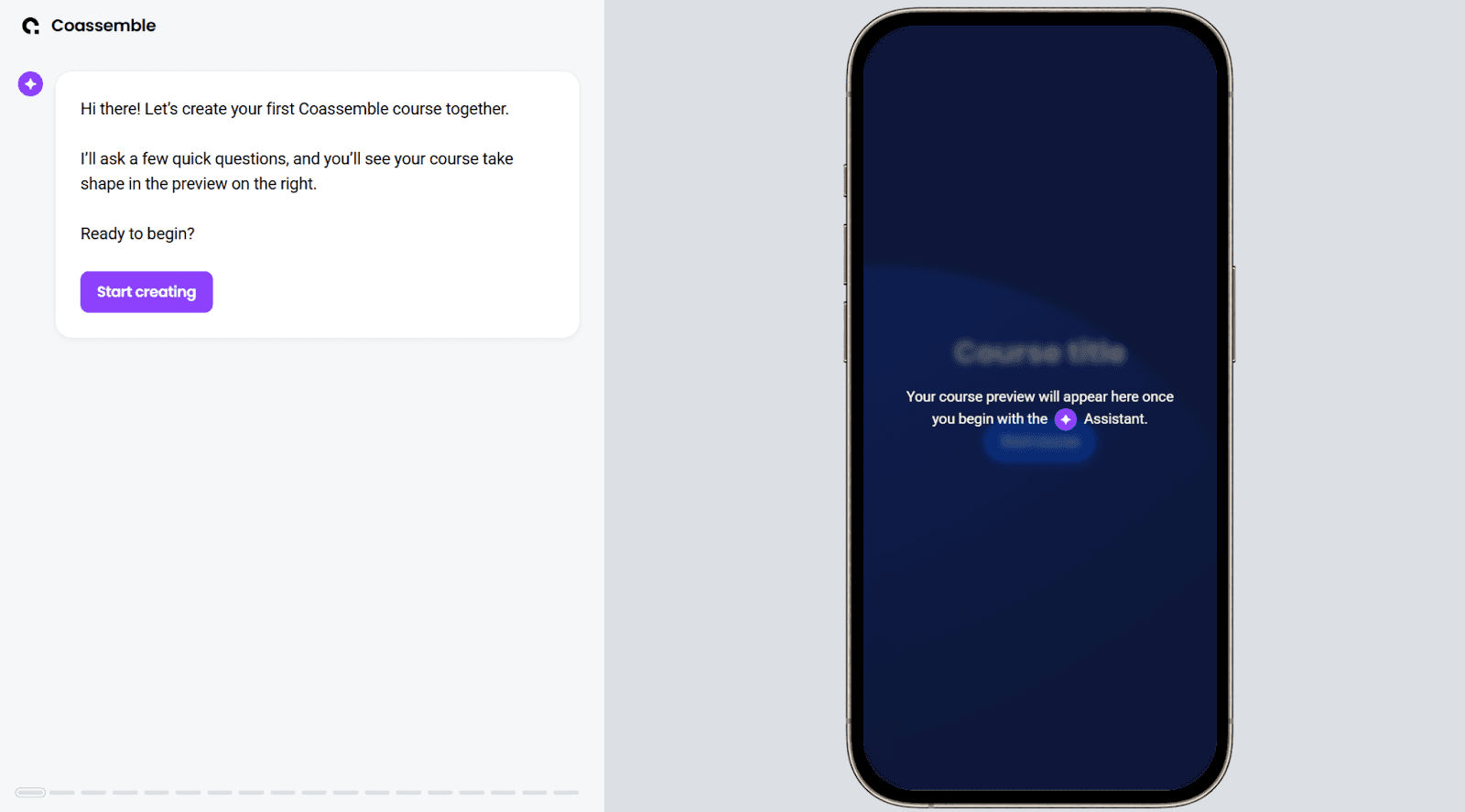
Open Coassemble's course builder to get started.
- Upload existing content
Upload existing content
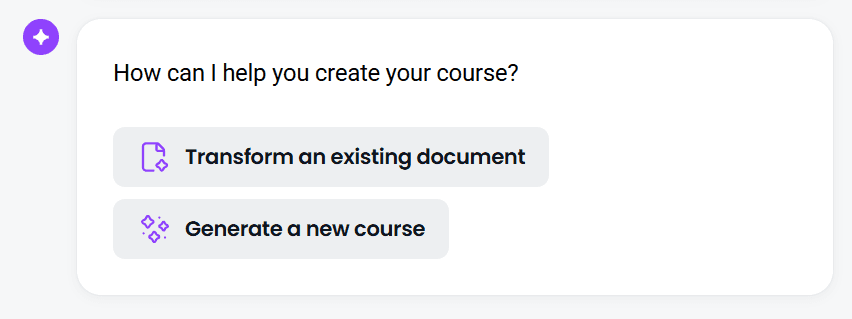
Choose to transform content you already have. Upload a PDF, PowerPoint, or Word document: your sales playbook, product brief, or competitive battle cards. Coassemble's AI scans the file, identifies key ideas, and organizes them into a structured training course.
- Set the direction
Set the direction
Answer a handful of quick questions to guide the AI. Your answers shape the tone and focus of the generated course.
- Review the generated course
Review the generated course
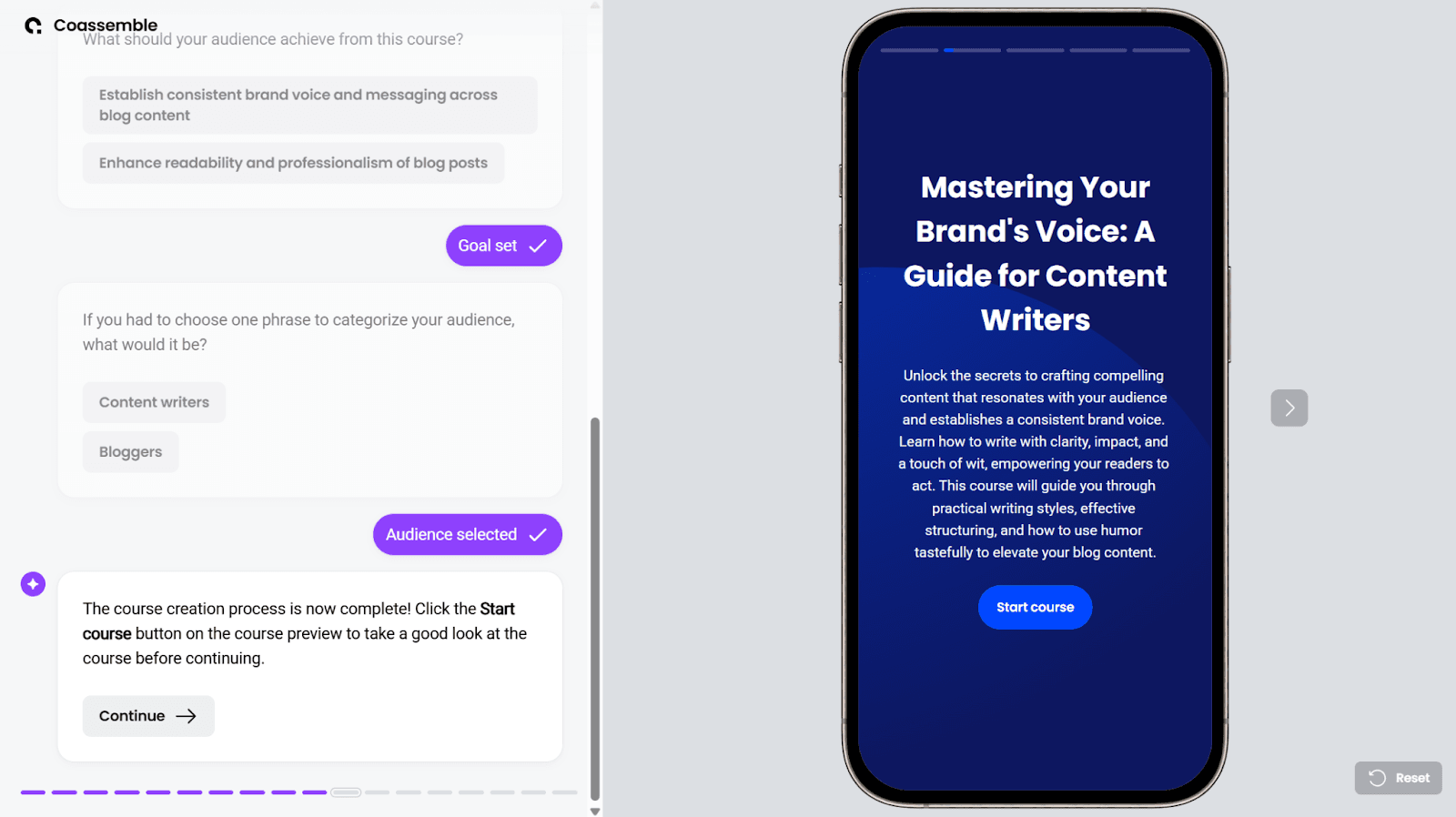
Within seconds, you'll see a complete course draft with organized lessons. Review each section for accuracy and flow. Click Continue when it looks right.
- Share training where work happens
Share training where work happens
Before publishing, you can add quizzes or branding. Add them if needed, or move ahead.
Pick your delivery method:
- Drop a link in your Slack channel
- Email it to specific sales reps
- Export as SCORM to integrate with your LMS
- Embed it in your existing sales platform
Choose what works for how your team operates.
- Save, track, and improve
Save, track, and improve
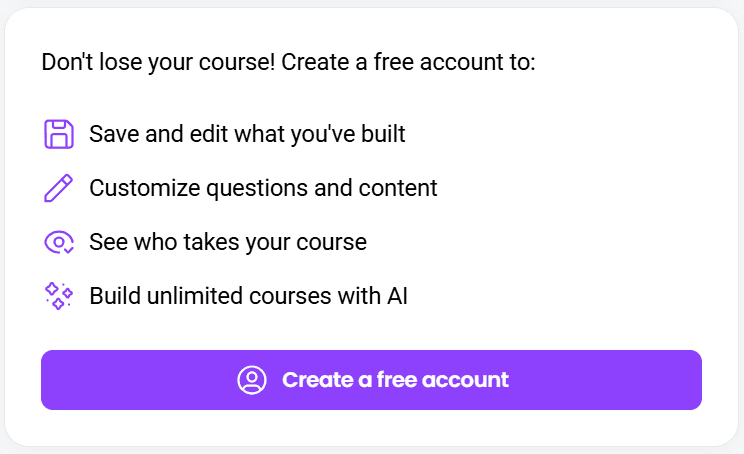
Request a free sandbox to save your work and enable editing. Monitor which sales reps have finished the training and how they scored on assessments. Spot knowledge gaps across your sales force. Make updates when your product or sales process changes; updates appear instantly for your team.
Coassemble isn't replacing your tech stack. It plugs into the LMS you already use or works standalone if you don't have one. The goal is speed, not system overhaul.
Wrapping Up
Sales training types haven't changed; on-the-job learning, coaching, role-playing, and self-paced courses still work. What's changed is how fast sales leaders can deploy them.
You don't need to wait weeks for formal training programs. The knowledge your sales team needs already exists in your pitch decks and product briefs. AI-powered tools turn these documents into interactive training the same day you need it.
Build your sales training with Coassemble. Your team already has the knowledge. The decks, the docs, the winning calls – it's all there. Coassemble helps you move it. Request a free sandbox to build and test a real course on the full platform at no cost.
FAQs on sales training types
What are the methods of sales training?
Sales training methods include on-the-job training, sales coaching, role-playing, eLearning, informal training, and just-in-time learning. Most effective sales organizations combine multiple approaches based on what their sales team needs.
What's the most important sales training type?
No single type works best for every situation. On-the-job training builds practical sales skills fastest. Sales coaching delivers personalized feedback. Just-in-time learning keeps teams updated on new products. The best approach depends on your sales team's immediate needs.
Can sales leaders create their own training?
Yes. AI-powered tools let you upload existing sales content and transform it into interactive training in minutes. Sales leaders can now own the entire process without waiting for instructional designers.
What's the fastest way to create and share sales training?
Upload your sales content to Coassemble. The AI structures it into courses automatically. Share directly in Slack or Teams. The entire process takes minutes, and you can update training as your sales strategies evolve.
Can AI help sales leaders create sales training?
AI lets you upload product specs, sales playbooks, or battle cards and generates structured courses instantly. Sales leaders can create professional training without design skills or support teams.Learn more about AI-powered sales training.
Keep reading
The cost of poor internal knowledge management: statistics that make the case
Poor knowledge management doesn't announce itself. It doesn't show up as a line item. It shows up as a new hire still piecing things together six weeks in. A product update that never made it past a Slack thread. A process question answered differently every time someone asks.
Tools for knowledge management: from storage to structured training
Stored knowledge isn't transferred knowledge. A wiki doesn't guarantee your team can execute what's in it. Knowledge bases don't track who actually learned the material.
How to build a knowledge transfer checklist that actually works
A knowledge transfer checklist is one of the simplest, highest-value tools a mandated team can have. It protects against knowledge loss, speeds up transitions, and gives new hires the critical information they need to contribute faster.