Sales training and development for growing teams
Sales training and development doesn’t have to be expensive, slow, or complex. Most sales teams already have the knowledge they need. It’s just trapped in decks, documents, and conversations that never scale.
Sales training and development for growing teams
Sales training and development often get overcomplicated.
Many sales teams picture long programs, high costs, and weeks of setup before anything improves. That friction pushes training aside, even as the sales process keeps moving. Deals close, new reps ramp, and sales managers coach in the moment.
Meanwhile, valuable knowledge stays trapped. Proven sales techniques live in decks, call notes, and conversations that never reach the full sales organization.
The importance of sales training isn’t the question. Making it practical and sustainable is.
This guide covers simple training methods that improve sales performance using existing content. We’ll cover:
- What sales training and development look like in everyday work
- Why ongoing sales training programs drive revenue growth
- How sales leaders support the sales team without heavy lift
- Clear examples you can apply fast
What is sales training and development?
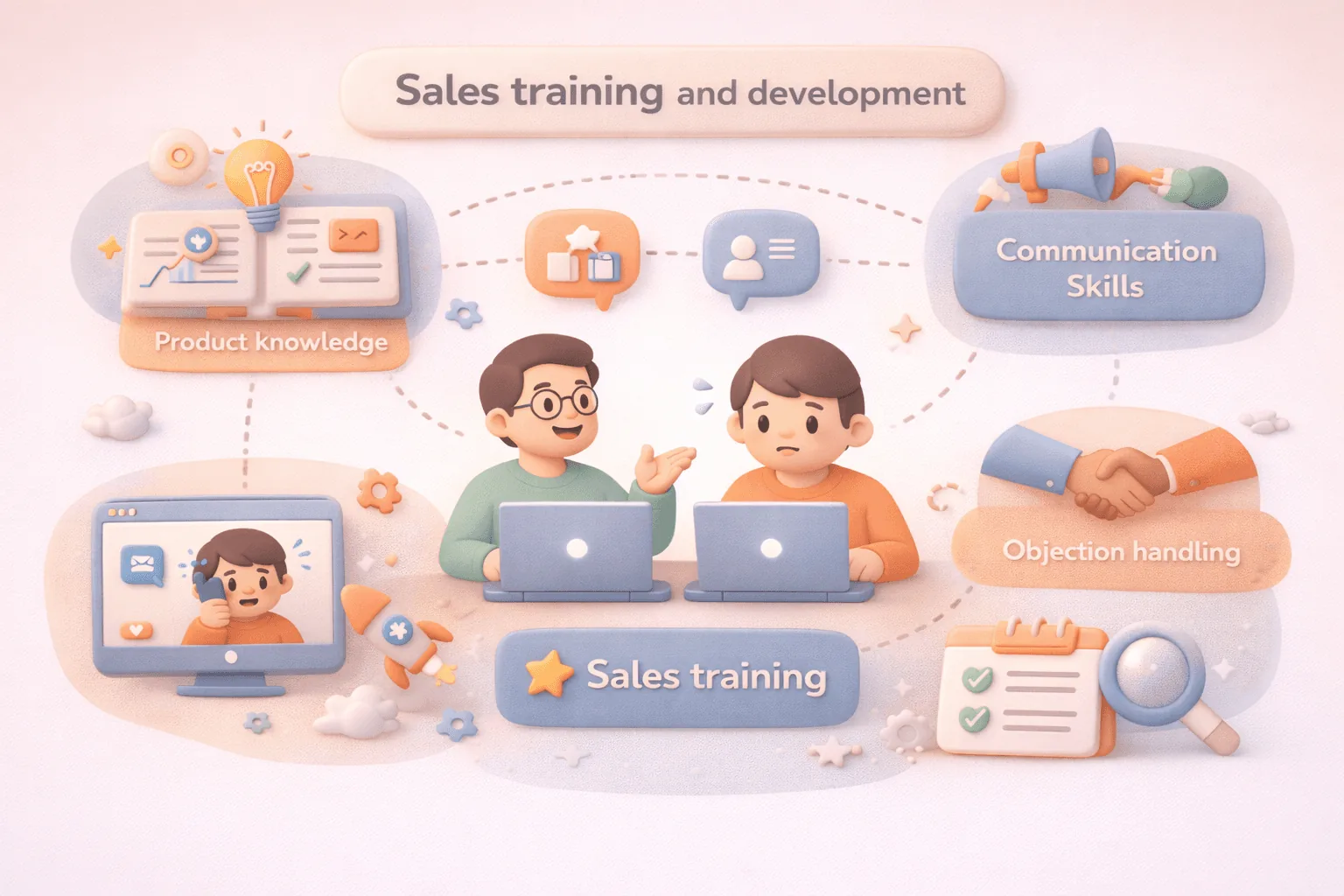
Sales training and development is the ongoing work of helping a sales team build the skills, confidence, and consistency needed to sell effectively.
In practical terms, it’s how sales managers and sales leaders turn a company’s sales strategy into daily behavior. It covers:
- Product knowledge
- Sales techniques
- Communication skills
- Objection handling
- Relationship building across the full sales cycle
Sales training programs aren’t a one-time event. They evolve as the sales process changes, new products launch, and customer needs shift. Strong sales organizations treat training as part of everyday sales operations, not a quarterly project.
At its best, it helps sales professionals:
- Understand the proven sales process your organization relies on
- Apply essential selling skills in real sales conversations
- Improve sales performance through practice, feedback, and sales coaching
- Build long-term customer relationships that support revenue growth
For mid-market teams, effective training often starts with existing content. Playbooks, sales presentations, call recordings, and internal docs already hold the knowledge. The goal is to move that knowledge out of static files and into training programs that support real selling moments.
It’s all about progress, consistency, and helping sales reps succeed deal after deal.
Importance of sales training and development
Sales training and development matters because buying has changed, and the sales organization feels it every day. Longer sales cycles. More stakeholders. More pressure to prove value early. That’s why effective sales training needs to be practical, repeatable, and easy to keep current.
Salesforce reports that non-selling tasks take up about 70% of a rep’s time. This leaves less room for relationship-building and customer conversations.
When time is tight, training programs can either add friction or remove it.
Revenue growth
Revenue growth depends on consistency across the sales team, not isolated wins from top performers.
Organizations that prioritize training are 57% more effective than their competitors. The average ROI of sales training is an impressive 353%. This means companies receive $4.53 for every dollar invested in training.
Effective sales training and development help sales professionals apply the same sales techniques across the sales cycle. When everyone follows a proven sales process, deals move faster and outcomes become more predictable.
Increased productivity
Training isn’t only about learning. It’s also about speed.
One centralized sales process means less time hunting for answers. Sales managers also spend less time repeating the basics, which frees up more time for sales coaching that actually closes skill gaps.
Training effectiveness shows up when reps prep faster, run better conversations, and move deals forward with fewer stalls.
Improved customer relationships
If reps don’t have a consistent sales approach, relationship building becomes inconsistent too. One rep nails the value proposition. Another over-explains. Another misses the customer needs entirely.
Strong sales training helps sales representatives build relationships, deepen client relationships, and support customer satisfaction. That’s the foundation for long-term customer relationships.
5 simple strategies to create engaging sales training and development
Most sales organizations already have valuable knowledge. The real challenge is turning that knowledge into training that supports selling in real time.
These strategies focus on practical sales training methods that fit into existing sales operations. They’re designed to improve sales effectiveness without adding process or overhead.
- Start with what you already have
Most sales teams already create training content every week. Sales decks, battle cards, playbooks, and Loom videos capture essential selling skills and proven sales techniques.
The problem is that reps can't find it when a prospect asks a tough question on a live call.
Start by identifying what sales reps reference during real sales conversations. These materials reflect customer needs, common objections, and how the sales process actually works.
For example, Coassemble’s AI Create turns your latest sales deck into an interactive course in minutes.
Sales managers can transform existing PDFs and PowerPoint slides into training. Then they share it where work happens, including Slack.
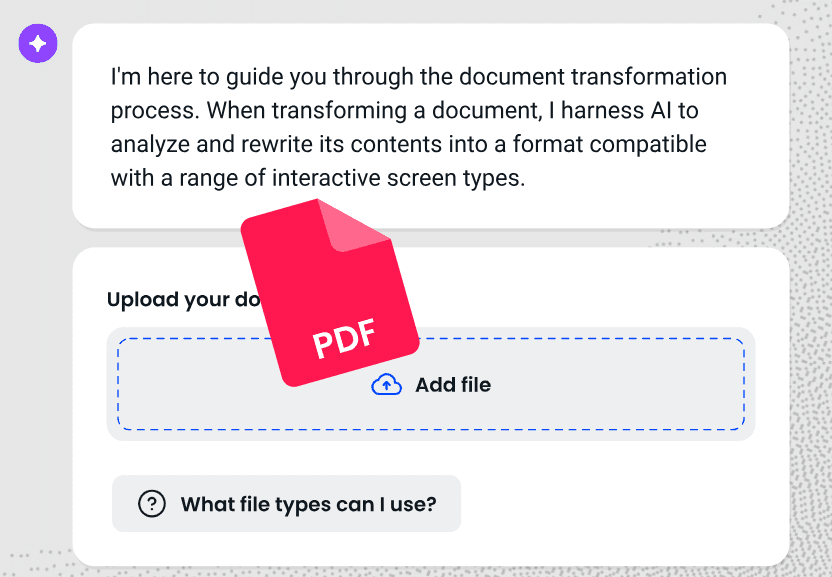
This keeps knowledge in motion and helps sales professionals learn without slowing down active deals.
- Make training bite-sized and accessible
Sales reps rarely have time for long training sessions. Between calls, follow-ups, and account work, extended training programs often get skipped or delayed.
Bite-sized training works better. Break sales training into short, focused modules that take five to ten minutes to complete. Each piece should cover one sales skill, one update, or one step in the sales process. This makes training easier to start and easier to finish.
Accessibility matters just as much as length. Training shouldn’t live in a separate portal that sales reps forget to check. It should show up where work already happens.
Coassemble delivers training directly in Slack, so reps complete modules between calls without switching tools.
For example, product launch training can be delivered as a short module shared in a team channel. Reps complete it between calls, confirm understanding with a quick check, and apply it immediately in live deals.
Short, accessible training improves training effectiveness. It supports ongoing training without pulling sales professionals away from selling.
- Focus on real-world application, not theory
Sales training sticks when it reflects what actually happens in sales conversations. Abstract frameworks and generic selling techniques rarely change behavior on their own.
Effective sales training uses real customer scenarios. Recent deals. Common objections. Actual questions from prospective customers. This helps sales professionals connect training to the sales cycle they navigate every day.
Build training around examples your sales team recognizes. Pull a snippet from a recent discovery call where a prospect raised a common objection like budget concerns, in Q4. Present it as a scenario: “The prospect says they love the solution but need to wait until next quarter. What do you say?” Let reps respond, then show the exact approach your top performer used to successfully close three similar deals last month.
This approach strengthens selling skills like objection handling, consultative selling, and relationship building. It also improves communication skills and confidence during high-stakes conversations.
- Use AI to scale without adding headcount
Scaling sales training usually hits the same wall. More content means more time, more reviews, and more coordination. That’s where AI changes the pace without changing the team size.
AI-powered training means speed. Existing sales decks, playbooks, and docs can be transformed into structured training programs in minutes.
AI also supports consistency. Quizzes, knowledge checks, and updates can be generated automatically. That helps close skill gaps and reinforces essential sales skills across the sales organization.
Compared to traditional LMS workflows, AI-driven training removes bottlenecks and supports ongoing sales training programs. You can explore the difference in more detail here: AI-powered training vs traditional LMS
The result is impact sales training that grows with your sales team, not your workload.
Make training trackable and measurable
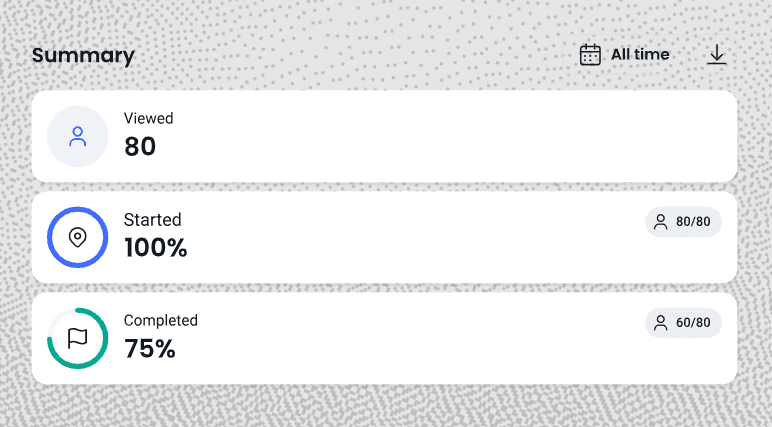
Sharing a deck in Slack doesn’t mean training happened. It only means information moved, not that it landed.
Trackable sales training changes that. It shows:
- Who completed training
- How long it took
- Where understanding drops
That visibility helps sales managers spot gaps before they affect live deals.
Measurable training also supports better sales coaching. Quiz results and completion data highlight which sales skills need reinforcement across the sales team. Instead of guessing, managers coach with evidence.
Tracking matters beyond learning. Training data can feed into sales operations, CRM reviews, or management training conversations. It connects training effectiveness directly to sales performance.
When training is measurable, it becomes a tool to improve sales effectiveness, support revenue growth, and strengthen the sales organization over time.
Sales training and development examples
Sales training works best when it reflects real workflows, real pressure, and real timelines. These examples focus on common moments where sales teams need fast, practical training.
New hire onboarding
New hire onboarding is often where sales training breaks down first. New sales reps receive too much information at once, spread across documents, decks, and shadowing sessions.
Effective onboarding training focuses on clarity. New sales professionals need to understand the sales process, product knowledge, essential selling skills, and how real sales conversations sound. Short, structured training helps them ramp faster without overwhelm.
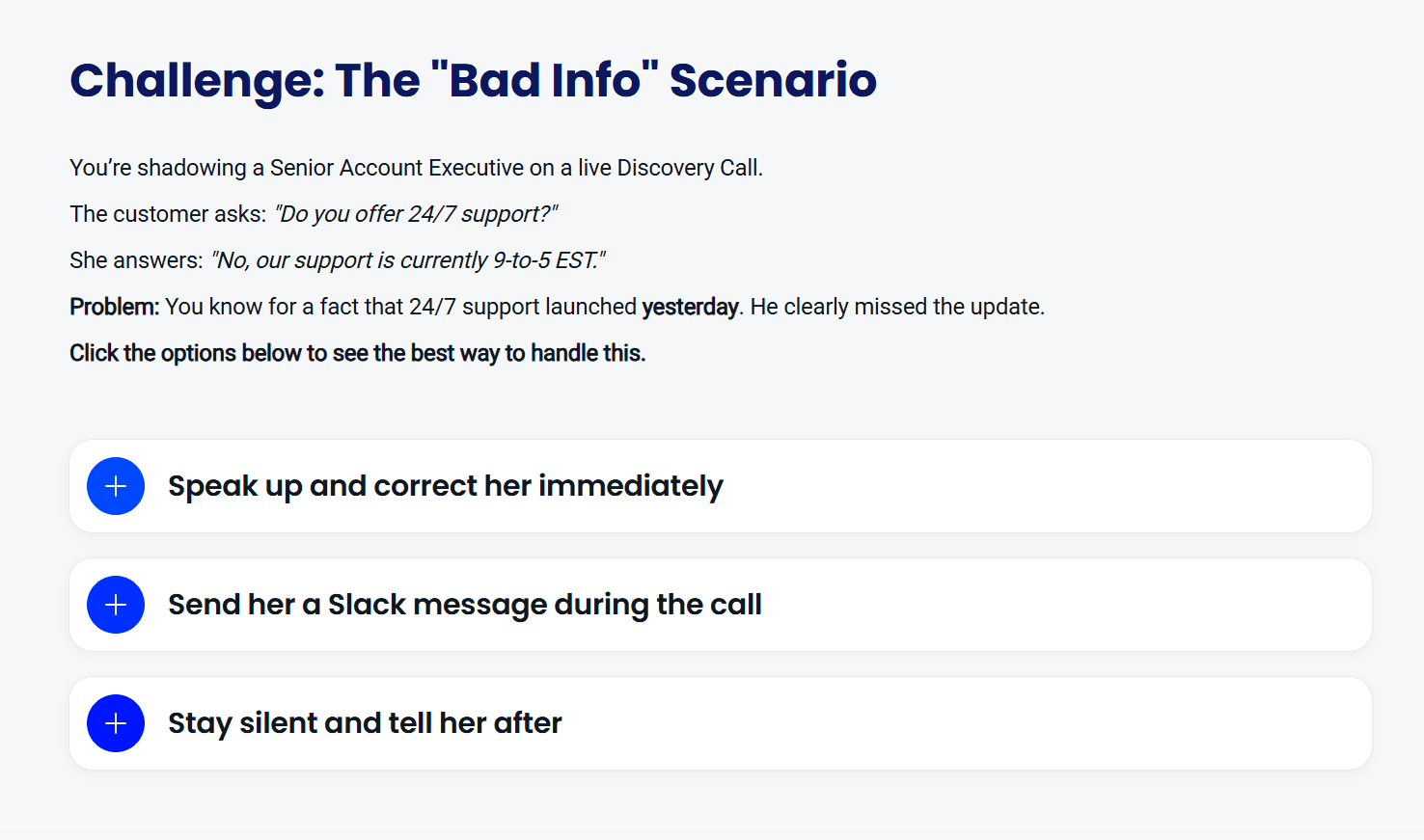
One example is the course Sales Rep Onboarding: Foundations for Success, created using Coassemble. The course turns existing onboarding materials into guided, trackable training that new hires can complete at their own pace.
Each module maps to a stage of the sales cycle, from discovery to closing, and includes real-world examples and quick knowledge checks. This structure helps new sales representatives build confidence before their first major deals.
Product launch training
Product launch training often breaks down when updates are shared without clear selling guidance. Sales reps hear about changes, then fill the gaps during live sales conversations.
Effective launch training focuses on selling impact. Reps need to understand what changed, why it matters to customer needs, and how to position the value during active deals.
Short, focused training helps sales teams adapt without slowing the sales cycle. When launch guidance is timely and practical, messaging stays consistent and revenue momentum is protected.
For example, adding a Loom video directly to a product training done in Coassemble is one of the easiest ways to create and share product updates.
Objection handling playbook
Objection handling is one of the most critical sales skills, yet it's often learned informally. Reps pick it up through trial and error and shadowing, which leads to inconsistent sales conversations across the sales team.
Strong sales organizations document what works. When Eubrics launched a new AI-driven analytics tool, they applied structured objection handling:
- Listening carefully to concerns
- Offering personalized demos
- Sharing success stories
This systematic approach converted 70% of hesitant prospects into paying customers within the first quarter.
An effective playbook reflects real deals. It's built from recent losses, stalled opportunities, and successful closes. When objection handling is structured and shared, sales reps respond with confidence and sales effectiveness increases.
Wrapping up
Sales training and development doesn’t have to be expensive, slow, or complex. Most sales teams already have the knowledge they need. It’s just trapped in decks, documents, and conversations that never scale.
When training is practical, accessible, and connected to real selling moments, it gets used. Sales managers spend less time repeating basics. Sales professionals build confidence faster. Sales performance improves without adding process.
Coassemble helps teams turn existing sales content into trackable, engaging training that fits into everyday work. It doesn’t replace your LMS. It plugs into what you already use and keeps knowledge in motion.
When training moves, sales teams move with it.
FAQs about sales training and development
What is the primary objective of sales training?
The primary objective of sales training is to help sales professionals perform consistently. It builds essential sales skills, improves sales conversations, and supports better outcomes across the sales cycle.
How do you develop a sales training program?
Start with the sales process your team already uses. Identify key skill gaps, reuse existing content, and build short training modules that reflect real sales situations.
Why should a sales training program be designed?
A designed sales training program creates consistency. It ensures sales reps follow a proven sales approach, communicate value clearly, and meet customer needs more effectively.
How do I build a sales training program?
Begin with current playbooks, decks, and call examples. Turn them into structured training with Coassemble, add simple knowledge checks, and update regularly to support ongoing training.
Keep reading
Headless Authoring Tools: The Ultimate Guide to Embedded Learning
Most training tools force a choice: adopt a rigid platform, or bolt on tools that never fit your product. Headless authoring is the third option. This guide covers what headless authoring is, how it works, and why it matters when you're building learning into a product instead of deploying it as a standalone tool.
What is microlearning? And why your team should be using it
Microlearning breaks training into short, focused lessons that actually stick. Here's what it is, why it works, and how to use it.
What are the top AI platforms for converting documents into courses?
Tools like Coassemble show what happens when document conversion is built for real workflows. Knowledge moves from files into courses, without forcing teams to replace their existing LMS or processes.