The sales training format that fits your team
Effective sales training doesn’t come from expensive programs or constant reinvention. It comes from choosing a sales training format that makes existing knowledge easy to access, reuse, and keep current.
Sales training formats should be easy. Most sales teams already have the knowledge they need to succeed. The problem is how that knowledge is shared and reused.
According to Seismic, around 65% of sales content created by organizations goes unused by sales reps. The issue isn’t effort or intent. It’s format.
A lot of guidance still assumes enterprise budgets, professional sales trainers, and long training sessions. That approach doesn’t fit growing sales teams. They need a sales training format that supports real workflows and keeps training close to the work.
This article focuses on practical sales training formats that turn existing materials into training people actually use.
We’ll cover:
- What a sales training format means in practice
- Common sales training methods teams rely on today
- Core components of an effective sales training program
- How to turn existing sales content into reusable formats using AI
What is a sales training format?
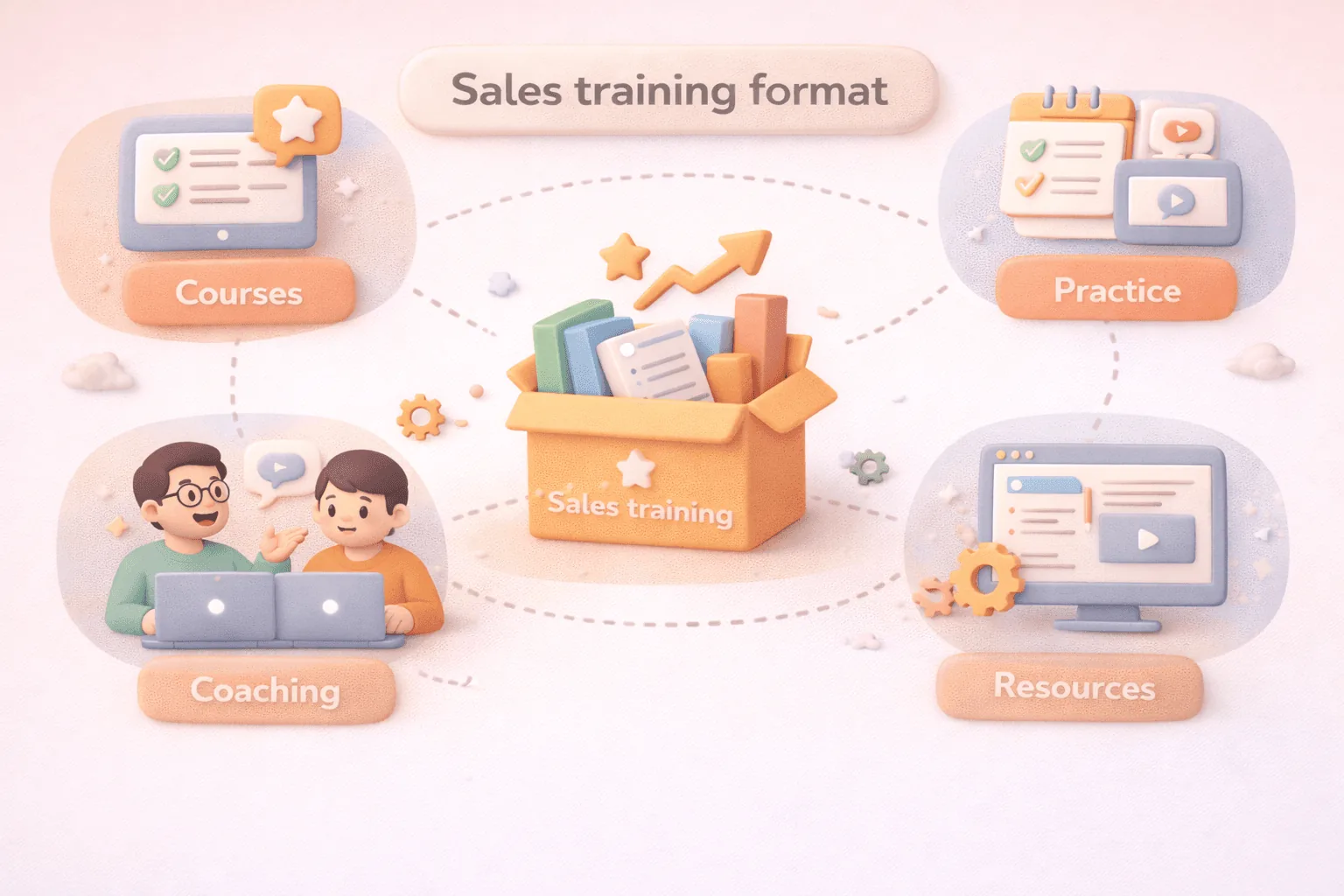
A sales training format is how sales training is structured and delivered to the sales team. It defines how sales reps learn, practice, and revisit key sales skills.
It’s the container for your training materials. Sales techniques, sales scripts, product knowledge, and real-world scenarios all live inside this structure.
A clear format turns scattered content into a repeatable training process. New hires know where to start. Experienced sales reps know where to refresh. Sales managers can provide sales training without rebuilding it every time.
Most importantly, a strong sales training format supports effective, ongoing sales training, not a one-off event.
Common sales training formats and methods
Most sales training programs rely on a mix of formats. Each one supports different training objectives and sales skills. What matters is understanding the strengths and limits of each approach.
Below are the most common types of sales training formats used today, and where they tend to work best for growing teams.
In-person workshops

In-person workshops are one of the oldest sales training methods. They usually involve live training sessions led by sales managers or a professional sales trainer.
This format works well for role-playing sales calls, practicing communication skills, and building confidence through real-time feedback.
It can help sales team members sharpen negotiation skills and closing techniques in a shared setting.
The downside is scale. Workshops take time to plan and deliver. They pull sales reps away from the sales pipeline and slow down sales productivity. For distributed teams, coordination becomes expensive and difficult.
In-person workshops can support sales success, but they work best as reinforcement. On their own, they rarely sustain an effective sales training program.
Virtual and online training sessions
Virtual training sessions move the classroom online. They’re easier to schedule than in-person workshops and work better for remote sales teams.
This format supports live coaching, walkthroughs, and group discussions. Sales managers can cover sales techniques, review the sales process, and answer questions in real time.
The challenge is attention. Long online sessions often turn passive. Sales reps multitask. Key details get missed. Without structure, training outcomes vary across the sales team.
Virtual sessions work best when kept short and focused. Breaking content into smaller training modules helps maintain engagement and supports improved sales performance.
Self-paced online courses
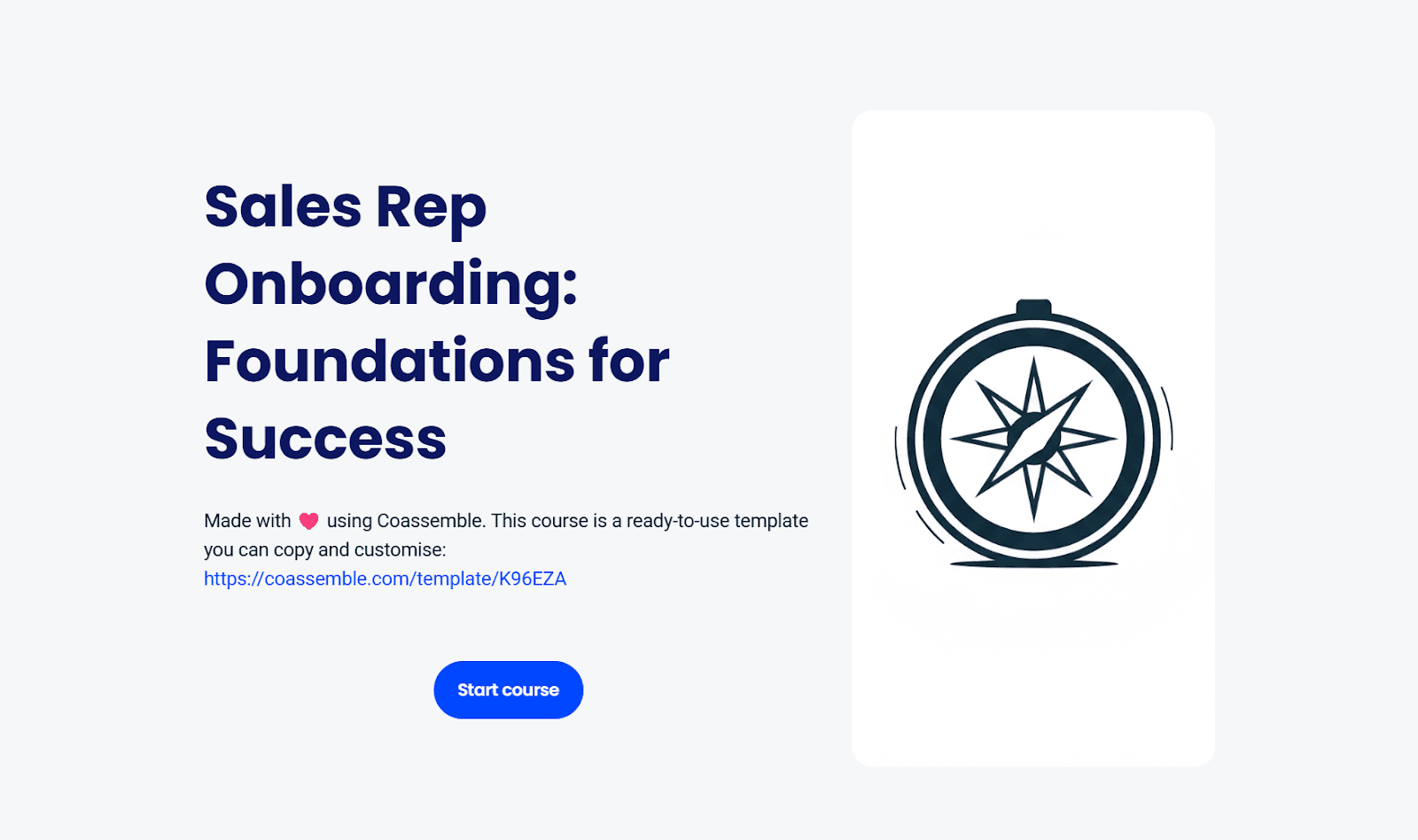
Self-paced learning gives sales reps control over when and how they train. It works well for remote teams, different time zones, and busy sales cycles.
This format suits** **product knowledge, sales scripts, customer relationship management workflows, and core selling skills. Training modules stay available, so sales team members can revisit content before sales calls or key moments in the pipeline.
Structure makes the difference. Research shows that short, focused learning modulescan reach completion rates of up to 83%, compared to 20-30% for longer traditional online learning. Smaller modules are more likely to be finished and remembered.
Coassemble is a knowledge transfer platform and course creation tool designed for this format. It helps teams turn existing playbooks, decks, and documents into structured, interactive training using AI. Courses stay easy to update, reuse, and share wherever the sales team already works: Slack, email, and more.
Hybrid approach
A hybrid sales training format combines multiple training methods to reinforce learning over time. It often blends self-paced learning with live coaching or group training sessions.
For example, sales reps might complete product training modules on their own, then join a live session to practice sales techniques or review real-world scenarios. This approach supports deeper understanding without relying on long workshops.
The tradeoff is coordination. Hybrid formats require planning across tools, calendars, and sales managers. Without a clear structure, training efforts can become fragmented.
When designed well, a hybrid approach supports continuous improvement. It keeps training connected to the sales process while giving sales teams flexibility to learn and apply skills in real work.
Understanding format options matters. But format alone doesn't make training stick. Effective sales training programs also need consistent core components, regardless of how they're delivered.
Key components of a sales training program
An effective sales training program focuses on the skills and knowledge sales reps use every day. It supports sales goals, improves sales performance, and gives sales managers a reliable way to guide the team.
Below are the core components most sales training programs need, regardless of format.
Product knowledge
Product knowledge helps sales reps explain value with confidence. It covers* features, benefits, use cases, and how the product fits into customer workflows*.
This training should also include integrations, limitations, and competitive positioning. Without that context, sales calls become vague and harder to close.
A common mistake is treating product knowledge as a one-time training effort. Products change. Messaging evolves. Without regular updates, sales team members rely on outdated information, which hurts sales performance.
Sales process and methodology
A clear sales process gives structure to how deals move forward. It defines each stage of the sales cycle and what success looks like at every step.
This training covers qualification frameworks, handoffs, and expectations inside CRM systems. Sales reps need to know when to advance a deal, what information to capture, and how to keep the sales pipeline accurate.
Consistency matters here. According to research shared by Heimdall Partner, organizations with a well-defined sales process are up to 30% more likely to hit quota and achieve higher win rates than teams relying on ad-hoc approaches.
When this knowledge isn’t formalized, sales team members follow their own habits. That creates inconsistency and makes sales performance harder to track. A shared sales process helps streamline sales processes and align the team around the same best practices.
Objection handling and scripts
Objection handling shapes how sales reps respond when deals stall. *Pricing concerns, timing questions, and competitive comparisons *show up on almost every sales call.
The problem is where this knowledge lives. Tested responses often sit with top sales performers or experienced sales reps. Other sales team members rely on guesswork or outdated sales scripts.
This part of the sales training program should document common objections and proven responses. It should also include negotiation skills and closing techniques tied to real situations.
When objection handling is structured and shared, sales reps sound more confident. Conversations move forward. Sales success becomes more consistent across the team.
Target customer understanding
Sales reps sell better when they understand who they’re selling to. This part of the sales training program focuses on customer relationships, not just product features.
Training should cover* ideal customer profiles, buyer pain points, and common buying triggers*. It should also include real-world scenarios that show how different customers evaluate solutions.
Without this context, sales calls stay generic. Messaging misses the mark. Deals take longer to close. Clear target customer training helps sales team members adapt their sales techniques and build stronger customer relationships over time.
Tools and technology training
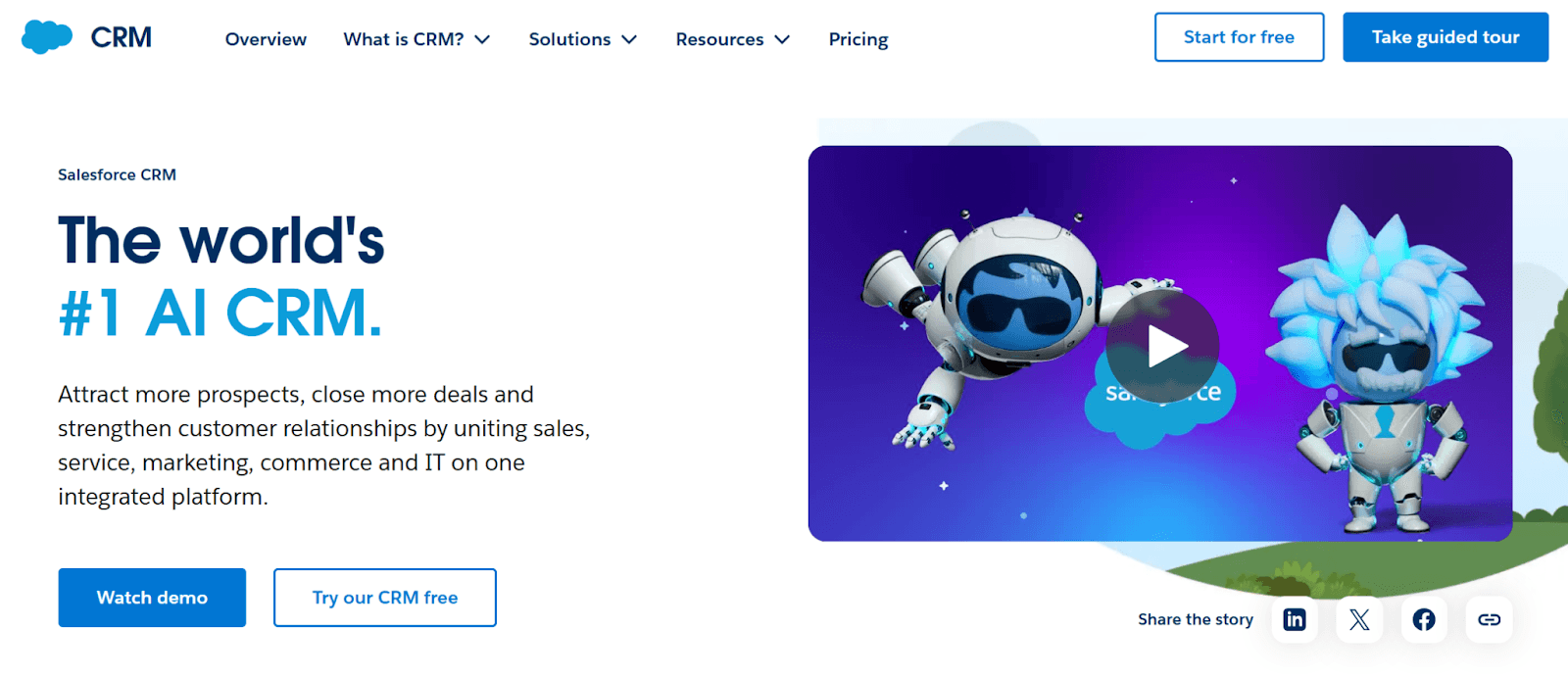
Sales tools shape how sales reps do their jobs effectively. This training covers the systems the sales team relies on every day, not just how to log in.
That includes CRM systems like Salesforce and HubSpot, where sales reps manage the sales pipeline, track activity, and update deal stages. Reps need to understand what to log, when to log it, and why it matters.
It also includes communication tools such as Slack, where sales conversations, updates, and handoffs happen daily. Training should show how these tools support collaboration, not replace good communication.
When tools training is unclear, data goes missing, and sales productivity drops. A clear training process helps sales team members use tools consistently, support customer relationship management, and improve performance tracking across the team.
How to create your own sales training format using AI
Creating a sales training format starts with structure, not new content. Most sales teams already have what they need.
In this guide, we’ll use Coassemble as the example. It’s a course creation tool designed to help teams turn existing documents into structured, reusable training using AI.
AI helps organize existing materials into clear training modules. That reduces manual work and keeps training easy to update.
Here’s how you can turn scattered sales content into a repeatable training format using AI.
Step 1: Gather your existing sales materials
Start by collecting the files your sales team already relies on. These usually live across shared drives, email threads, and internal tools.
Look for PDF sales playbooks, Word documents with messaging or scripts, and PowerPoint slides used for pitches or onboarding. Include pricing sheets, competitive battle cards, call notes, and recorded demos.
The goal is to bring everything into one place. Once these materials are grouped together, they’re ready to be shaped into structured training.
Step 2: Upload your content to Coassemble’s AI Create
Open Coassemble’s course builder. You’ll first see a short setup flow that introduces the creation options and explains how the process works. This gives teams a chance to understand the approach before uploading anything.
From there, choose Transform an existing document. Upload PDFs, Word documents, or PowerPoint slide decks, and Coassemble’s AI scans the content and organizes it into a draft course layout. Lessons and sections are created automatically based on the material you provide.
At this stage, you’re reviewing structure and flow. You can click through the draft to see how your sales content has been organized. Editing and personalization become available later.
Step 3: Choose optional add-ons for your course
After the draft course is generated, Coassemble prompts you with a few optional add-ons. These help shape the course preview before you decide how to share it.
You’ll see options to generate quizzes and add your company URL. If you include your URL, Coassemble automatically applies your logo and primary brand color to the course preview. This gives you a clearer sense of how the training will look in context.
All of these steps are optional. You can skip them and move ahead. This stage is about previewing and understanding the output, not editing content yet.
Step 4: Choose how to share your course
You’ll see a few sharing options for your course depending on your plan:
- Send an email invitation
- Generate a shareable link
- Export a SCORM file for your HRIS or learning management system
- Embed your training directly into your platform using our API
Before you proceed, Coassemble makes it clear that you’ll create your account in the next step.
Step 5: Sign up to save and refine your course

After choosing how to share the course, you’ll be prompted to save your work in Coassemble. The free way in is to request a free sandbox — the full platform at no cost to build and test a real course. This saves your progress and unlocks the full course creator.
Once you’re signed in, you can edit, personalize, and refine the course content. This is where sales managers can adjust language, add context, and tailor training to their sales process.
You’ll also gain access to a clean dashboard showing course completions and quiz results. Individual learner progress is available on paid plans. This makes it easier to see what’s landing and where sales reps may need more support.
Step 6: Save as a reusable template
After signing up, access your Coassemble dashboard. From there, you can duplicate the course you just created and turn it into a reusable training template.
This is where structure starts to pay off. Create your core formats once, such as a product knowledge training template or a new rep onboarding template. These become the foundation for future training.
You can duplicate the template and adapt it for specific needs. That might mean a new product launch, updated messaging, or different sales segments. When foundational information changes, updates can be applied quickly across all related courses, keeping training consistent and current.
You can also watch a tutorial video about course creation here:
Wrapping Up
Effective sales training doesn’t come from expensive programs or constant reinvention. It comes from choosing a sales training format that makes existing knowledge easy to access, reuse, and keep current.
Most sales teams already have strong playbooks, proven sales techniques, and real experience across the team. The challenge is turning that knowledge into something consistent and usable. A clear format solves that problem.
Coassemble helps make this practical. By turning familiar documents into structured training with AI, teams can build sales training programs that scale as the business grows. Training stays relevant. Updates stay simple. Knowledge keeps moving.
Your sales team already has the expertise. The right format makes sure it gets used.
FAQs about sales training format
How do you structure sales training?
Start with a clear sales training format. Organize product knowledge, sales process, and objection handling into focused modules. Keep training short, repeatable, and easy to update as things change.
What is a sales training template?
A sales training template is a reusable course structure. It defines how content is organized, so teams can quickly build training for new hires, product launches, or messaging updates without starting over.
Who should use a sales training template?
Sales managers, enablement leads, and growing sales teams benefit most. Templates help keep training consistent across sales reps while reducing manual work and one-off builds.
Can a sales training template be reused?
Yes. Templates are designed for reuse. You can duplicate them for different sales segments or use cases, then update shared content when core information changes.
Keep reading
The cost of poor internal knowledge management: statistics that make the case
Poor knowledge management doesn't announce itself. It doesn't show up as a line item. It shows up as a new hire still piecing things together six weeks in. A product update that never made it past a Slack thread. A process question answered differently every time someone asks.
Tools for knowledge management: from storage to structured training
Stored knowledge isn't transferred knowledge. A wiki doesn't guarantee your team can execute what's in it. Knowledge bases don't track who actually learned the material.
How to build a knowledge transfer checklist that actually works
A knowledge transfer checklist is one of the simplest, highest-value tools a mandated team can have. It protects against knowledge loss, speeds up transitions, and gives new hires the critical information they need to contribute faster.