What is the best embeddable training software for SaaS platforms?
Embeddable training software puts course creation, delivery, and tracking inside your product instead of a separate portal. Here's what to look for, and how the top SaaS options compare in 2026.
A new customer signs up. Two days later, they're stuck on step three of setup, and your support queue picks up the slack. Multiply that by every release your team ships this quarter, and a b2b SaaS training platform stops being a nice-to-have.
Most SaaS teams already have training scattered everywhere: a help doc, a Loom video, a Notion page nobody's updated in months. None of it lives inside the product or shows up when someone actually needs it.
Embeddable training software for SaaS platforms fixes that by putting course creation, delivery, and tracking directly inside your app instead of a separate portal.
Here's what to look for and how the top options for SaaS teams compare.
What is embeddable training software for SaaS platforms?
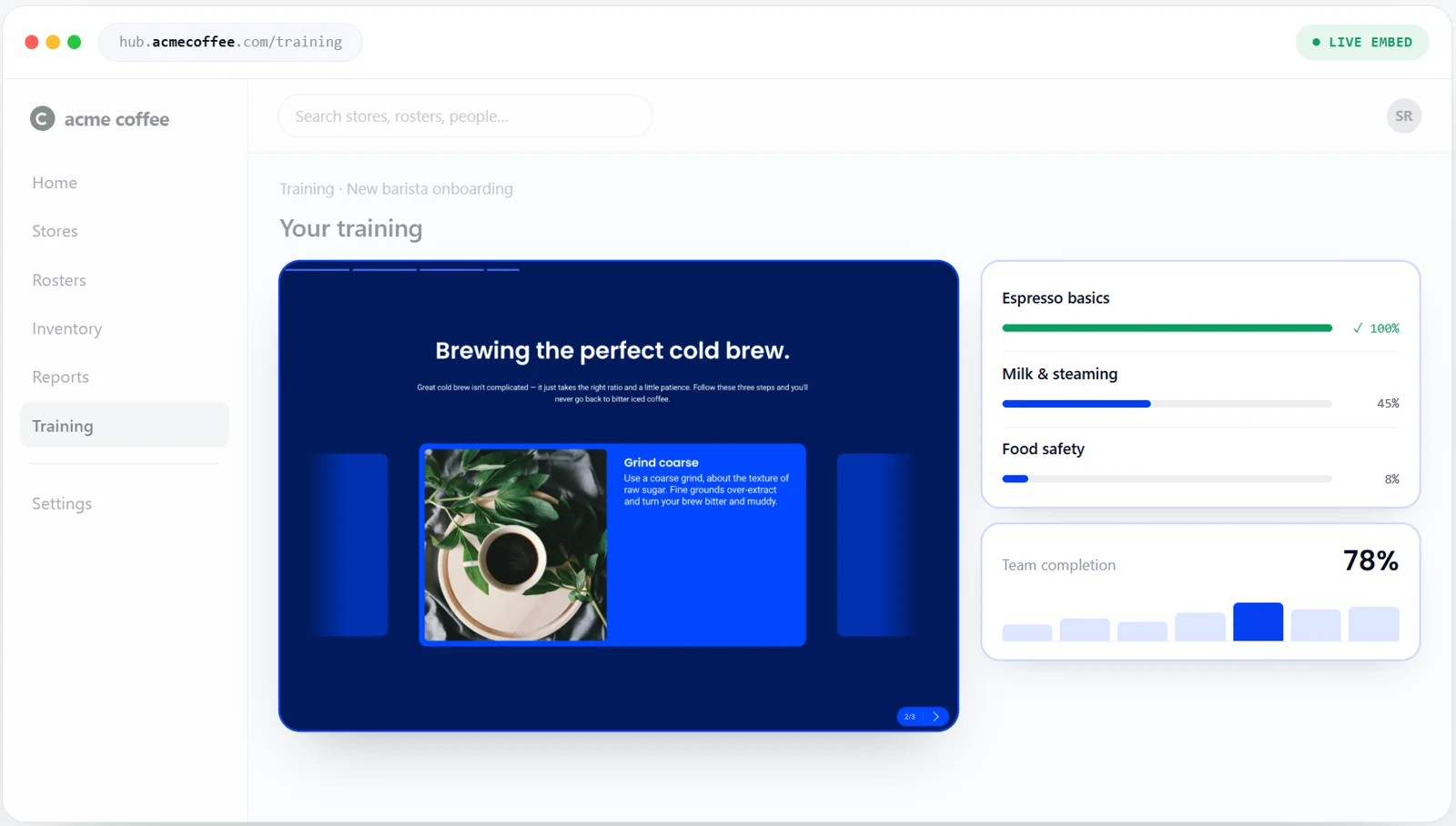
Embeddable training software lets SaaS teams build courses inside their own product. It replaces a separate learning portal with API-driven components: players, builders, and analytics you drop into your existing interface.
Training then lives where users already are.
What should SaaS teams look for in embeddable training software?
That in-product placement is the whole point, but it only works if the platform underneath is built for it. The right embeddable training software should feel invisible to your users and simple to run for your team. Here's what to check, from core features down to the infrastructure underneath.
Core functional features
A SaaS product changes fast, so training built for it needs to keep pace. Look for:
- In-app contextual triggers — training that surfaces at the moment a user needs it, not buried in a help center
- White-label customization — no visible trace of a third-party tool, so the experience stays fully yours
- Modular micro-learning — short, focused lessons that fit around a user's workflow instead of pulling them away from it
- Easy version control — content that updates the moment your product does, without a re-export cycle
Integration and data architecture
Those features only earn their keep once the platform can actually talk to the rest of your stack. The right platform connects instead of isolating:
- Single sign-on (SSO) — one login, no separate account for training
- API-first components — a signed player for learners, a builder for authors, and analytics for tracking, each dropped directly into your product
- CRM and support sync — completion data feeding back into the tools your CS and sales teams already use
- Engagement analytics — visibility into who's actually using training, and where they drop off
Security and compliance
According to Vanta's State of Trust Report, 65% of organizations now face more demand to prove compliance. A strong platform gives you that proof upfront:
- SOC 2 certification — independently audited, so security review doesn't stall a pilot before it starts
- Data residency options — region-locked or self-hosted infrastructure for teams with strict data-location requirements
- Documented AI/data-handling policy — clarity on how the platform trains, or doesn't train, on your content and learner data
- Audit trail for completions — an immutable record of who completed what and when, for compliance or enterprise procurement
Best embeddable training software for SaaS platforms in 2026
Every tool below solves a different piece of the puzzle. Here's how each one compares against the criteria above.
1. Coassemble
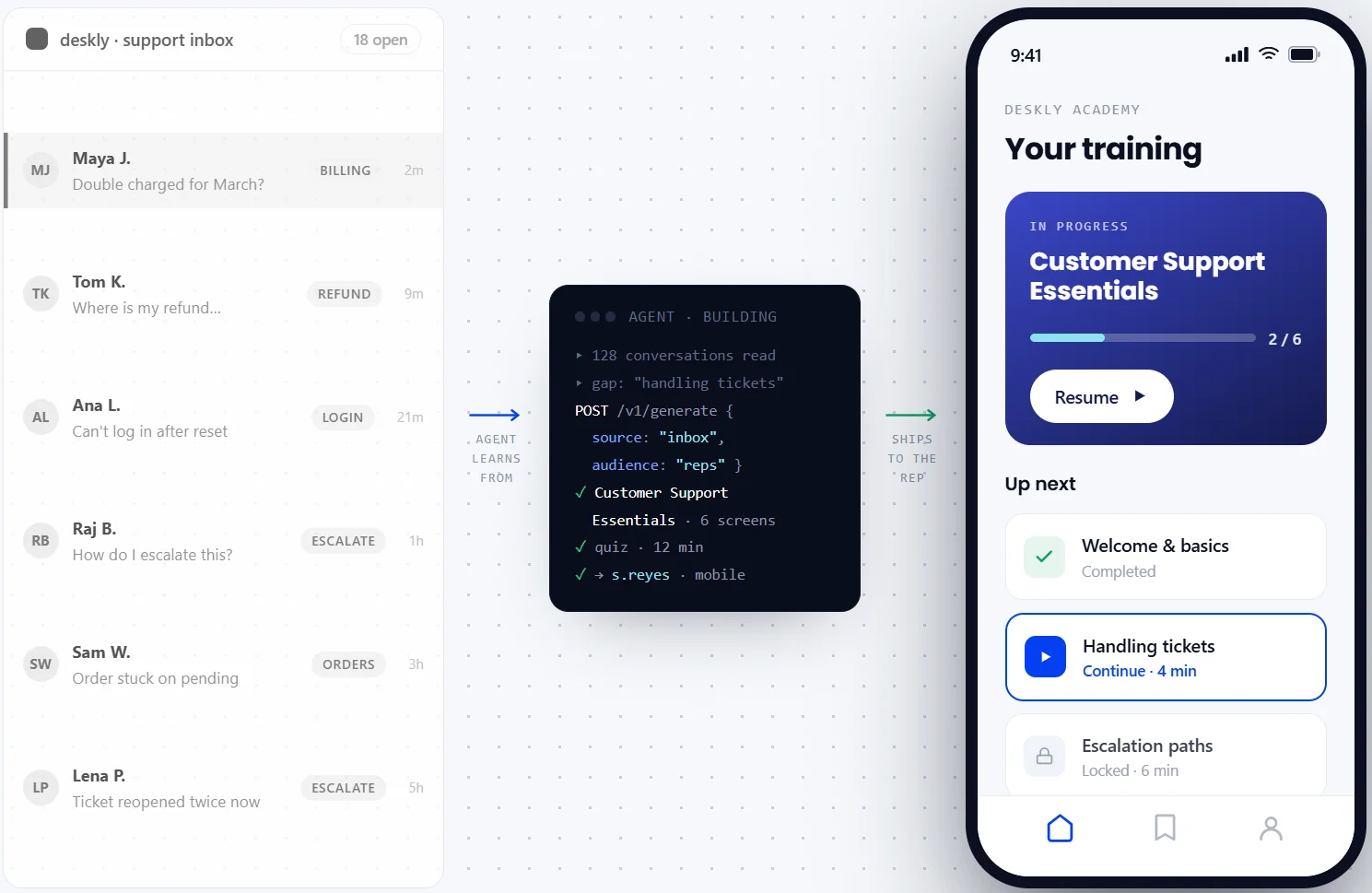
Coassemble is built API-first, so training embeds directly into your product instead of routing users to a separate portal.
- Course Player, Course Builder, and analytics dashboards drop in as embeddable components
- Works for both self-serve customer academies and internal SaaS training, covered in Coassemble's customer education solution and its guide to internal SaaS product training
- Full API access, SSO, and SOC 2 documentation available from the entry tier
- Coassemble Embed is the plan built specifically for product teams shipping learning inside their own software
2. Skilljar
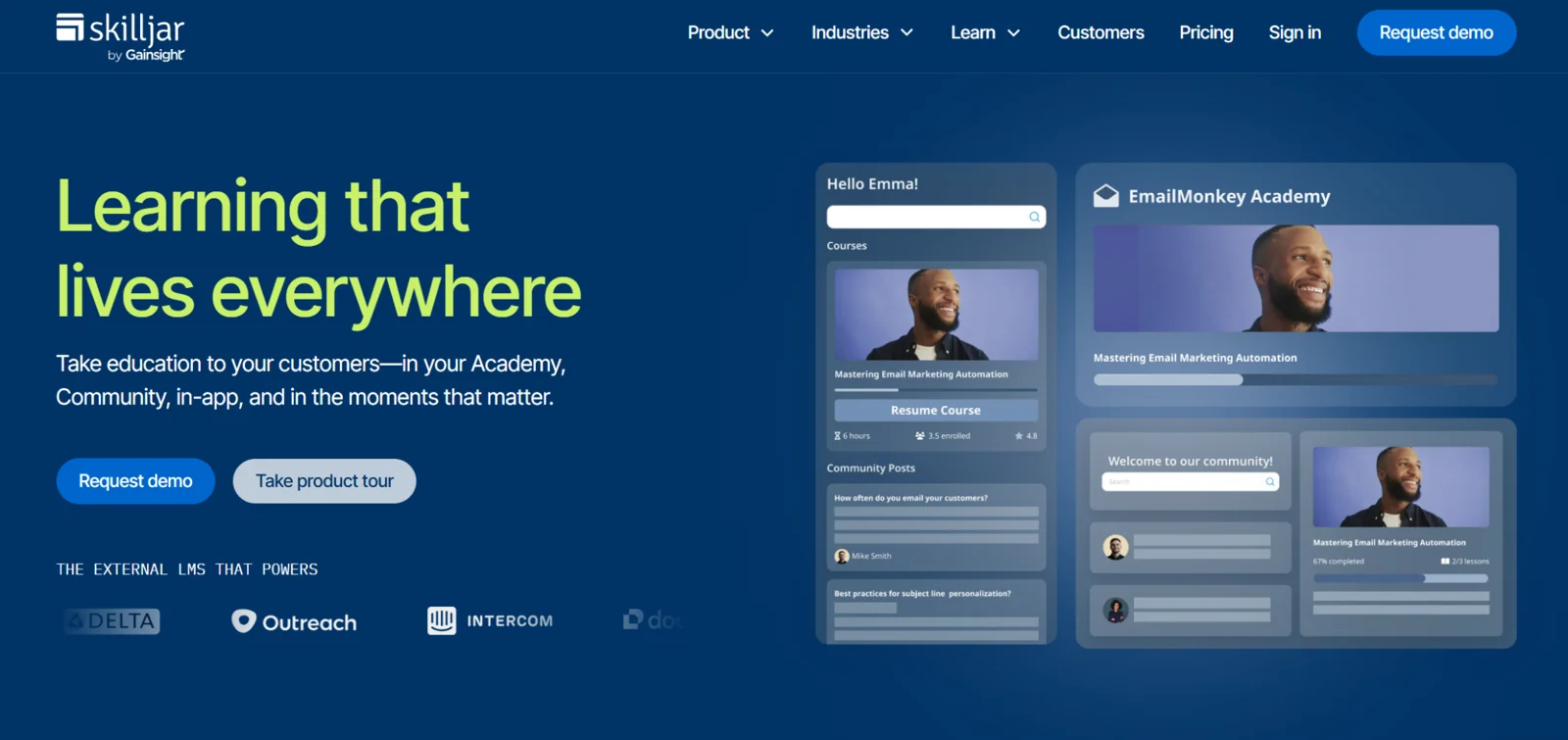
Skilljar (now Skilljar by Gainsight) is purpose-built for external customer and partner education.
- Customizable, brandable academy with SSO for end customers
- Salesforce and Gainsight integration for tying training to revenue metrics
- Built-in monetization like subscriptions, promo codes, and Stripe/PayPal checkout
- Pricing isn't published; third-party buyer data puts most deployments between $30,000 and $90,000 a year
3. Docebo
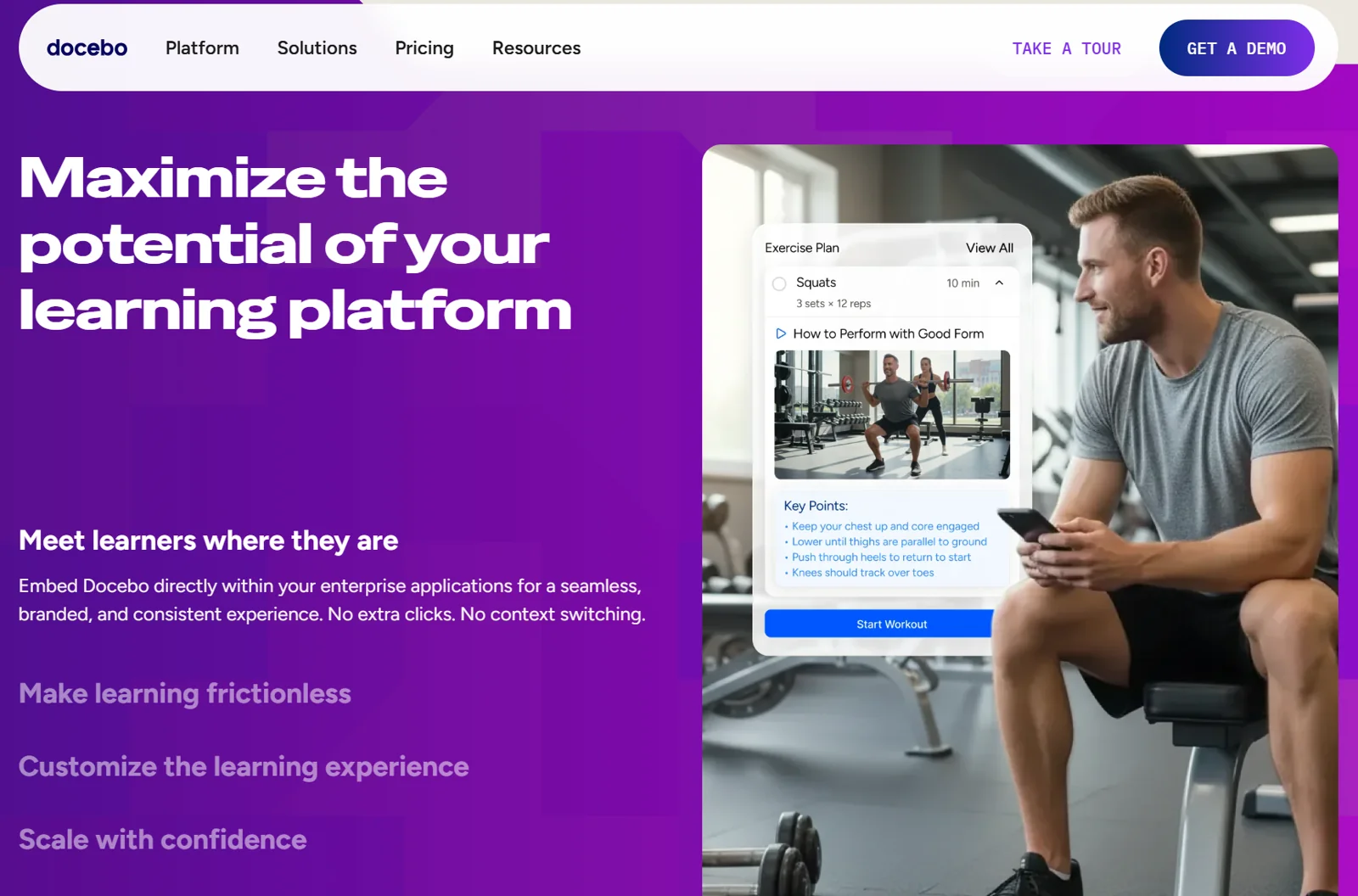
Docebo offers a genuinely headless architecture, separating the front end from the back end.
- SSO, tokenized access, and full permission inheritance built for embedded delivery
- APIs, webhooks, and a widget library for injecting learning into existing workflows
- Suits larger organizations training employees, partners, and customers from one system
- Pricing is quote-based; third-party estimates put entry deployments around $25,000 a year
4. MeltingSpot
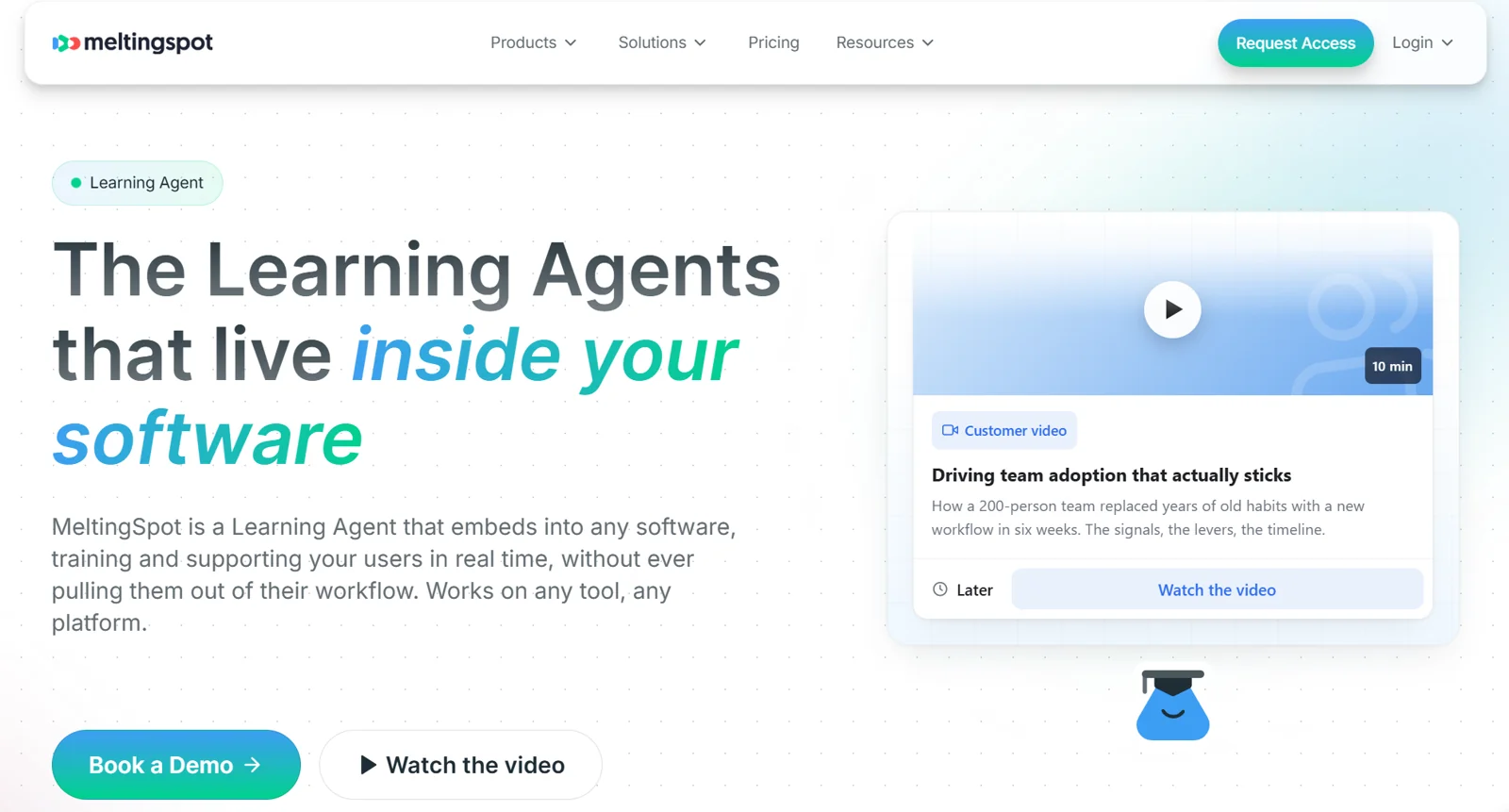
MeltingSpot takes a different approach. It layers contextual, in-app coaching on top of conversational, tooltip, and learning-path formats, rather than a standalone academy.
- Supports conversational coaching, tooltips, video, microlearning, and full learning paths
- Prices on monthly active users, not seats, starting from €1.50 per active user on the SaaS plan
- Deploys via a JS snippet, live in hours rather than months
- A strong fit for SaaS teams focused on feature adoption and support deflection
5. Thought Industries
Thought Industries positions itself as a platform for monetizing customer learning, not just delivering it.
- Native ecommerce for subscriptions, bundles, and course sales
- Segmented learning paths, custom portals, and omnichannel content distribution
- Fits SaaS companies building certification programs or paid academies
- Pricing isn't published; third-party estimates put entry deployments around $2,500 a month for up to 100 active users
6. TalentLMS
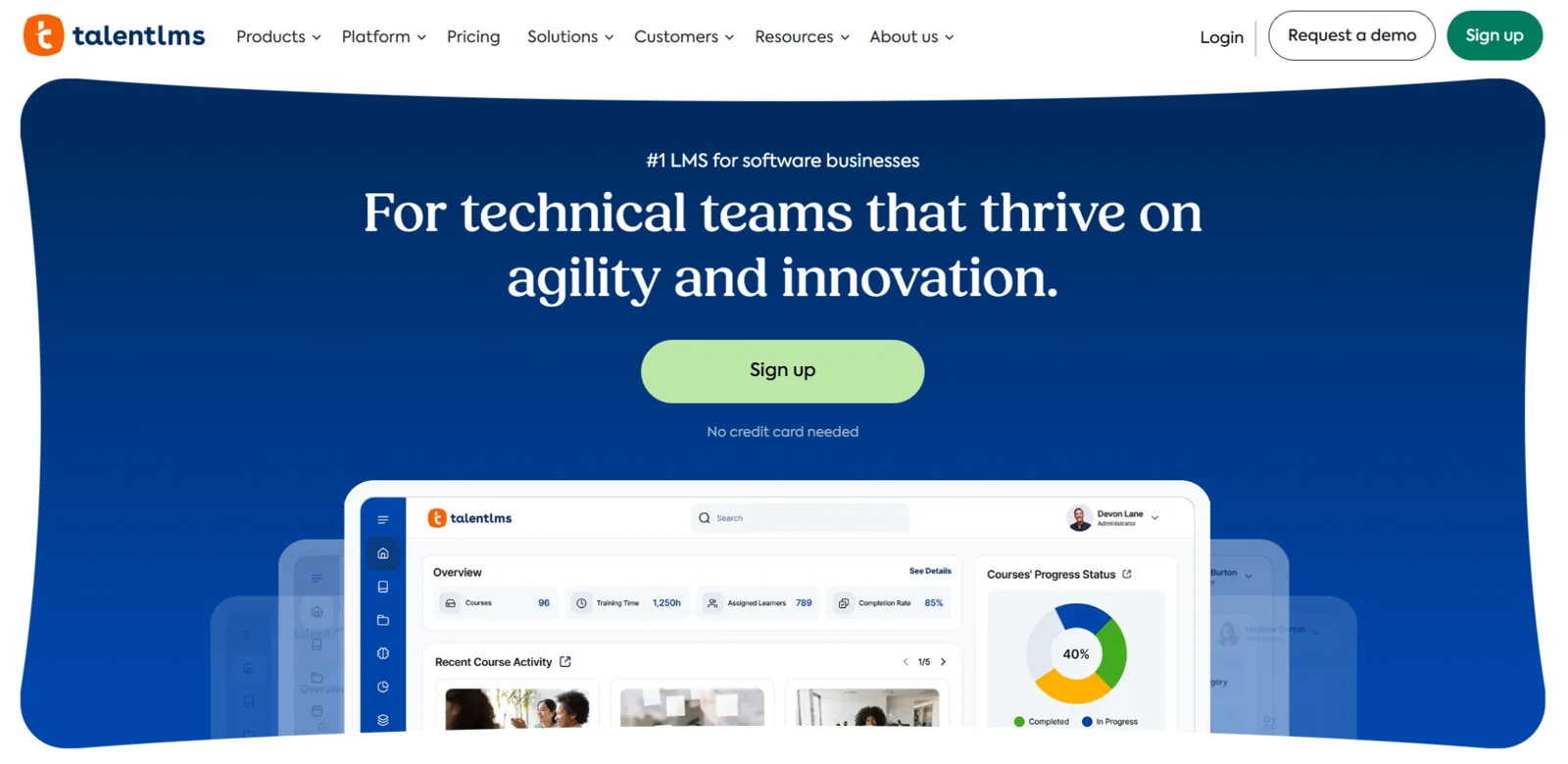
TalentLMS is a straightforward course platform for internal and customer training alike. SSO, API access, and learning paths are included from the entry-level Core plan.
- Free for up to 5 users and 10 courses, no credit card required
- Core plan starts at $119 a month
- SCORM, Tin Can, and cmi5 support, plus a built-in AI course creator (TalentCraft)
- A reasonable entry point for smaller SaaS teams, though it lacks the deeper embed architecture that fast-shipping product teams eventually need
7. Trainual
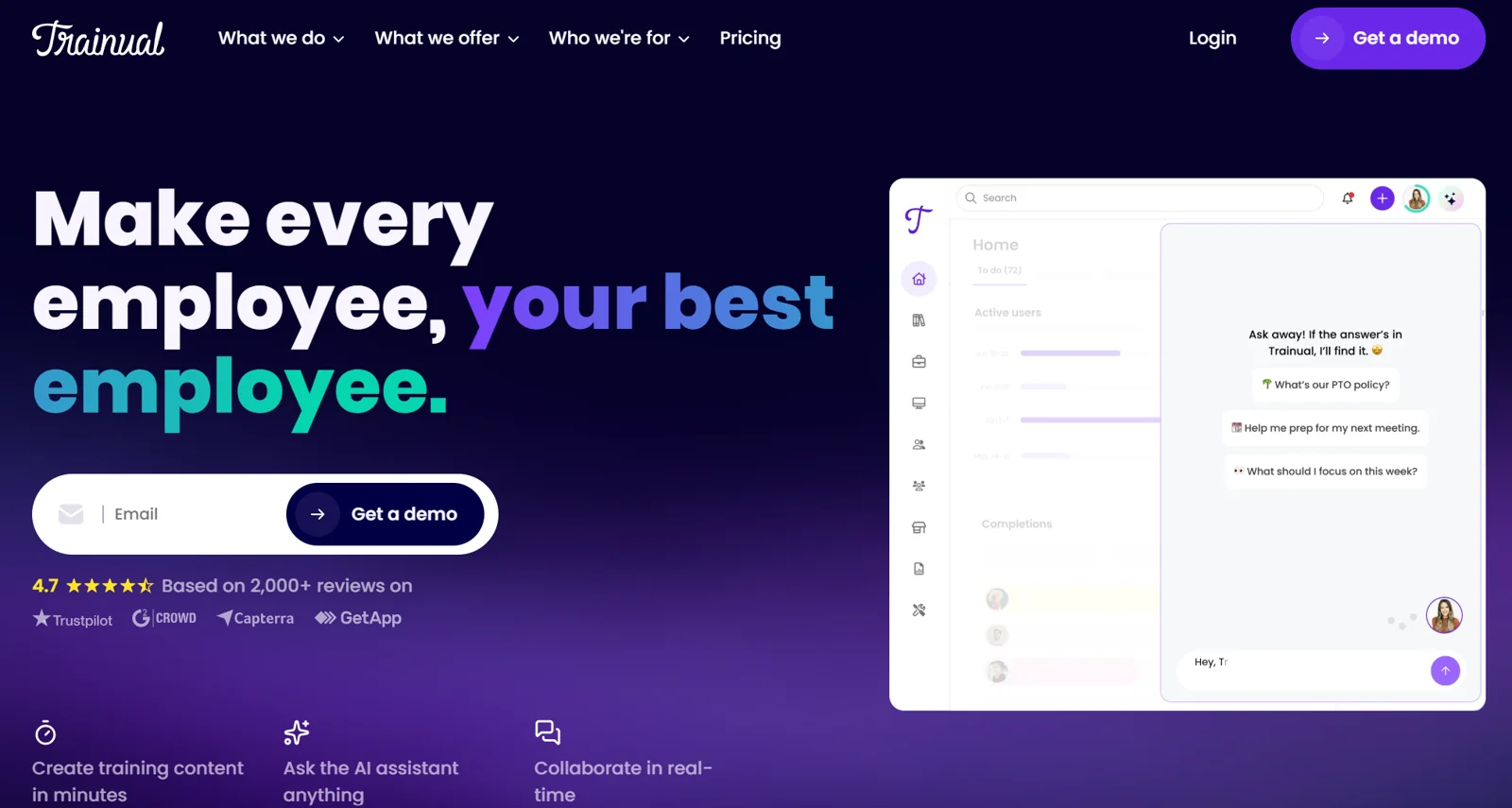
Trainual is built for internal training, not customer education. It turns SOPs into role-based onboarding for a company's own team.
- Centralizes processes, policies, and step-by-step playbooks in one searchable place
- SSO (Okta, Microsoft Azure) and e-signatures for policy compliance
- A solid fit for documenting fast-changing internal processes, but it doesn't address customer-facing training
- No published pricing; the platform is sales-led with no free plan, and third-party cost estimates conflict too much to cite a reliable range
Bring learning inside the product
The right embeddable training software disappears into your product. Your customers learn without leaving the app and your team ships training as fast as it ships features.
Coassemble, Skilljar, Docebo, MeltingSpot, Thought Industries, TalentLMS, and Trainual each solve a different piece of that problem. The right fit depends on whether you're building customer education, internal enablement, or both at once.
If you're a SaaS product or CS team evaluating this space, start with the criteria above. Then match them against your actual use case, not just the feature list.
FAQs: Embeddable training software for SaaS platforms
What is the difference between embeddable training software and a traditional LMS for SaaS companies?
A traditional LMS lives on its own portal, so users have to leave your product to learn. Embeddable training software drops the same course creation and tracking directly inside your app.
Is embedded LMS the same as customer education software?
Not quite. Customer education software describes the use case: training external customers. Embedded delivery describes how that training gets to them, inside your product instead of a separate site.
What SaaS companies use embeddable training software?
Product-led SaaS companies use it for self-serve onboarding and feature adoption. Customer success and support teams use it to cut ticket volume through in-app guidance and courses.
Do I need a developer to embed training software into my SaaS product?
Most embeddable platforms need a developer for initial setup since integration happens through an API or SDK. Day-to-day content creation typically doesn't require coding.
Keep reading
What is a learning infrastructure, and how is it changing?
Learning infrastructure is the systems that create, deliver, and track training. Here's what it includes, how it differs from an LMS or a learning ecosystem, and how embedded learning and AI agents are changing the model.
What training software has the best API and developer documentation?
A robust API means little if the docs are unclear or support-gated. Six practical checks for evaluating a training platform's API and developer documentation before a sales call.
What Is a Learning Experience Platform (LXP)?
Most articles on learning experience platforms are written for people who already run a mature training program. This one is for someone who's just been handed a knowledge problem to solve, fast. Here's what a learning experience platform is, how it fits next to an LMS, its key features, and the examples worth knowing — so you can tell whether an LXP is the right fit for your team.